
Unbiased headlines. Facts, not spin.
Unbiased Headlines is an independently owned news organization. We bring you the facts, not opinions, written fresh from 110+ named sources. Sources linked so you can verify it yourself.
 politics
Major Story (7/10)
D.C. and Virginia Sue to Block Trump's 250-Foot Arch Days Before Planned Nov. 5 Groundbreaking
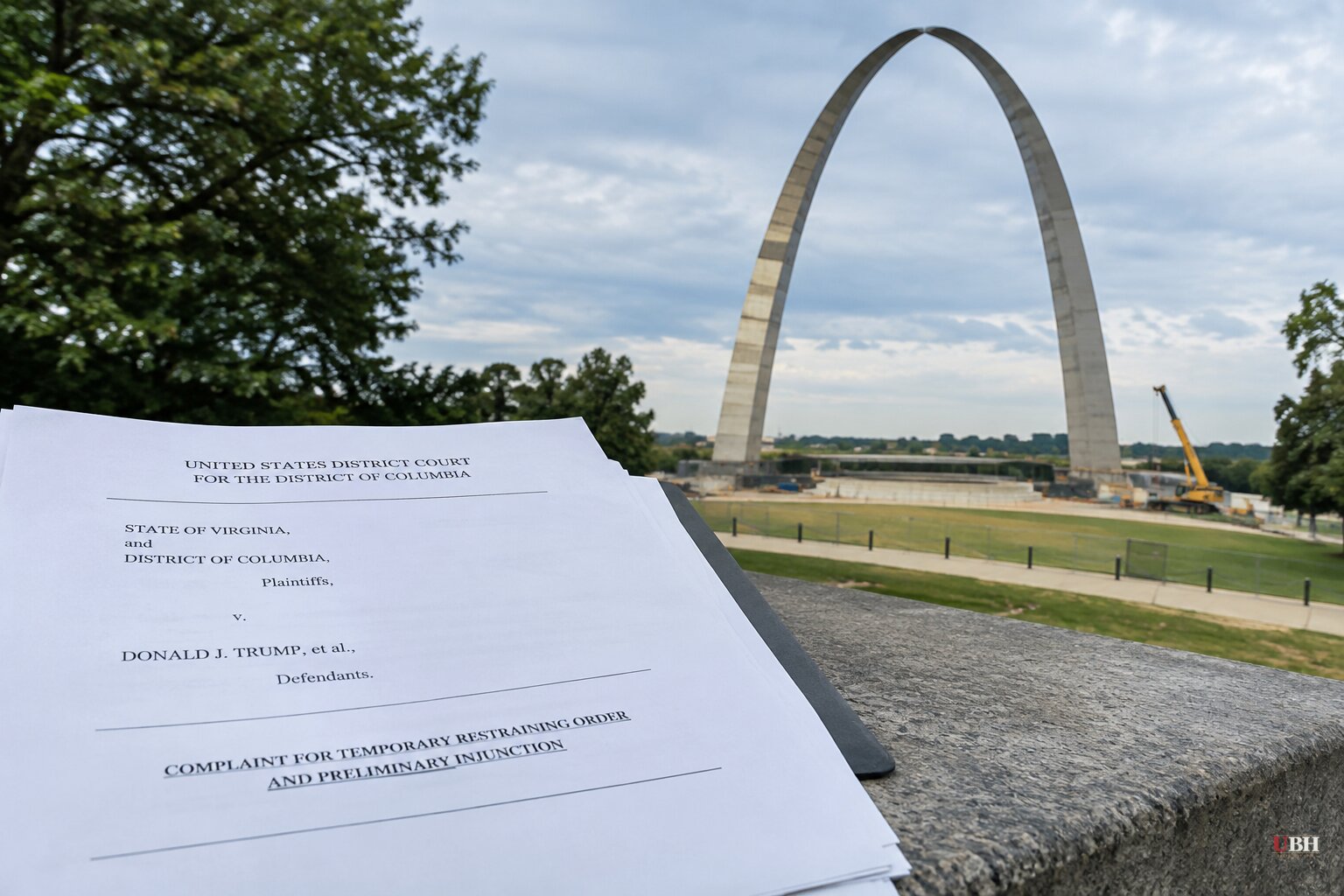
Virginia and the District of Columbia sued the Trump administration on Saturday, Oct. 31, to stop construction of the 250-foot triumphal arch planned for Memorial Circle, the traffic circle at the Washington end of the bridge to Arlington National Cemetery.
The 45-page complaint in U.S. District Court for the District of Columbia was filed by D.C. Attorney General Brian Schwalb and Virginia Attorney General Jay Jones. It names the National Park Service, the Interior Department, and their leaders, Jessica Bowron and Doug Burgum. It asks for a temporary restraining order.
The timing is the whole case. The administration has said ground could be broken as soon as Thursday, Nov. 5. That is the day the National Capital Planning Commission meets to consider final approval, provided Interior also issues its own final decision.
What the complaint alleges
The suit runs to eight counts. It alleges violations of the Administrative Procedure Act, the National Environmental Policy Act and the National Historic Preservation Act. It also says the arch breaks the Height of Buildings Act, which generally caps buildings at 130 feet, and that Congress never authorized the project as the Commemorative Works Act requires.
The attorneys general call the project "flagrantly unlawful." They write that the defendants "have made only half-hearted gestures at complying with these requirements" and did not adequately consult either jurisdiction.
They say the harm starts "as soon as Defendants break ground." Their list: three years of construction snarling traffic between the District and Virginia, strain on emergency services, stormwater runoff into the Potomac, and a blocked sightline between the Lincoln Memorial and Arlington House. They point to the region's reliance on joint emergency operations, including the January 2025 midair collision between a military helicopter and an airliner that killed 67 people.
Schwalb said construction would cause "serious, immediate and irreparable harm to the District and its residents." Jones called the arch an "illegal vanity project" and said Virginia has "a solemn duty and a profound interest in preserving the dignity of this sacred place."
The complaint also anticipates the government's playbook. Once work starts, the attorneys general wrote, the administration will likely argue "as they have done in other cases" that halting construction would pose security risks and upset the status quo it created. "This is not the first time that Defendants have rushed to dramatically remake the District too quickly for courts to intervene," they added.
The administration's position
The White House has not addressed the legal claims point by point. Spokesman Davis Ingle said in an email that the arch "is going to be one of the most iconic landmarks not only in Washington, D.C., but throughout the world." He said it will serve as "a gateway to Arlington National Cemetery for veterans, the families of the fallen, and all Americans alike."
On the authorization question, the administration argued in a June 17 filing in the first case that Congress already authorized construction at the site in 1925, when it approved plans for Arlington Memorial Bridge that included two monumental columns. Those columns were never built.
On security, Defense Secretary Pete Hegseth and Homeland Security Secretary Markwayne Mullin filed sworn declarations Oct. 28 saying the arch is central to national security. Trump said last month he agreed, at the Defense Department's request, to add a military complex with facilities for drones and snipers. The most recent plans, which the planning commission will review, do not include military elements, according to NPR.
The Park Service and Interior did not respond to requests for comment on the new suit.
Three suits, one judge
This is the third lawsuit against the arch. The first, Lemmon v. Trump, was filed in February by three Vietnam War veterans and an architectural historian. They argue the arch would block historically significant views between the Lincoln Memorial and Arlington National Cemetery and needs congressional authorization.
The Arlington County Board filed its own suit Oct. 8. It argues construction would disrupt roads important to emergency services and "significantly and detrimentally" affect the cemetery.
Judge Tanya Chutkan is weighing a halt in the veterans' case until it is resolved. She held a hearing Friday, Oct. 30, did not immediately act, and said she would move expeditiously. In the new case she ordered both sides to confer and propose a briefing schedule on the restraining-order motion by Saturday evening.
What the arch would be
On Friday the government submitted a 106-page plan. It describes a structure more than 12 stories high, topped by a bronze statue of Lady Liberty with wings and an eternal flame. At 250 feet, it would stand 100 feet taller than the Statue of Liberty measured from base to torch.
The interior includes program space, offices, a staff lounge, circular staircases, multiple elevators, a "fire command center," an observation deck with east and west views, an "occupied roof" and two mezzanines.
The height claim is one of the cleaner legal questions. The complaint says the arch exceeds the 130-foot limit in the Height of Buildings Act. The administration's filings so far lean on the 1925 authorization and national security rather than on the height statute.
What to watch
The next steps are on a short clock. Chutkan could rule on a halt in the veterans' case or set a schedule for the new restraining-order motion before Thursday's planning commission meeting. If she does not, the administration may break ground Nov. 5 and argue that stopping work already underway would harm the government. That is exactly the argument the attorneys general are trying to head off.
Sources used for this briefing
7 links from 7 independent newsrooms (syndicated copies of the same report count once)
These are the sources it draws on, linked so you can verify.


