
Original briefings. Zero spin.
Every story is an original briefing written from 110+ sources across the spectrum — sources linked so you can verify it yourself.
 politics
Major Story (7/10)
September 14, 2026 at 03:22 AM
politics
Major Story (7/10)
September 14, 2026 at 03:22 AM
White House Agrees to Let State AGs Enforce Crypto Ethics Rules Ahead of Tuesday's Clarity Act Vote
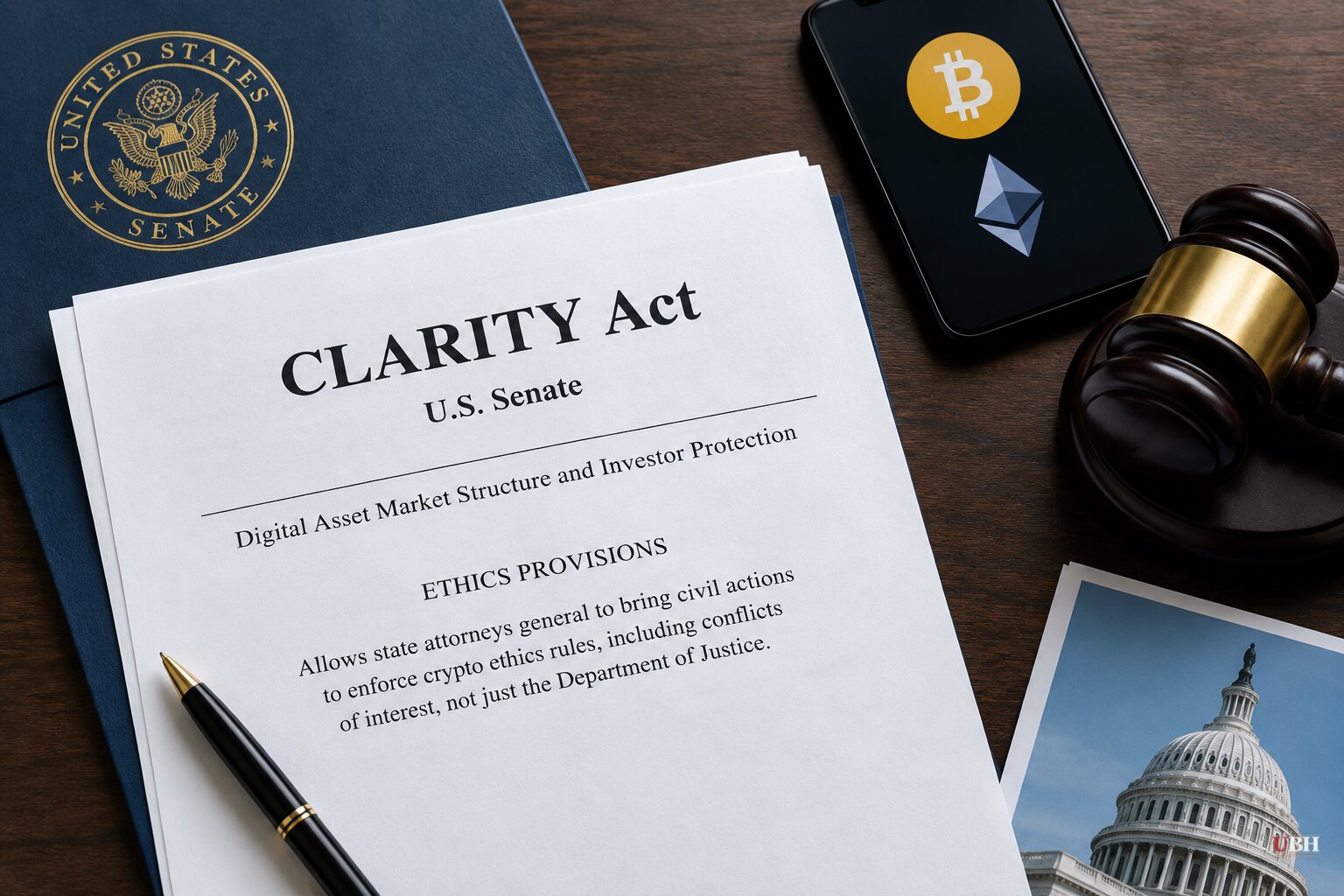
Since Senate Republicans dropped their 630-page CLARITY Act rewrite on Friday, September 11, the bill's fate has hinged on one question: would Donald Trump accept real enforcement teeth on crypto ethics rules that apply to him personally. On Sunday night, September 13, the answer came back yes, at least partially, according to The Hill, the Associated Press, and multiple crypto trade outlets.
The new language, released late Sunday by Senate Republicans, lets state attorneys general sue over violations of provisions barring federal officials from issuing or sponsoring digital assets for compensation. Previously, enforcement ran exclusively through the Department of Justice, an arrangement Democrats said let a president's own appointees police his own crypto business.
A senior GOP aide told reporters on condition of anonymity that Trump agreed to "about 80 percent" of the ethics framework pushed by Sen. Ruben Gallego (D-Ariz.) and Sen. Thom Tillis (R-N.C.), according to Newsday and the Associated Press. The aide said the updated bill will also require officials to either divest or place in a blind trust any "significant" financial interest in an entity that issues cryptocurrencies, and lets state AGs sue exchanges that list assets the bill would otherwise bar.
That divestment detail matters because it appears to go further than earlier characterizations of the deal. Crypto Briefing and KuCoin, describing the negotiated framework, reported the ethics ban carries "an important carve-out" that does not require divestment from preexisting crypto holdings. The AP and Newsday's sourcing, drawn from a senior GOP aide briefing reporters Sunday night, describes a broader divest-or-blind-trust requirement added to the text released that same evening. The discrepancy likely reflects the difference between the version circulating before Sunday's talks and the one finalized after them.
Sen. Cynthia Lummis (R-Wyo.), one of the bill's chief authors, said in a statement that "after a year of intense daily bipartisan negotiations, this bill is ready." She added that "a no vote on Tuesday means opposing real ethics reforms on politicians' personal investments, handing American leadership in digital assets to our foreign competitors, and leaving Americans with zero protections in the digital asset markets. Democrats got what they wanted; now they need to take yes for an answer."
White House crypto adviser Patrick Witt posted on X Sunday night that "at every step of the way during the Clarity Act negotiations, the White House and Senate Republicans have been responsive to Democrats' stated policy objectives," and called for passage of what he termed a bipartisan bill.
The concession did not come easily. Two people with knowledge of internal discussions told the Associated Press that White House officials privately worried Democratic state attorneys general could use the enforcement power as a political weapon against Trump and other Republican officials, and that the same tool could cut the other way against Democrats under GOP-controlled states. Any administration handing new legal ammunition to 50 state law-enforcement offices, some of them explicitly adversarial to the sitting president, would have similar concerns.
The stakes for Trump personally are not abstract. Crypto Briefing and KuCoin both reported that Trump's financial disclosures showed crypto-linked income between $1.4 billion and $2.2 billion, tied to the TRUMP memecoin and World Liberty Financial, a DeFi project connected to the Trump family. That disclosure, made in July, is what pushed Senate Democrats to dig in on enforcement mechanics rather than settle for a DOJ-only provision they viewed as toothless.
Whether the Sunday concession is enough remains unclear. As of a report from TFTC describing the state of play before this weekend's talks, seven Democratic senators, Angela Alsobrooks, Cory Booker, Catherine Cortez Masto, Gallego, John Hickenlooper, Mark Warner, and Raphael Warnock, had said the merged bill text fell short as of July 22, with Gallego calling the ethics language "not a serious proposal." None of those senators had publicly signaled a change of position as of that report. Neither The Hill nor the Associated Press cited any Democratic senator confirming a yes vote following Sunday's revisions.
The cloture vote Tuesday, September 15, needs 60 votes to advance, meaning Republicans need at least eight Democrats even with full GOP support. The Senate returns from recess Monday, September 14. If cloture fails, the bill does not die outright, but Republicans would need to find a new path forward on a measure that has already absorbed more than 126 Democratic-requested amendments, according to Crypto Briefing and KuCoin. If it passes, floor debate opens the door to further amendments on unresolved issues, including a stablecoin yield clause and liability protections for non-custodial software developers, that TFTC identified as still contested heading into the vote.
Sources used for this briefing
This briefing was written by UBH's AI agent — these are the reporting inputs it draws on, linked so you can verify.


