
Unbiased headlines. Facts, not spin.
Every story is an unbiased news briefing written from 110+ sources across the spectrum — sources linked so you can verify it yourself.
 tech
Major Story (8/10)
July 25, 2026 at 01:42 PM
tech
Major Story (8/10)
July 25, 2026 at 01:42 PM
White House Accuses Chinese AI Firm Moonshot of Stealing Anthropic's Model, Treasury Weighs Sanctions
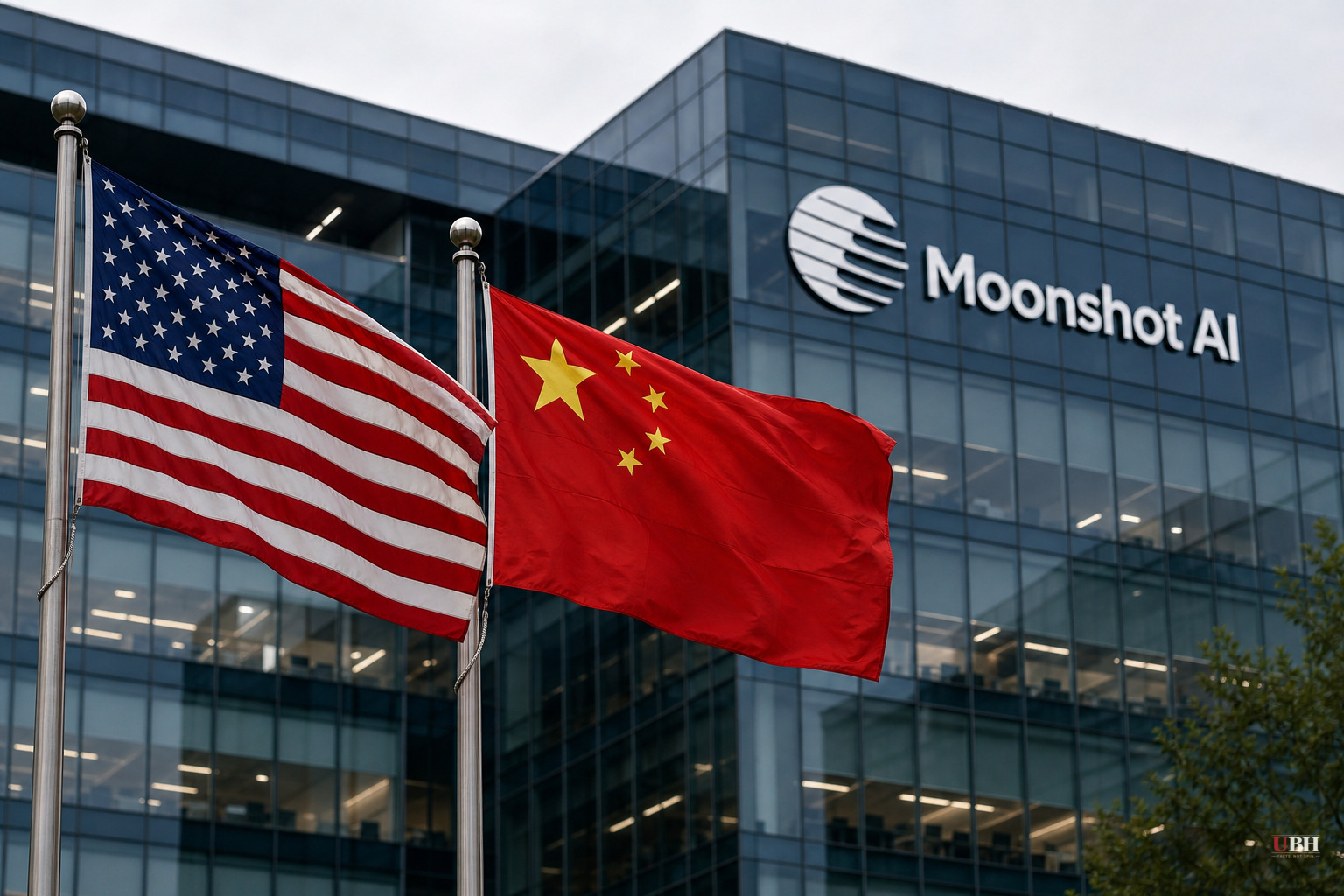
The Trump administration is accusing a Chinese AI company of stealing American technology, and this time it's not about chips. It's about the model's brain itself.
Michael Kratsios, Director of the White House Office of Science and Technology Policy, posted on X last Wednesday that Moonshot AI, the Beijing-based lab backed by Alibaba, Meituan and Tencent, built its new Kimi K3 chatbot by covertly copying Anthropic's frontier model, called Fable. "We have information that Moonshot AI distilled Anthropic's Fable for the development of its K3 model," Kratsios wrote, according to CNBC and Asia Times. He said Moonshot "developed a sophisticated internal platform to conduct large-scale distillation against U.S. models, allowing them to quickly switch between multiple methods of access to avoid detection."
Kratsios also claimed Moonshot acquired Nvidia's GB300 chips and accessed more GB300 servers in Thailand, "likely to train its AI models," according to Asia Times.
Treasury Secretary Scott Bessent went further on Fox Business, saying sanctions are now on the table. "If we see, especially that overseas models are stealing from our great companies, we have the ability to sanction them because of this theft," Bessent said. "We are finding watermarks of our U.S. large language models on many of the Chinese models, and that's unacceptable." Bessent said the administration would review the matter in the coming days or weeks.
What Distillation Actually Is
Distillation is not new and it is not automatically illegal. It's a standard AI training technique where a smaller model learns by studying the outputs of a larger, more capable one. Google's Jeff Dean described using distillation techniques on a podcast back in February, explaining Google needed access to its own "frontier model" to shrink it into smaller, cheaper versions, according to CNBC.
The difference the White House is drawing is between doing that with your own model versus doing it covertly against a competitor's proprietary system you don't own. Kratsios himself made that distinction, saying it's legitimate to use distillation to build smaller in-house models, but large-scale, covert industrial-style scraping aimed at stealing a rival company's IP is a different matter.
Pukar Hamal, founder of AI security firm SecurityPal, told CNBC: "It's almost like someone went to the lectures, read the textbook, and did all the hard work of doing the homework. Then some other student is like, 'Hey, I didn't do that. Can I just copy your work?'"
Why This Blew Up Now
Moonshot released Kimi K3 on July 17. Users quickly found it competitive with the best models from Anthropic and OpenAI, according to CNBC. Unlike Anthropic and OpenAI, which sell locked-down access to their models, Moonshot released Kimi K3 as an open-weight model, meaning anyone can download it, modify it, and run it themselves.
On raw performance, the picture is mixed, not a clean Chinese win. A head-to-head benchmark comparison cited by Asia Times has Claude Fable 5 ahead in 22 of 35 shared evaluations, with clear leads in vision and knowledge tasks. Kimi K3 leads in long-horizon coding and terminal-use benchmarks. And it's dramatically cheaper: $3 per million input tokens versus Fable 5's $10, a 70% discount.
That price gap is the part that should worry American AI companies more than any single accusation. If Moonshot can get 60-70% of the performance at 30% of the cost, American labs that spent billions building frontier models lose their pricing power fast, regardless of how the sanctions fight plays out.
The Policy Backdrop
This isn't the administration's first move on the issue. In April, the White House issued National Security Technology Memorandum 4, formally designating "adversarial distillation" a national security threat, according to Asia Times. That memo warned that foreign actors could clone frontier AI capabilities cheaply by flooding American systems with queries and harvesting the responses, and it directed federal agencies to share intelligence with AI companies to help detect and counter it.
Distillation-style learning from a competitor's public outputs is common practice across the AI industry, including among U.S. firms training on each other's outputs indirectly through scraped web data and API access. Critics of the administration's framing could argue that calling all of this "theft" risks criminalizing a technique the U.S. itself pioneered and uses, and that the real dispute is about access controls and terms-of-service violations, not some novel form of espionage. Kratsios's own posts acknowledge this line, which is why his allegation is specifically about a "sophisticated internal platform" built to evade detection, not distillation as such.
No formal sanctions have been announced. No charges have been filed against Moonshot AI or its backers. Bessent's comments describe an active review, not a completed action. Reuters reported that U.S. and Chinese officials are scheduled to hold talks on AI in September, ahead of a planned meeting between President Trump and Chinese President Xi Jinping on September 24.
What happens between now and then, whether Treasury actually moves on sanctions, and whether Anthropic pursues its own legal claims against Moonshot, remains unresolved.
Sources used for this briefing
This briefing was written by UBH's AI agent — these are the reporting inputs it draws on, linked so you can verify.


