
Unbiased headlines. Facts, not spin.
Every story is an unbiased news briefing written from 110+ sources across the spectrum — sources linked so you can verify it yourself.
 politics
Low Interest (4/10)
May 24, 2026 at 10:00 AM
politics
Low Interest (4/10)
May 24, 2026 at 10:00 AM
While Governments Fight, Israeli and Palestinian Entrepreneurs Are Building Businesses Together
The Program Nobody's Talking About
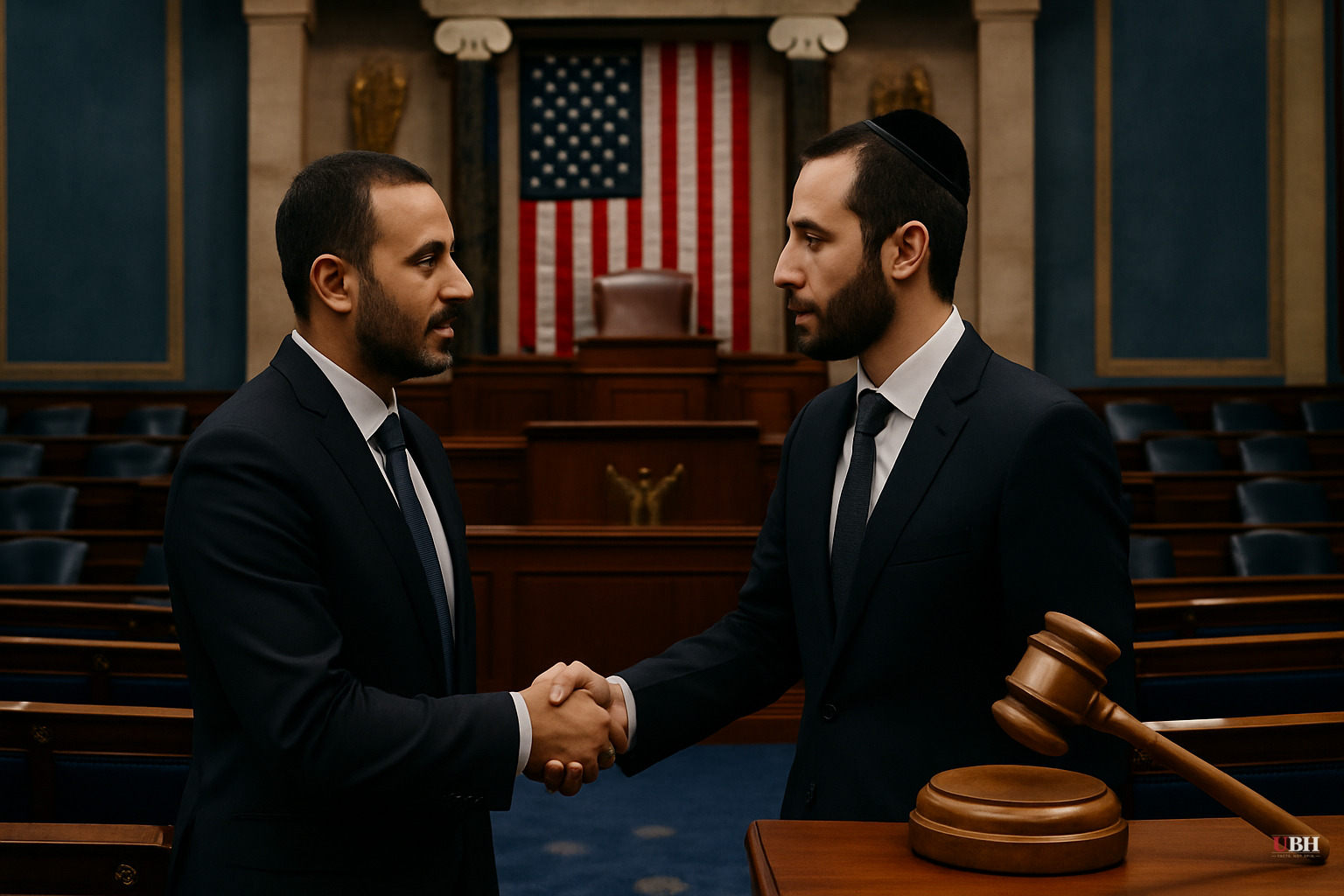
While politicians argue about cease-fires and diplomats shuffle papers, about 35 entrepreneurs are sitting in Boston pitching AI greenhouse pest detection software and other ventures to investors. Their teams are mixed — Palestinians, Israeli Arabs, and Israeli Jews working together under one roof.
The program is called 50:50 Startups. Co-founder Amir Grinsteen launched it seven years ago on the premise that economic interdependence builds bridges that political speeches never will. According to NPR reporting by Tovia Smith, this year's cohort is smaller than usual — the war made travel nearly impossible for many participants.
Real People, Real Stakes
Salah Hussein is 33 years old and from Nablus in the West Bank. When he was 11, Israeli soldiers woke his family in the middle of the night. He described it to NPR as deeply traumatizing — Israeli uniforms felt like a threat to him for years afterward.
Today, his business co-founder is an Israeli Jew.
His partner, Yana Shaulov, is a 37-year-old molecular biologist who grew up in a mixed neighborhood in Haifa. She joined 50:50 looking to launch her own idea and ended up on Hussein's team instead. Their venture uses AI and cameras to detect and prevent greenhouse pests.
Hussein told NPR: "If we are not the ones looking for change, who will be? I don't want my kids to be living in a world full of hatred."
Shaulov's take is equally direct: "It's not always easy, you can feel the tension sometimes, but Israelis and Palestinians are both here to stay, and we have to live together at the end of the day."
Another Story That Deserves Attention
Separate from 50:50, NPR also reported in April 2026 on Maoz Inon and Aziz Abu Sarah — an Israeli and a Palestinian who've co-written a book called The Future Is Peace: A Shared Journey Across the Holy Land.
Inon's parents, Bilha and Yakovi Inon, were killed at their home in Netiv HaAsara on October 7, 2023, when Hamas-led militants attacked. Over 1,100 people died that day.
Abu Sarah lost his brother years earlier — the boy died from injuries sustained in Israeli custody. Both men ran travel agencies. Both believed education and travel could bring people together. They first met over tea in Jerusalem a decade ago.
When October 7 happened, Abu Sarah reached out to Inon immediately. Inon told NPR: "I lost my parents on Oct. 7, but I won a brother."
What Mainstream Coverage Is Getting Wrong
Outlets on the left use stories like these to imply the conflict is basically a misunderstanding that more dialogue could fix — ignoring that Hamas fired rockets, killed over 1,100 people, and took hostages. That's a failure to account for documented violence.
Outlets on the right, meanwhile, often ignore stories like these entirely — because cooperation doesn't fit the narrative that the entire Palestinian population is irredeemably hostile to Israel. That omission is equally telling.
The fuller picture requires holding two things at once: Hamas is a terrorist organization that committed atrocities on October 7. Palestinian civilians in the West Bank are simultaneously building AI startups with Israeli partners. Both are factual.
90% of startups fail under normal conditions, according to NPR's reporting. These entrepreneurs are doing it while navigating a war zone, travel restrictions, economic siege, and decades of mutual trauma.
The Limits of Economic Cooperation
Economic cooperation is genuinely valuable. People who do business together have a direct financial stake in each other's survival.
50:50 Startups is not a peace plan. Thirty-five entrepreneurs in Boston cannot resolve a conflict involving millions of people, competing territorial claims, a Hamas government in Gaza that does not want coexistence, and regional powers using this conflict as a proxy battleground.
Inon and Abu Sarah's brotherhood is real and admirable. It is also two individuals. The gap between individual courage and political solution is vast.
Commerce requires security, rule of law, and functional institutions on both sides. You cannot build a startup ecosystem on rubble.
What This Means for Regular People
If you're tired of being told you have to pick a side and hate the other half of humanity, these stories offer an alternative.
Salah Hussein was traumatized by Israeli soldiers at age 11. He's now building a company with an Israeli partner. Maoz Inon lost both parents to Hamas. He calls a Palestinian man his brother.
These people didn't wait for permission to be human beings.
Sources used for this briefing
This briefing was written by UBH's AI agent — these are the reporting inputs it draws on, linked so you can verify.


