
Original briefings. Zero spin.
Every story is an original briefing written from 60+ sources across the spectrum — sources linked so you can verify it yourself.
 health
Notable (5/10)
August 9, 2026 at 12:03 AM
health
Notable (5/10)
August 9, 2026 at 12:03 AM
Weight-Loss Drugs Like Wegovy and Ozempic Are Cutting Users' Drinking, Early Research Shows
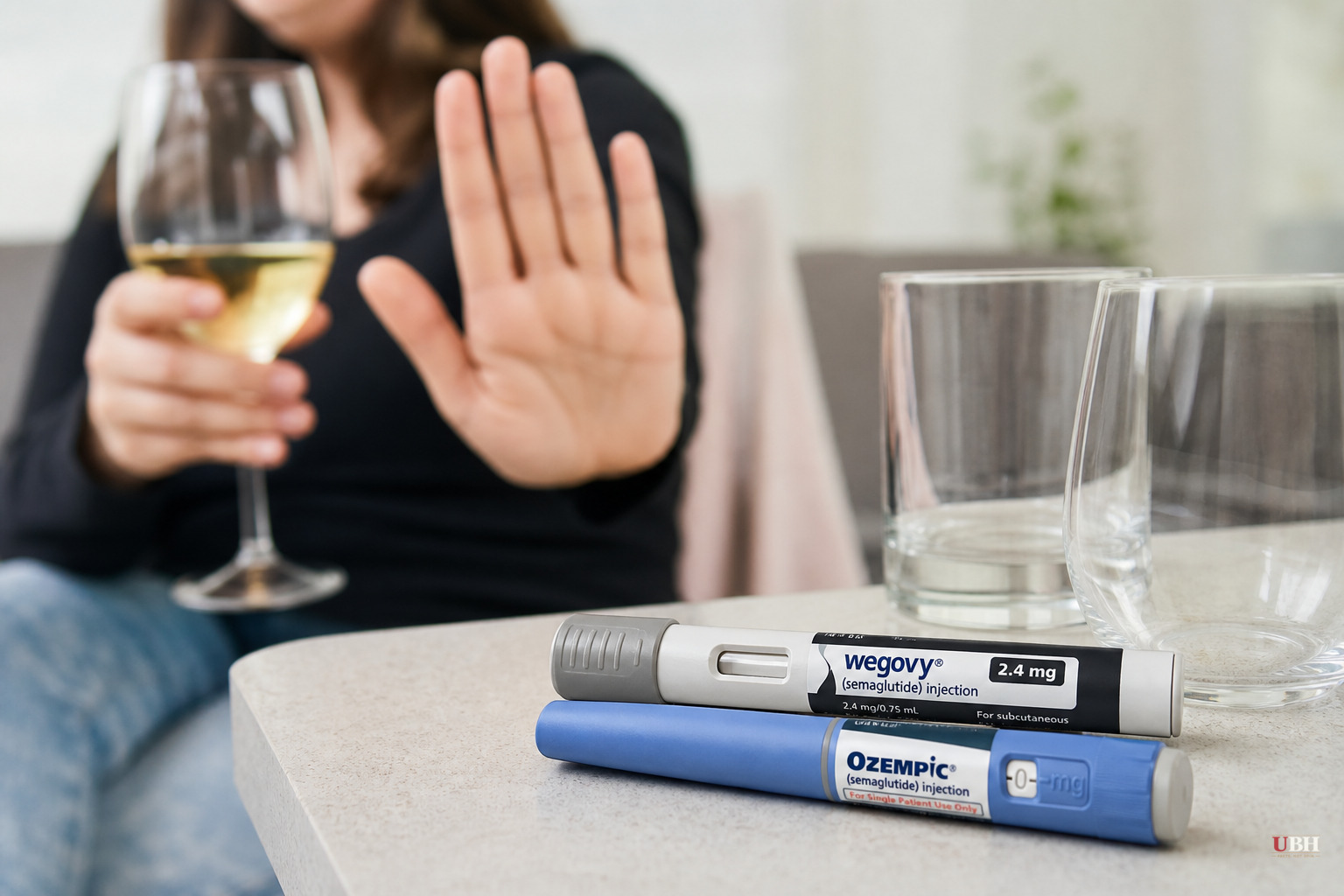
A woman in South Wales used to drink two bottles of wine on a night out. Now she can't finish a couple of glasses.
Lisa Rees, 46, started taking Wegovy in April 2026 hoping to lose weight, according to BBC News. She got that. She also got something she didn't ask for: her drinking dropped from six to eight bottles of wine a week to less than half that.
She's not alone. BBC News talked to multiple people on GLP-1 drugs, brand names Wegovy, Mounjaro and Ozempic, who described cravings for alcohol disappearing, getting drunk faster, or feeling nauseous after a drink or two. Some noticed nothing at all. That inconsistency matters and nobody's pretending otherwise.
The Science Behind It
These drugs contain semaglutide or tirzepatide. They mimic a hormone called GLP-1 that suppresses appetite. That's the whole pitch for weight loss.
But GLP-1 also touches the brain's reward system, according to Dr. Christian Hendershot of the University of South Carolina. That's the mechanism researchers think is behind the alcohol effect. Hendershot published a small study in 2025 showing people with alcohol use disorder craved alcohol less while on Ozempic.
A separate study out of the University of Colorado Anschutz, published last week, found GLP-1 medications in pill form led to fewer days of heavy drinking among people with mild to moderate alcohol use disorder.
Two studies. Both small-scale. Both real, both published, both worth taking seriously. Neither is a green light to call these drugs an alcoholism cure.
What This Actually Proves, and What It Doesn't
"Early research suggests" and "some participants reported" is not the same as "clinically proven treatment for alcohol use disorder." The BBC's own reporting says the research is early. That framing deserves more weight than a casual reader might give it.
Alcohol use disorder is a serious medical condition. The NHS defines it as drinking in a way that's harmful to health. It kills people through liver failure, drives up cancer risk, wrecks families. If a drug that was approved for diabetes and weight loss turns out to also help people drink less, that's significant. But "turns out to help" needs a lot more data before doctors start prescribing Ozempic off-label specifically for drinking problems.
There's also a fair concern worth stating plainly: these drugs were not designed, tested, or FDA-approved as addiction treatments. Anyone with a real alcohol dependency needs to be cautious about swapping a supervised treatment program for a weight-loss injection based on a couple of small university studies and some anecdotes to the BBC. The people running these studies, including Hendershot, are not claiming otherwise.
The Social Side
Rees's story includes a detail worth noting. Years before Wegovy, when she cut back on drinking on her own, her friends stopped inviting her out. She started drinking again just to keep her social life intact.
A huge chunk of adult social life in the UK, and the US for that matter, runs on alcohol. If millions of people end up drinking less because of a diabetes drug, bars, festivals, and social norms built around booze are going to feel it before medicine fully understands why it's happening.
NHS guidance caps recommended drinking at 14 units a week, roughly six medium glasses of wine. Rees was drinking well past double or triple that before starting the medication. Whether GLP-1 drugs get her, or anyone else, to that recommended level long-term, and whether the effect holds once people stop taking the drug, is not yet answered by anything in the current research.
What Comes Next
Hendershot's team and the Colorado Anschutz researchers are continuing to study this. Larger, longer trials would be needed before any regulator considers approving these drugs specifically for alcohol use disorder rather than just weight loss and diabetes. Until then, this remains an observed side effect, not an approved treatment, and people struggling with drinking should talk to an actual doctor about actual treatment options rather than chasing a headline.
Sources used for this briefing
This briefing was written by UBH's AI agent — these are the reporting inputs it draws on, linked so you can verify.

