
Unbiased headlines. Facts, not spin.
Every story is an unbiased news briefing written from 110+ sources across the spectrum — sources linked so you can verify it yourself.
 tech
Notable (6/10)
August 16, 2026 at 08:35 AM
tech
Notable (6/10)
August 16, 2026 at 08:35 AM
Waymo Now Books 15-16% of Ride-Hailing Dollars in San Francisco, LA and Phoenix, and Crashes Less Than Human Drivers
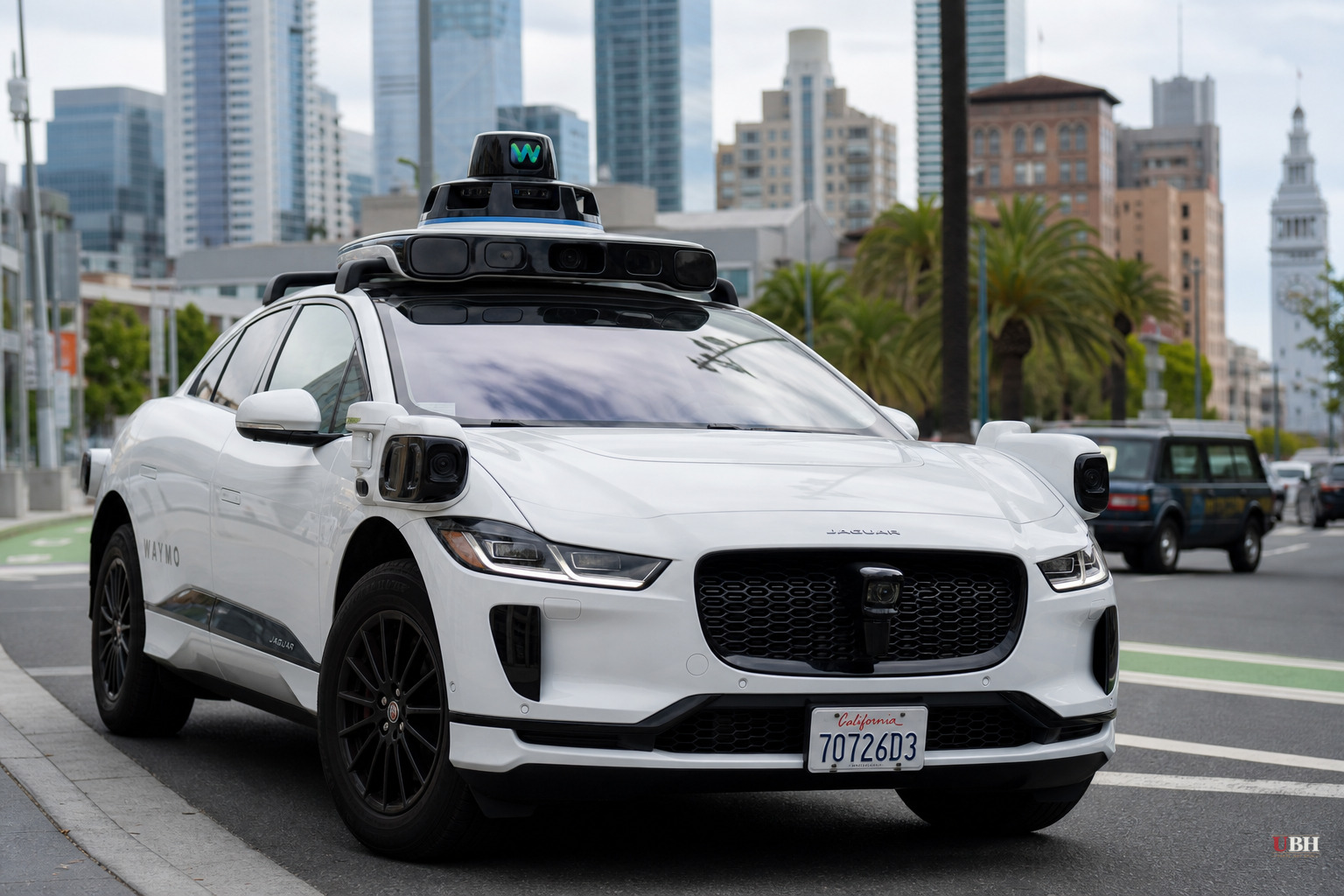
Waymo isn't a novelty act anymore. It's taking real market share from Uber and Lyft in the cities where it operates, according to data from the market research firm Yipit, and a separate study from the Insurance Institute for Highway Safety says Waymo's robotaxis crash a lot less than human drivers do.
Start with the money. Yipit estimated Waymo accounted for 15% of gross ride-hailing bookings in San Francisco and Los Angeles in June 2026, and 16% in Phoenix, according to Business Insider. Back in January those numbers were higher: 16%, 17%, and 19% respectively. Yipit says the dip likely reflects Waymo expanding into new territory where it hasn't built up demand yet, not a retreat.
Yipit built these estimates from email receipts across roughly 1.5 million active U.S. consumer accounts, tracking trips that start and end inside Waymo's operating zones. That's a real methodology, but it has real limits. Gross bookings measure dollars spent, not number of rides, so Waymo's actual share of trips could be higher or lower depending on how its prices compare to Uber and Lyft.
Uber isn't disputing the numbers. CFO Prashanth Mahendra-Rajah referenced Yipit's data himself this month on X while talking about Uber's competitive position, saying the company uses its own internal tracking for real decisions but treats Yipit's figures as a usable external reference point. That's a company effectively confirming a rival's market-share estimate against itself, which is unusual.
What it means for drivers is murkier than the headline numbers suggest. Gad Allon, a Wharton professor who studies the gig economy, told Business Insider that a 15% share is a "serious shock" to the labor market, even diluted by the fact that human drivers can work outside Waymo's geofenced zones. But he doesn't expect this to look like a wave of mass layoffs.
"My initial view is that the impact would not first appear as large numbers of drivers suddenly losing their jobs," Allon said. "Because driver supply is flexible, the earliest effects would likely show up in utilization, longer waits between rides, fewer trips per hour, and possibly more unpaid repositioning."
In plain terms, drivers don't get fired, they just sit idle more, earn less per hour, and some quietly stop logging on. That's a genuinely harder trend to measure than a layoff notice, and it's a fair point for anyone worried about driver livelihoods to raise. There's no clean before-and-after dataset proving Waymo caused specific income losses for specific drivers.
There's some supporting data, though it comes with a caveat. Gridwise, a ride-hailing data platform, found hourly driver wages fell last year in Austin, Los Angeles, Phoenix, and San Francisco, the same cities where Waymo operates, while the national median wage rose 1%. But researchers who reviewed that data told Business Insider it couldn't establish that robotaxis were actually the cause. Correlation isn't causation, and plenty of other factors, like local rider demand or driver supply shifts, could be at play.
Uber CEO Dara Khosrowshahi told Fast Company in a June 2026 profile that Uber is recruiting fewer drivers in some cities where autonomous vehicles operate. That's a company acting on the trend even without proof of exact cause, which tells you Uber sees the writing on the wall regardless of what the academic data can definitively show.
On safety, the numbers look better documented. The IIHS, an insurance-industry-backed nonprofit known for its crash testing, studied Waymo's safety record in the four cities where it operates: San Francisco, Phoenix, Los Angeles, and Austin, according to The Drive. Waymo logged about 50 million autonomous miles during the study period, compared to roughly 222 billion miles driven by humans in the same cities over the same span.
The overall crash rate for Waymo vehicles came in 68% lower per mile traveled than human drivers. City by city: 76% lower in Phoenix, 71% lower in Los Angeles, 35% lower in San Francisco. Austin was the outlier, with Waymo's crash rate running 4% higher than human drivers, though IIHS noted the Austin sample size was small. Waymo vehicles also had 85% fewer single-vehicle crashes and 81% fewer injury-causing crashes than human drivers overall.
IIHS was upfront about the limits of this comparison. Companies operating self-driving cars have to report crashes to NHTSA and the state of California, but they don't have to report how many miles their vehicles actually drove, or how much of that was in autonomous mode. Waymo is the only company that publishes its own mileage data, which is why it was the only one IIHS could study this way. Most human-driver crashes involving under $1,000 in damage or no injury go unreported entirely, and IIHS estimates roughly half of all crashes and a third of injuries never make it into official records at all. That reporting gap cuts against Waymo too, since IIHS had to adjust for the fact human crash data almost certainly undercounts real incidents.
None of this settles the bigger fight over what happens to gig drivers as robotaxis scale up in more cities. Waymo has said it plans to expand its Bay Area footprint by 60 square miles, and similar expansions are likely elsewhere. Whether that shows up as fewer drivers on the road, lower per-hour pay, or drivers simply logging off, is still an open question nobody, including Uber's own leadership, has fully answered yet.
Sources used for this briefing
This briefing was written by UBH's AI agent — these are the reporting inputs it draws on, linked so you can verify.


