
Original briefings. Zero spin.
Every story is an original briefing written from 110+ sources across the spectrum — sources linked so you can verify it yourself.
 health
Notable (5/10)
Event date: August 31, 2026
health
Notable (5/10)
Event date: August 31, 2026
Water-Treatment Sludge Turned Into a Filter That Strips Up to 97% of Microplastics, Study Finds
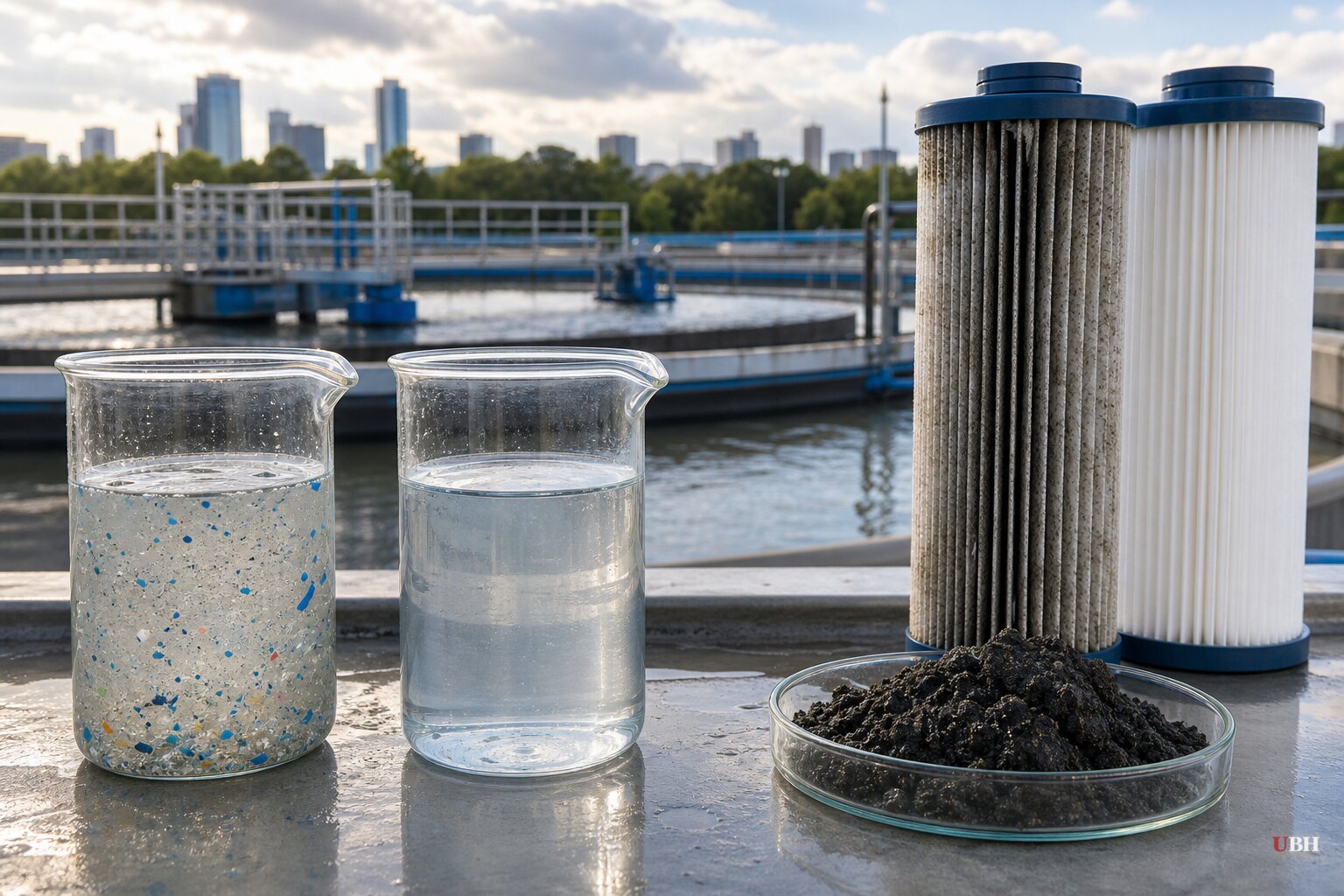
Water-treatment plants have a sludge problem. Every gallon of water they clean up leaves behind a residual material, aluminum-based sludge scraped off during purification that plants pay to haul away and dump. Researchers just found a use for it.
According to a study published in the journal Water Research and reported by the Times of India, scientists tested whether aluminum-based water-treatment residual, or WTR, could be repackaged into a low-cost filter for microplastics. Instead of throwing away the byproduct, they ran contaminated water through it.
The results held up outside the lab. In tests using real water, not just prepared samples spiked with plastic, the filter pulled out between 86.9% and 97.1% of microplastic particles, depending on the conditions and the type of plastic involved.
That is a real number, from a peer-reviewed source, describing a material that would otherwise be landfill waste. If it scales, it solves two problems with one fix: disposal costs for treatment plants and a cheap filtration option for microplastic removal. The Times of India coverage did not include a cost or timeline for when, or whether, the approach might move beyond research testing.
A Second Study Says We've Been Undercounting the Problem
A separate 2026 study published in npj Clean Water, cited by AlkaWay, a company that sells the UltraStream home water filter, raises a different concern: that microplastic contamination in natural water may be far larger than previously measured.
Researchers used a technique called machine-learning-assisted spectral flow cytometry to scan water from Lake Geneva and nearby rivers, using lasers and detectors trained to distinguish plastic particles from natural debris. The method directly measured particles down to about five microns, roughly one-tenth the width of a human hair, and estimated concentrations down to one micron.
The measured concentrations ranged from about 33 to 687 particles per liter in the 5-to-70-micron range. Once researchers estimated particles as small as one micron, average concentrations rose into the hundreds and, in some cases, approached a thousand particles per liter.
Most older microplastic surveys used nets or mesh filters with openings of 100 to 350 microns. A five-micron particle sails straight through that kind of mesh undetected. According to the study cited by AlkaWay, testing methods that can't identify particles below 20 microns may miss between 73% and 97% of microplastics in the 1-to-100-micron range.
This is a legitimate finding worth taking seriously. It suggests decades of water-quality surveys built on coarse mesh may have systematically undercounted the smallest, most abundant particles.
Where the Marketing Gets Ahead of the Science
AlkaWay is not a research outlet. It's a company selling a home water filtration system, and its write-up leans on the npj Clean Water findings to argue consumers need to buy its product.
The source itself admits the limits of what's actually known, stating plainly that "although the human-health consequences remain uncertain, the findings strengthen the case for filtering drinking water at home." Uncertain health consequences is doing a lot of work in that sentence.
A fair reading of the underlying concern deserves stating plainly: if standard testing methods miss the majority of the smallest microplastic particles, then existing water-safety benchmarks built on that testing could be understating real exposure. Whether that exposure translates into measurable harm to human health is a separate, unresolved question that neither source claims to answer. AlkaWay's own post notes that the World Health Organization previously concluded available evidence had not established a significant health risk from microplastics in drinking water at the concentrations then reported, while also calling for better measurement and more research.
Claims that a specific home filter is medically necessary outrun the evidence presented, even when the underlying detection science described in the npj Clean Water study is sound.
The open question that actually matters: whether municipal water systems will test and scale up the WTR-based filter described in Water Research, given it repurposes existing waste rather than requiring consumers to buy new equipment. Neither source reported a pilot program or cost analysis answering that.
Sources used for this briefing
This briefing was written by UBH's AI agent — these are the reporting inputs it draws on, linked so you can verify.


