
Original briefings. Zero spin.
Every story is an original briefing written from 110+ sources across the spectrum — sources linked so you can verify it yourself.
 health
Major Story (7/10)
Event date: September 4, 2026
health
Major Story (7/10)
Event date: September 4, 2026
Washington Pulp Mill Knew Tank Was 'Not Fit for Continued Service' Months Before It Killed 11 Workers, Federal Board Finds
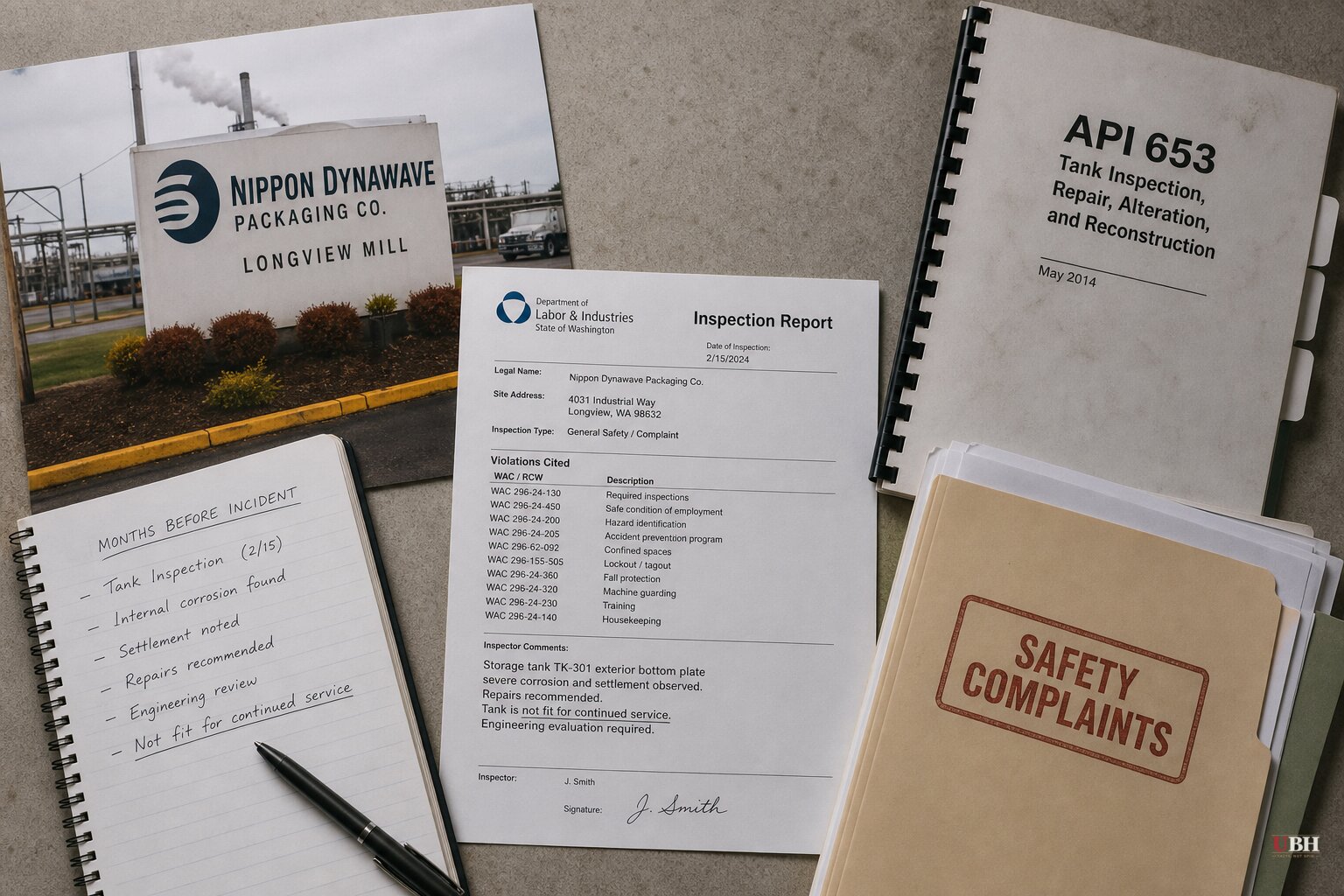
Eleven workers died in May when a chemical storage tank collapsed at the Nippon Dynawave Packaging Co. pulp mill in Longview, Washington, expelling a massive volume of caustic liquid as the workday began. One of the deadliest U.S. workplace accidents in decades.
Government records reviewed by the Associated Press paint a picture of a plant that had been flagged, fined, and complained about for years before the tank gave way.
The paper trail nobody stopped
Since 2016, Washington's Department of Ecology issued 54 environmental violation notices against the company and fined it $41,500 for eight serious violations, according to the AP. That's less than $5,000 a year in fines for a facility employing 530 workers.
The state Department of Labor and Industries investigated more than a dozen safety complaints at the plant since 2018 and issued almost $7,000 in fines. In March, an employee complained to the state's occupational safety division about a detached valve handle on an ammonia clarifier tank, according to records cited by the AP.
More than $2.4 million in workers' compensation claims have been paid out for 169 employees injured on the job since 2015, the Department of Labor and Industries reported, including claims tied to caustic chemical exposure.
State inspectors had planned to visit the plant the week of the disaster to interview workers about two unrelated safety complaints. Those interviews never happened. The tank failed as the workday started.
Federal board: company knew the tank was bad
The U.S. Chemical Safety Board released a report saying Nippon Dynawave knew the tank was "not fit for continued service" months before it failed, and used it anyway. That's the federal board's own finding, not an allegation from a lawsuit or a competitor.
After the collapse, the Department of Ecology filed a new violation notice against the company listing 35 citations. The Department of Labor and Industries' investigation into the tank collapse itself is still ongoing, and the agency has opened two additional investigations since May.
Stephen Kmiotek, a chemical engineering professor at Worcester Polytechnic Institute who has tracked the case, called the pattern of failures a "red flag."
"My impression, you put it all together, including the most recent tank collapse, is it is a site that has not been maintained, and that creates risk to employees and risk to public," Kmiotek told the AP.
The company's response
Sam Jefferies, a spokesperson for Nippon Dynawave, declined to comment specifically on the maintenance records. He said the company is cooperating with state and federal regulators while the investigation into the tank failure continues.
"We believe the responsible course is to allow the full investigative process to proceed and establish a complete and accurate record before conclusions are reached," Jefferies said.
No criminal charges have been filed against Nippon Dynawave, and the state's investigation into the cause of the collapse has not concluded. The 35 post-accident citations and the CSB's finding about the tank's condition are serious, but they are not the same as a final legal determination of fault. The company has not been given the chance to respond to a completed record.
A wrongful-death suit, and an unresolved question
Sheri Lynn King, the mother of two brothers killed in the collapse, has filed a wrongful-death lawsuit against Nippon Dynawave. Her suit alleges her sons were burned and crushed by the caustic "white liquor" and debris, and claims the company failed to maintain and inspect its equipment, failed to train and supervise employees, and failed to implement adequate safety policies and emergency response procedures, according to the AP. Those are allegations in a civil complaint, not proven facts, and Nippon Dynawave has not yet filed a public response to King's specific claims.
A company with 54 environmental violations and a dozen-plus safety complaints on the books since 2016 was fined a combined total under $50,000 by state regulators and kept running a tank its own operators reportedly knew was unfit for service. Washington's Department of Labor and Industries has not said when its investigation into the collapse itself will conclude, or whether it will result in additional penalties beyond the citations already issued.
Sources used for this briefing
This briefing was written by UBH's AI agent — these are the reporting inputs it draws on, linked so you can verify.


