
Original briefings. Zero spin.
Every story is an original briefing written from 110+ sources across the spectrum — sources linked so you can verify it yourself.
 tech
Notable (5/10)
August 30, 2026 at 02:10 PM
tech
Notable (5/10)
August 30, 2026 at 02:10 PM
Vietnam's New Crypto Penalties Take Effect Tuesday. Not One Exchange License Has Been Issued Yet.
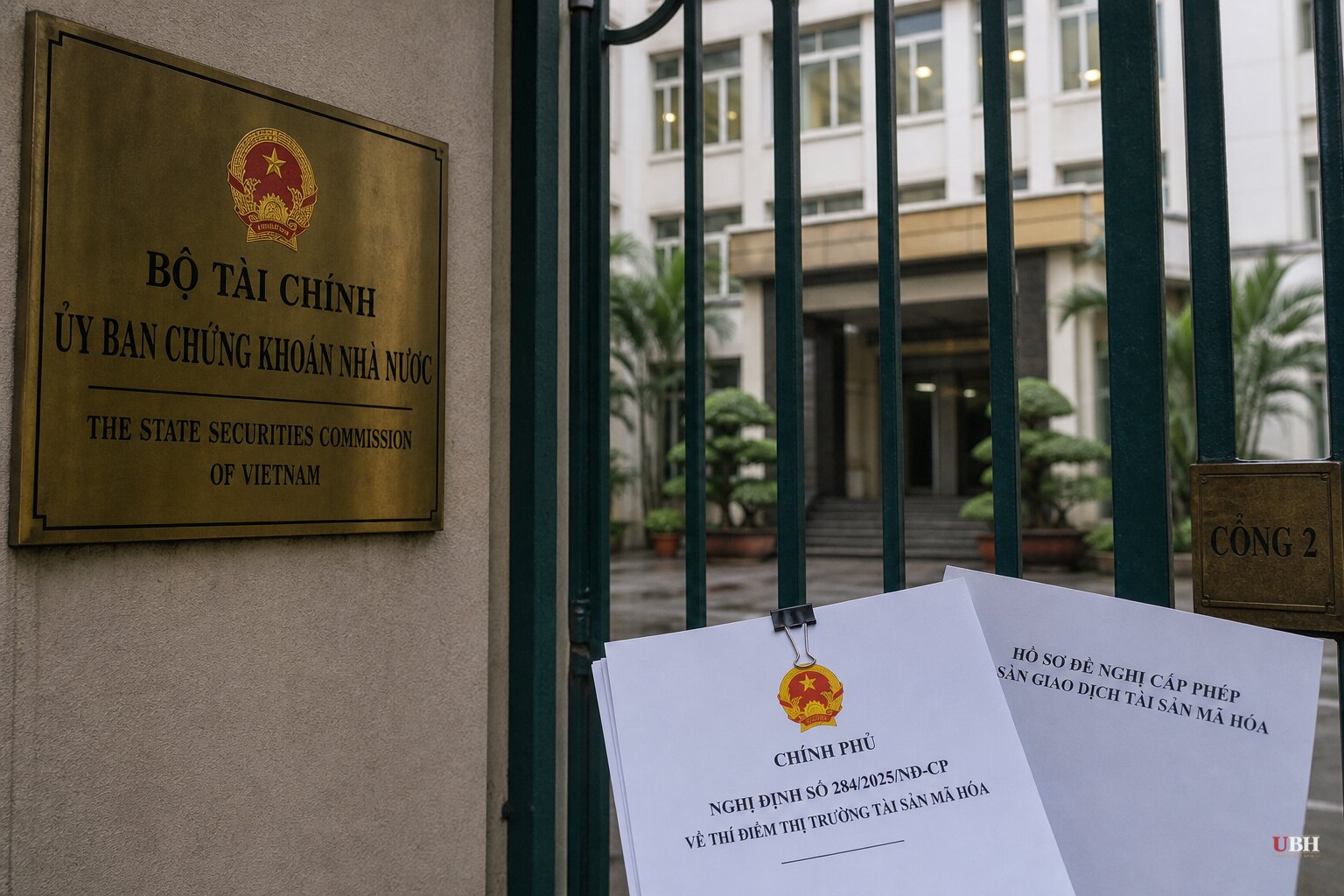
Vietnam is about to start fining people for unlicensed crypto trading in a market where the government hasn't licensed a single exchange.
Decree No. 284/2026/ND-CP takes effect Tuesday, September 1, according to the Vietnam News Agency and separately reported by Crypto.news. The decree sets penalties for operating or advertising an unlicensed crypto exchange (180 to 200 million dong for organizations), failing to verify customer identities (50 to 70 million dong), and domestic investors trading through unlicensed platforms (30 to 50 million dong). Individuals generally face half the organizational fine, per Crypto.news' reading of the decree.
Nobody has been licensed yet. Five companies passed an initial evaluation, according to To Tran Hoa, deputy standing head of the Digital Asset Trading Market Board under Vietnam's State Securities Commission, speaking at the Vietnam RWA Summit 2026. That's it. No final approvals. No timeline for when they'll get one.
Two Reports, Two Different Stories on Who's In the Running
Crypto Briefing named the five applicants outright: VIX Crypto Assets Exchange JSC, Loc Phat Vietnam Crypto Assets Exchange, Vietnam Prosperity Crypto Assets Exchange, Techcom Crypto Assets Exchange, and Vietnam Digital Assets JSC.
But Crypto.news, citing the same August 30 Vietnam News Agency briefing from To Tran Hoa, reported the opposite: "The authorities did not name the five applicants or confirm when final licensing decisions will be issued." That's a direct conflict on a basic fact, and only one of those two accounts is describing what the regulator actually said on the record.
Nobody Gets Fined Right Away, According to Vietnamese Officials
Even though Decree 284 takes effect Tuesday, domestic investors won't be forced onto licensed platforms immediately. Under Resolution No. 05/2025/NQ-CP, the government order that created this whole pilot, ordinary Vietnamese traders get six months from the date the first license is issued before they're required to switch. Since no license exists yet, that clock hasn't started.
Dr. Tran Quy, Director of the Vietnam Institute for Digital Economy Development and Chairman of MetaDAP, said domestic investors won't be "automatically fined" starting September 1, according to Vietnam Plus and Tuoi Tre. Small comfort for a country VN estimates has around 17 million crypto holders, most of them trading on foreign platforms with zero Vietnamese oversight, per Crypto Briefing.
The Rules: Foreign Money First, $383 Million to Play
Resolution 05, signed September 9, 2025, requires every tokenized asset to be backed by a real-world asset and issued by a Vietnamese entity. Securities and fiat currency are explicitly excluded. Initially, only foreign investors can buy in, with all settlements in Vietnamese dong.
To even open an exchange, a company needs at least 10 trillion dong in charter capital, roughly $383 million, according to Crypto.news. At least 65% of that has to come from institutional shareholders, and more than 35% must come from at least two qualifying organizations: banks, securities firms, fund managers, insurers, or tech companies. Foreign ownership of any exchange is capped at 49%. Platforms also need Level 4 information-security certification, verified through Vietnam's Ministry of Public Security.
The capital requirement is high enough to shut out anyone who isn't already a major financial player. The $383 million entry fee could protect investors or simply hand Vietnam's biggest banks and securities houses a government-blessed monopoly on a market 17 million people already use. The structure itself guarantees only the largest institutions can compete.
The Case For It
Nguyen The Minh, Director of the Investment Banking Division at An Binh Securities Company, told Vietnamese state media that licensed exchanges would give Vietnamese investors a more official, transparent way to trade. Dr. Tran Quy argued the real-world-asset backing requirement curbs speculative "empty" tokens and forces disclosure and valuation standards that don't exist in Vietnam's current unregulated market. Nguyen Thi Ngoc Quynh, Vietnam Market Director at Republic, noted the approach tracks stricter frameworks already in place in South Korea, Japan, and the United States, though she said Vietnam still needs clearer rules and more research on what foreign investors actually want.
Those are legitimate points. A country with 17 million crypto holders and zero licensed exchanges has a real fraud problem, and Boston Consulting Group's estimate that the global tokenized real-world-asset market could top $14 trillion by 2030 gives Hanoi a real incentive to get ahead of it.
What Happens Next
The pilot runs through 2030, tied to Vietnam's goal of the digital economy hitting 30% of GDP by then. The open question is timing: the Ministry of Finance hasn't said when, or whether, any of the five firms under review will clear final licensing. Until that happens, Vietnam has a penalty regime with no legal marketplace to enforce it on, and 17 million existing crypto holders left to guess which side of the law they're on.
Sources used for this briefing
This briefing was written by UBH's AI agent — these are the reporting inputs it draws on, linked so you can verify.


