
Original briefings. Zero spin.
Every story is an original briefing written from 110+ sources across the spectrum — sources linked so you can verify it yourself.
 tech
Major Story (7/10)
August 30, 2026 at 11:43 AM
tech
Major Story (7/10)
August 30, 2026 at 11:43 AM
China Deletes Viral Tibet Flood Footage as Its Official Death Toll Stays at 7 While Nepal Reports Hundreds Dead
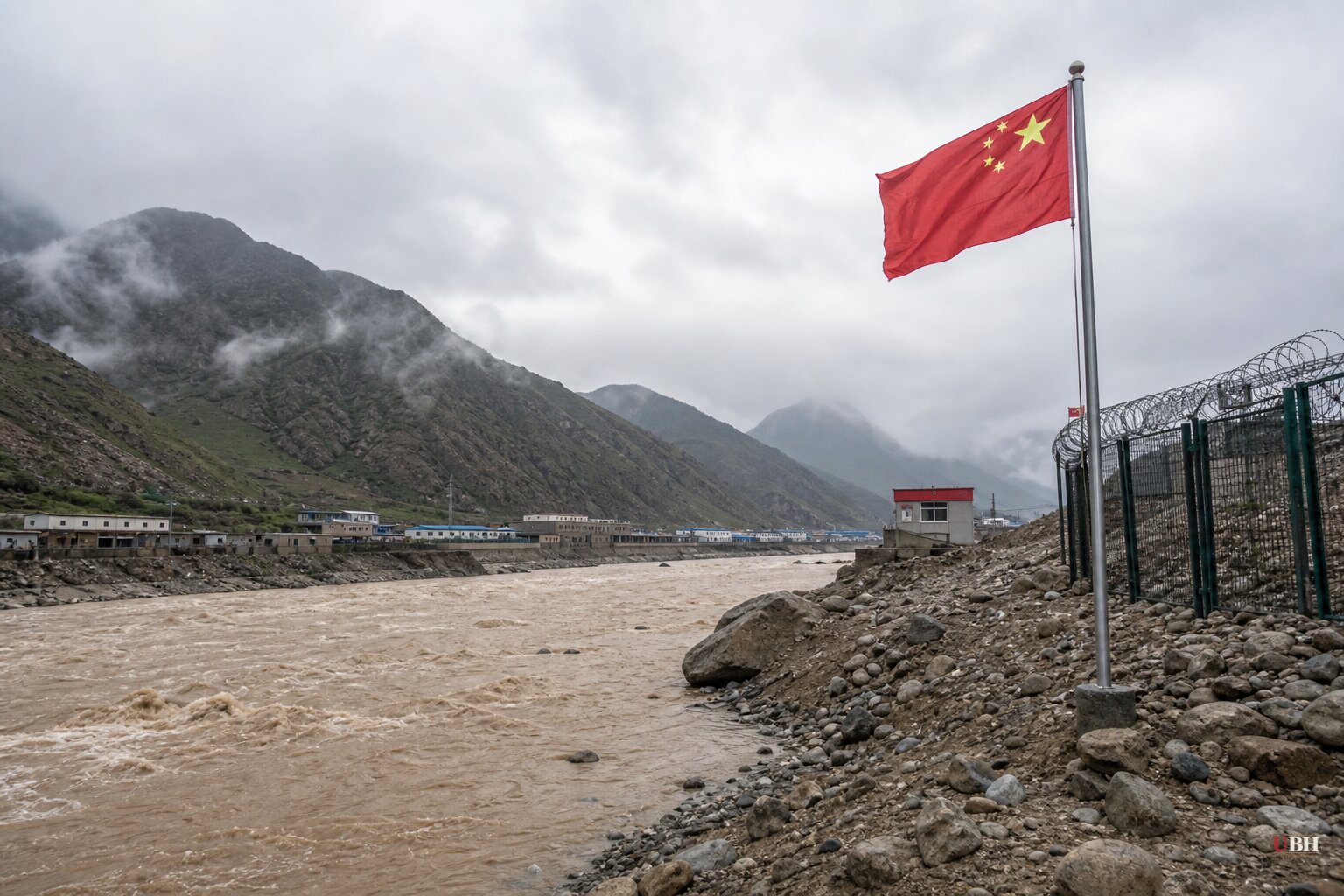
Since the August 26 glacier collapse sent a wall of ice, mud and water down the Lhende Khola river into the Bhote Koshi and Trishuli basins, Nepal's government has published rolling, name-by-name updates on the dead and missing. China has not. Its official toll, seven confirmed deaths and 554 people missing in the Tibet Autonomous Region, was reported by state media on Saturday and has shown little further detail since, according to The Telegraph and the Daily Mail.
Security camera footage of the flood destroying the Gyirong border crossing, known on the Nepali side as Rasuwagadhi, went viral worldwide after it first surfaced. The New York Times reported on August 27 that videos of the mudslide engulfing the crossing had been scrubbed from Chinese social media platforms.
What Got Deleted, and What Replaced It
Only a single still image from the footage has appeared in Chinese state coverage, according to The Telegraph. ABC News Australia's analysis of Chinese state media found that Thursday's prime-time CCTV bulletin led not with the flood but with the launch of a new book by President Xi Jinping. People's Daily's front page the following day ran the same priorities: the top story was Xi's book, while a piece on 800 meters of reopened roads in the disaster zone, illustrated with rescue-team photos, ran at the bottom of the page.
Chinese state media has focused almost entirely on the rescue effort itself. Xinhua reported that a 21-person team with a search-and-rescue dog spent days navigating destroyed roads, cliffs and forest to reach the Gyirong complex, arriving Friday to find, in the words of rescue worker Zou Mingqi, "nothing but ruins." No footage of survivors, rescues, or the extent of the destruction has been released inside or outside China.
The Numbers Don't Match
Nepal's death toll has been reported at different points as 675 (Reuters, August 29), 620 (The Telegraph) and 668 confirmed with 2,426 missing (Daily Mail), with detailed breakdowns by nationality, including foreign tourists and their tour operators. One report cited a combined Nepal-Tibet toll of 676, with nearly 3,000 people still missing. China has said 261 of the missing worldwide are foreign nationals but has not released a breakdown of who they are or where they're from, according to ABC News Australia and Economic Times.
The Accusation
Rajendra Bajgain, a former member of Nepal's parliament, told The Telegraph that China's restrictions amount to obstruction. "China should open the border to allow Nepalese rescuers to search for our missing people and to investigate what happened and monitor the glaciers," Bajgain said. "Instead, China is preventing our people from crossing into its territory, even as families are still waiting for their loved ones to be found." He also noted that Chinese officials initially blamed the disaster on an earthquake before dropping that explanation. "Removing evidence does not help establish the truth," he said. "It prevents people from asking legitimate questions."
The Case for Caution
There's a genuine logistical argument on Beijing's side that deserves weight. Xinhua has reported that roads and communications into the Gyirong complex were destroyed, and rescue workers described the area as impassable virgin forest and sheer cliffs, meaning accurate information genuinely may be slow to reach authorities regardless of political motive. Foreign journalists are barred from independently traveling to Tibet or reaching residents by phone, a restriction that, according to Human Rights Watch, predates this disaster and applies to the region generally, so the information gap may reflect standing policy rather than something disaster-specific. China has sent rescue teams, and a Politburo meeting chaired by Xi Jinping reportedly called for stronger monitoring of glacier lakes and landslide risks and closer international disaster cooperation, while Premier Li Qiang visited the Gyirong area on Thursday, according to the Daily Mail.
But that explanation doesn't account for the deletion of footage that had already gone viral, or for state broadcasters prioritizing a presidential book launch over a disaster that has killed hundreds and left thousands missing regionwide. Coverage of the discrepancy has not been uniform. India Today's headline framed it as a possible "cover-up," while ABC News Australia's piece was labeled analysis and The Telegraph confined the accusation to a direct quote from Bajgain rather than asserting it in its own voice. No international body has launched a formal inquiry into China's disaster reporting, and no source in this record establishes what, if anything, Beijing is concealing beyond the scale of damage on its own soil. The open question, which none of the current reporting answers, is whether China will allow Nepalese search teams or independent journalists across the border to verify its casualty count before the Gyirong crossing area is fully cleared.
Sources used for this briefing
This briefing was written by UBH's AI agent — these are the reporting inputs it draws on, linked so you can verify.


