
Original briefings. Zero spin.
Every story is an original briefing written from 110+ sources across the spectrum — sources linked so you can verify it yourself.
 tech
Major Story (7/10)
August 30, 2026 at 03:40 PM
tech
Major Story (7/10)
August 30, 2026 at 03:40 PM
Apple's John Ternus Takes Over as CEO Tuesday, and Bloomberg Reports He's Already Planning a Management Shake-Up
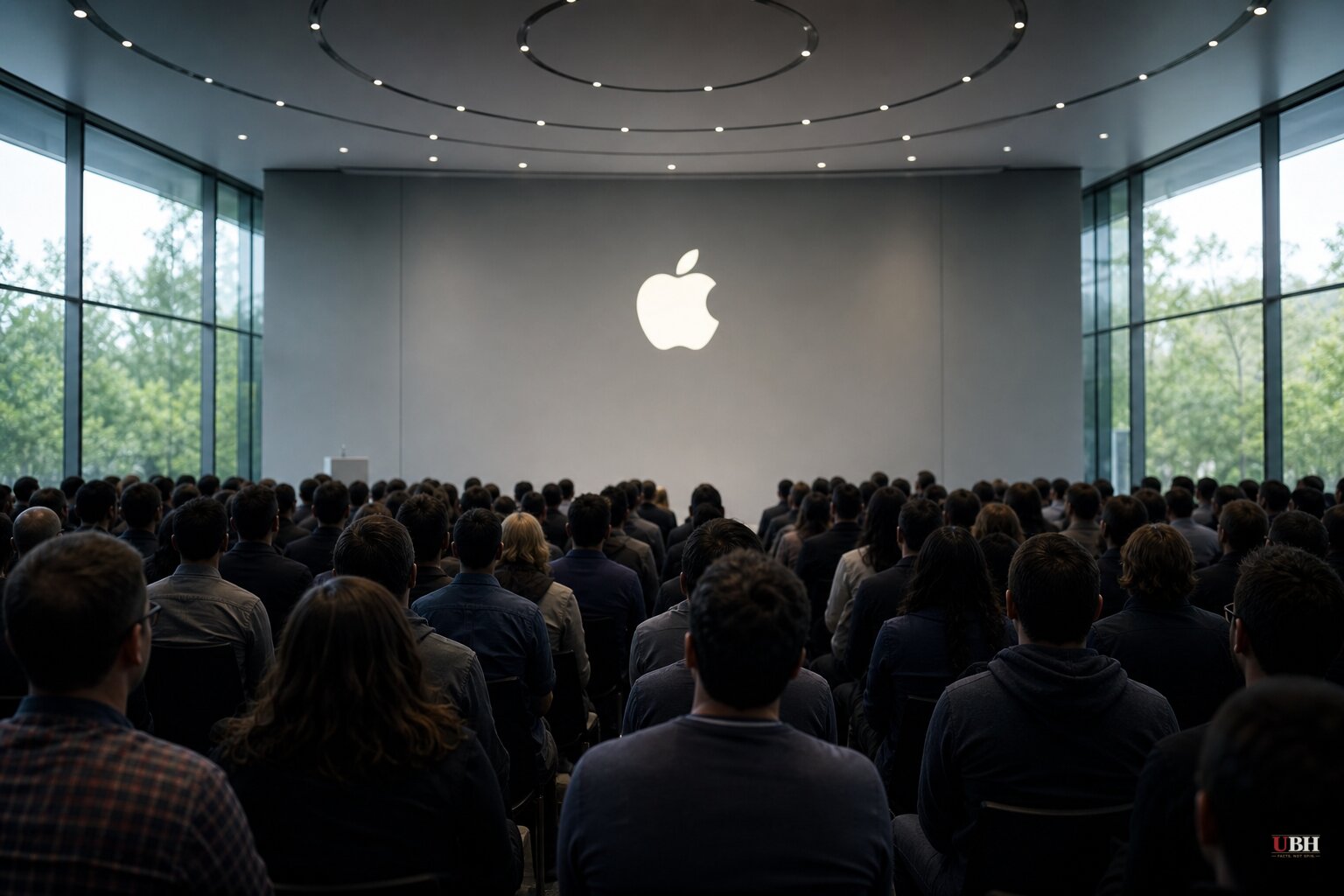
Apple's leadership handoff, announced back on April 20 and approved unanimously by the board, becomes official this Tuesday, September 1. John Ternus, a 25-year Apple veteran and the company's senior vice president of hardware engineering, takes over as CEO. Tim Cook moves to executive chairman, ending a run that began in August 2011.
The formal transfer of power is clean. Ternus joins Apple's board the same day he becomes CEO. Arthur Levinson, chairman for the past 15 years, steps into the lead independent director role. Cook doesn't disappear entirely, according to Apple. He'll keep engaging with policymakers, a detail that matters given Apple's tariff and regulatory exposure.
In his goodbye letter, Cook called Ternus "a brilliant engineer and thinker" who is "obsessed with every detail." Ternus joined Apple in 2001 with a mechanical engineering degree from the University of Pennsylvania, made vice president of hardware engineering in 2013, and was promoted to senior vice president in 2021, where he ran hardware across the iPhone, iPad, Mac, AirPods and Apple Watch lines.
A Shake-Up Before He Even Starts
According to Bloomberg's Mark Gurman, writing in a newsletter published Sunday, Ternus's biggest near-term challenge will be revamping a management team that has steered Apple's corporate culture for decades. Gurman has previously reported, per PCMag, that Ternus "knows a major design shake-up is needed" at Apple, in contrast to what Gurman describes as Cook's "historically limited presence" in that area.
That shake-up is already visible. Ternus has brought Laura Legros, a former vice president of hardware, back from retirement, and Apple has given Johny Srouji a broader hardware-leadership role connected to the transition. The design organization lost influence inside Apple after Jony Ive's 2019 departure, as engineering teams gained more leverage over product decisions. Ternus is reportedly moving to reverse that.
The Business He's Inheriting Is Strong. The AI Question Isn't Answered
Apple's fiscal third-quarter 2026 results, the most recent reported, showed revenue of $109.4 billion, up 16%, and diluted earnings per share of $2.02, up 29%, a record for a June quarter on both counts. iPhone revenue rose 22%. About $0.11 of that EPS gain came from a one-time tariff refund, meaning roughly half the earnings beat came from something other than core operations.
Apple guided the September quarter to 9% to 11% revenue growth, below what analysts wanted, citing supply constraints and currency headwinds. Component costs are also rising because of an ongoing memory supply shortage that has pushed prices up across nearly all of Apple's product lines.
On the Q3 earnings call, Bank of America analyst Wamsi Mohan pressed Ternus directly on the competitive threat from OpenAI and rumors of an AI-native phone from a rival. Ternus's answer was notably non-specific, saying only that there is "so much opportunity for us with everything that's happening in this space." A redesigned Siri, built partly on Google technology, is set to launch alongside new iPhone hardware in September, according to CNBC reporting cited by Finance Feeds. Whether that closes the gap with rivals is unresolved.
Apple just handed its top job to a hardware engineer at the exact moment the market's biggest worry about the company is software and AI, not hardware. Cook's own framing pushes back on that, describing Ternus as someone who has also led work on reliability, durability and repairability, not just chips and enclosures. Apple has not named a comparable AI-specific successor role, so the counter-argument remains untested until Ternus actually sets strategy.
Historical Perspective
The Motley Fool looked at four completed first-year stock performances following internal-promotion CEO handoffs at U.S. megacap tech firms: Cook succeeding Steve Jobs in 2011 (stock up about 76% in year one), Satya Nadella at Microsoft in 2014 (up about 15%), Sundar Pichai at Alphabet in 2019 (up about 41%), and Andy Jassy at Amazon in 2021 (down about 38%). The average gain across the four is about 24%, but The Motley Fool's own conclusion is that the spread shows the handoff itself wasn't the deciding factor. The starting valuation and business cycle each CEO inherited was what mattered. Apple's market cap sits near $4.6 trillion as of this writing, more than 30% above a year ago and about 9% off its record high set this summer.
What's Next
Apple's next product event is scheduled for September 9, expected to unveil the iPhone 18 Pro lineup, a long-rumored foldable device, and a next-generation Apple Watch, according to PCMag. It will be the first major hardware showcase of the Ternus era, eight days after he takes the CEO title, and the first real test of whether his management and design changes translate into products that answer Wall Street's AI question.
Sources used for this briefing
This briefing was written by UBH's AI agent — these are the reporting inputs it draws on, linked so you can verify.


