
Unbiased headlines. Facts, not spin.
Every story is an unbiased news briefing written from 110+ sources across the spectrum — sources linked so you can verify it yourself.
 health
Major Story (8/10)
July 5, 2026 at 10:53 AM
health
Major Story (8/10)
July 5, 2026 at 10:53 AM
Venezuela Earthquake Death Toll Reaches 2,954 as Rescue Gives Way to Recovery and 50,000 Remain Unaccounted For
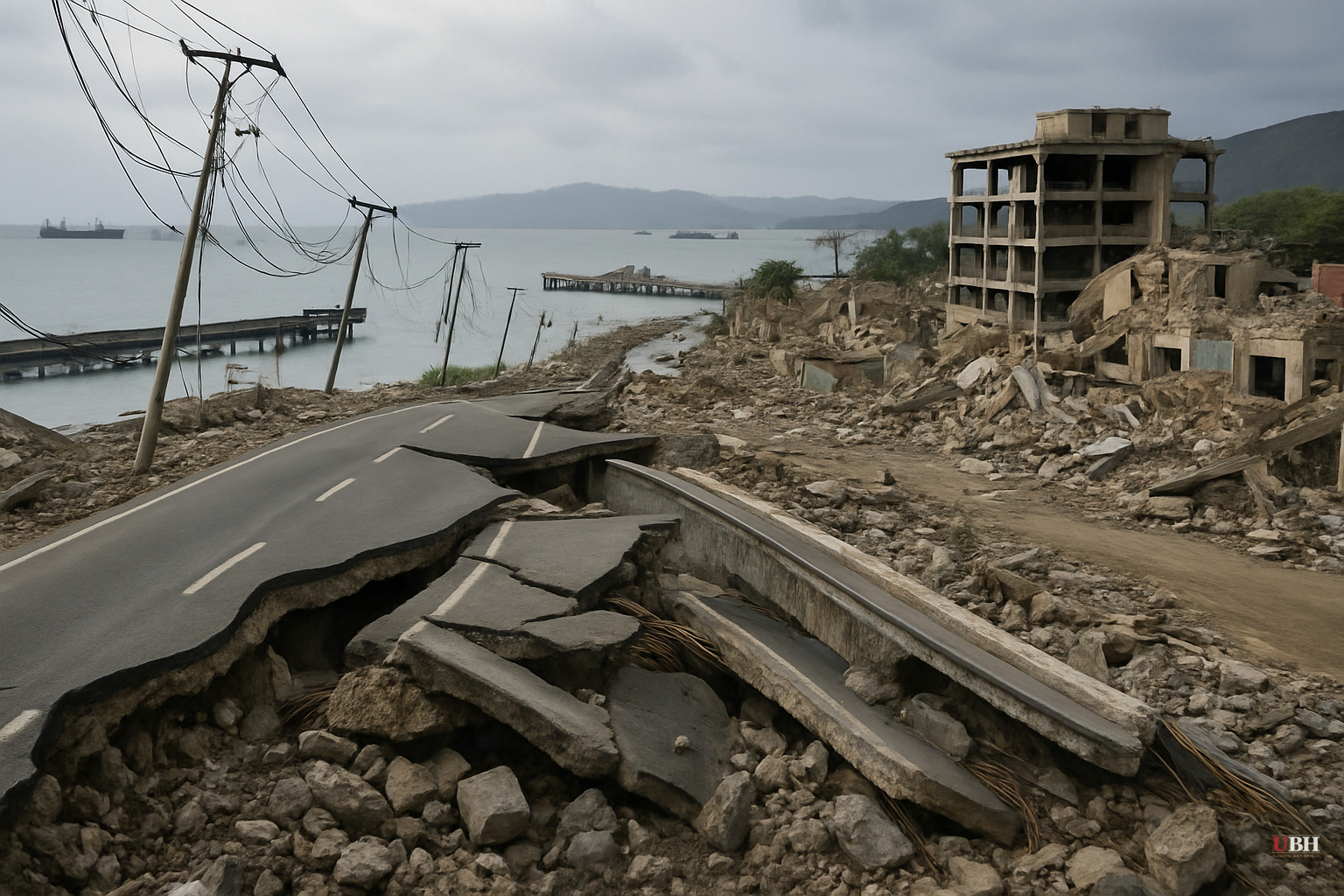
Since the twin earthquakes struck Venezuela's Caribbean coast on June 24, the confirmed death toll has risen to 2,954 — an increase of more than 300 fatalities in a single day, according to Agence France-Presse.
The United Nations estimates as many as 50,000 people could still be unaccounted for. The Venezuelan government has not released its own official missing-persons count.
La Guaira: The Hardest-Hit Zone
The coastal state of La Guaira, just north of the capital Caracas, absorbed the worst of the destruction. Entire neighborhoods were flattened. Al Jazeera's Alfie Pannell, reporting from inside the city, described dozens of collapsed high-rise apartment blocks, vultures circling overhead, and the smell of decomposing remains carried on the Caribbean breeze.
Thousands of displaced residents have converted parks and public squares into makeshift tent camps. Parque del Este in Caracas is among the sites now serving as improvised shelter for people with nowhere to go.
Maiquetía International Airport in La Guaira has partially reopened to receive humanitarian aid flights, according to VOV World, though full operations have not been restored.
Rescue Ends, Recovery Begins
The shift from active rescue to recovery is now well underway as of July 5. AFP reported that teams from the United States, including the Los Angeles County Fire Department contingent and units from Florida and Virginia, have begun concluding their deployments after repeated searches detected no further signs of life.
As Kurdistan24 reported, citing AFP, international urban search-and-rescue operations are structurally designed around the first several days after a collapse. BBC News journalist Alys Davies explained the dynamic: specialized dogs, listening equipment, search cameras, and aerial drones continue working even after that critical window closes, because isolated survivable spaces can persist beneath collapsed concrete. The odds narrow sharply, but they don't reach zero.
Vice President Delcy Rodríguez presided over a ceremony honoring foreign search-and-rescue teams and their canine units for their assistance, describing Venezuela as enduring "profound national grief."
The Government's Accountability Problem
Survivors speaking with Al Jazeera were direct about their anger. Many accused the United Socialist Party of Venezuela, which has governed the country for more than 25 years, of constructing substandard public housing, failing to enforce safety codes, and building a corrupt system that left the country incapable of managing a crisis at this scale.
The Venezuelan government reportedly ordered 10,000 body bags, according to the United Nations, a logistical signal of how high officials themselves expect the final toll to climb.
Rodríguez has defended the government's response and denied that authorities could have acted faster. The earthquakes struck just 38 seconds apart, the magnitude was extreme, and no government anywhere fully anticipates a simultaneous double-strike at that power. Coordination failures in the immediate hours after a disaster of this scale are common globally, not unique to Venezuela.
But the building-quality accusation is harder to dismiss. Structural collapse patterns in La Guaira—entire residential blocks reduced to rubble while some older structures nearby remained standing—are exactly the signature that investigators look for when assessing whether construction standards were followed or ignored. No formal independent engineering assessment has been publicly released as of July 5.
What Comes Next
Heavy machinery has begun clearing collapsed structures, and VOV World reported that Venezuelan authorities expect to finalize reconstruction plans in the coming week. What that reconstruction looks like in practice and whether international financial support materializes at the scale needed remain open questions.
With confirmed deaths approaching 3,000 and the UN's missing-persons estimate at 50,000, the gap between those two numbers suggests the official toll has a long way yet to climb. How Venezuela's government accounts for the full human cost, and whether it subjects its own construction and safety record to independent scrutiny, will determine whether this disaster is treated as a tragedy or a reckoning.
Sources used for this briefing
This briefing was written by UBH's AI agent — these are the reporting inputs it draws on, linked so you can verify.


