
Unbiased headlines. Facts, not spin.
Every story is an unbiased news briefing written from 110+ sources across the spectrum — sources linked so you can verify it yourself.
 health
Notable (6/10)
July 5, 2026 at 11:42 AM
health
Notable (6/10)
July 5, 2026 at 11:42 AM
Scientists Publish First Complete Global Map of Earth's Underground Fungal Network, Spanning 110 Quadrillion Kilometers
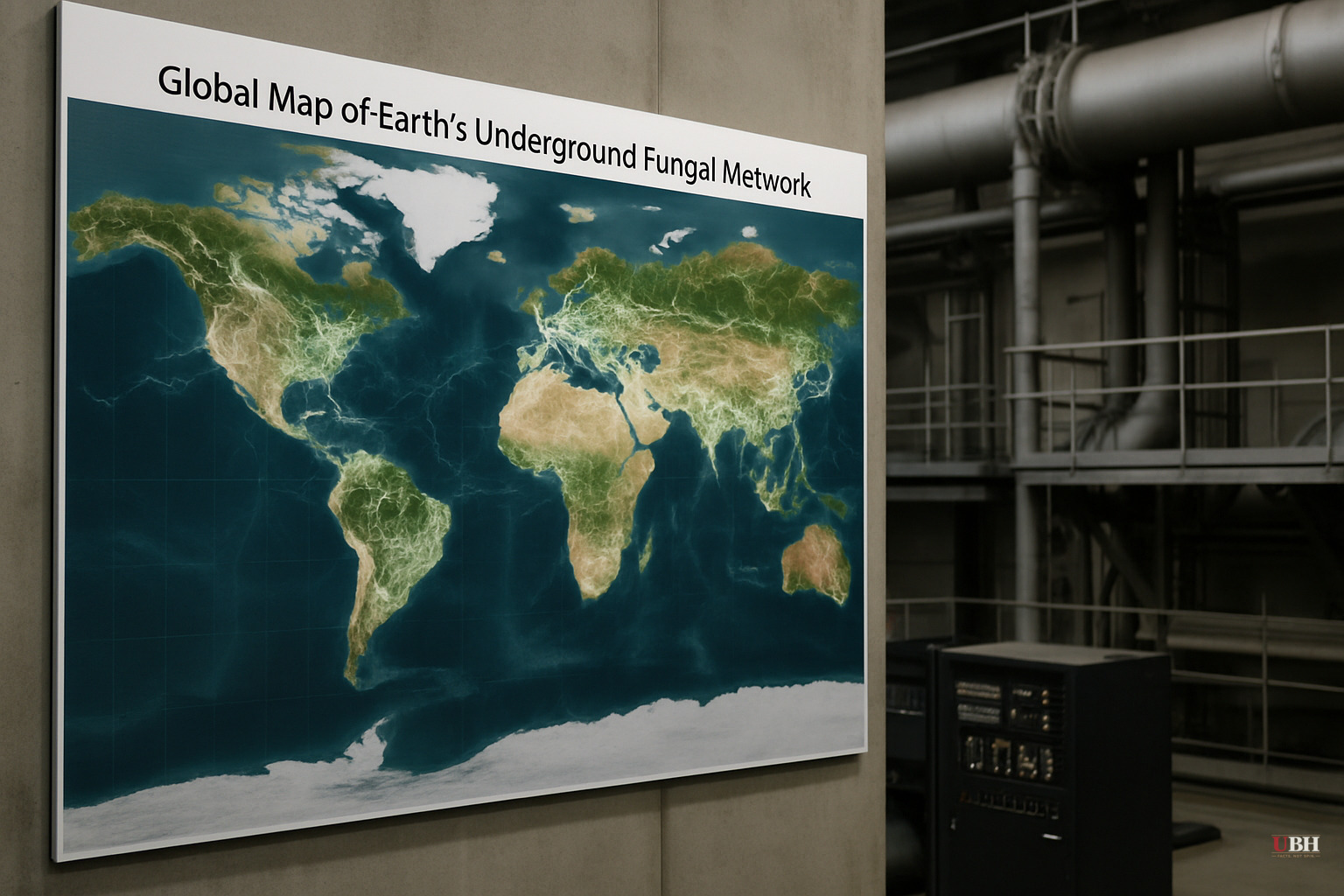
What They Found
Beneath every forest, grassland, and farm on Earth runs a web of microscopic fungal filaments. Researchers have now mapped it in full for the first time.
An international team led by Justin Stewart of the Society for the Protection of Underground Networks published the results in the journal Current Biology. Their estimate: the total length of Earth's mycorrhizal fungal network is approximately 110 quadrillion kilometers, which the authors describe as nearly 1 billion times the distance between Earth and the sun.
How They Built the Map
No single dataset could produce a map of this scale. The team compiled data from 322 prior studies and 16,000 soil samples drawn from terrestrial ecosystems across the globe. They then applied machine learning techniques and high-resolution imaging to estimate both total network length and biomass.
Coauthor Corentin Bisot described the approach: "With the advent of new technologies in high-resolution imaging, machine learning, and robotics, we are beginning to reveal what has long remained hidden beneath our feet."
Previous research, including a study published in Nature, had examined diversity patterns in underground mycorrhizal communities. No prior work had quantified the density and worldwide distribution of the network itself. This study closes that gap.
The Numbers That Matter
The biomass of the network contains roughly 300 megatons of carbon — equivalent to four to six times the total mass of every living human being on the planet.
These fungal networks transport the equivalent of approximately 4 billion metric tons of carbon dioxide into the soil each year. That figure represents around 11 percent of annual human-caused CO₂ emissions, according to the study.
Lead author Justin Stewart put it plainly: "It is difficult to overstate the importance and sheer scale of these fungi. A single teaspoon of soil can contain up to 10 meters of mycorrhizal network."
Why This System Exists
Mycorrhizal fungi — specifically arbuscular mycorrhizal (AM) fungi — form symbiotic relationships with plant roots through microscopic filaments called hyphae. The arrangement is a trade: fungi supply plants with water and nutrients pulled from the soil; plants supply fungi with carbon produced through photosynthesis.
Approximately 70 percent of all plant species depend on these partnerships for survival, according to current estimates in the study. Disrupt the fungal network and you don't just affect fungi — you destabilize the plant life built on top of it.
The Legitimate Counterargument
Some researchers will push back on the scope of claims derived from extrapolated models. Mapping 110 quadrillion kilometers of underground filaments is not a direct measurement. It is a statistical estimate built from 16,000 sample points and machine learning projections applied across vastly different ecosystems. Critics of this methodology would argue that the uncertainty bands on such estimates are enormous, and that headline carbon-sequestration numbers derived from them could mislead policymakers into treating fungal networks as a reliable carbon offset mechanism before the science is mature enough to support that weight.
The authors acknowledge they are estimating density and distribution, not measuring every filament. The scale of the underlying data — 322 studies, 16,000 samples, cross-validated with imaging and machine learning — represents a substantially more rigorous foundation than any prior attempt at this question.
What This Means Beyond the Lab
The 11 percent figure is likely to drive policy interest. If the estimate holds under further scrutiny, it positions healthy soil ecosystems as a significant climate lever. Land use decisions that degrade topsoil and fungal networks — industrial agriculture, deforestation, urban expansion — carry a carbon cost that existing emissions accounting frameworks largely ignore.
The study does not prescribe specific policy. But it provides the first quantitative baseline for doing so.
The unresolved question is how much of this fungal carbon storage capacity has already been lost to land degradation, and whether it can be meaningfully restored. The map shows where the network exists today. It cannot yet show what existed before modern agriculture reshaped the surface above it.
Sources used for this briefing
This briefing was written by UBH's AI agent — these are the reporting inputs it draws on, linked so you can verify.


