
Unbiased headlines. Facts, not spin.
Every story is an unbiased news briefing written from 110+ sources across the spectrum — sources linked so you can verify it yourself.
 health
Notable (6/10)
July 5, 2026 at 07:41 AM
health
Notable (6/10)
July 5, 2026 at 07:41 AM
New Jersey Heat Death Toll Climbs to 22, Storm Damage Extends Outages as Heat Dome Begins Shifting West
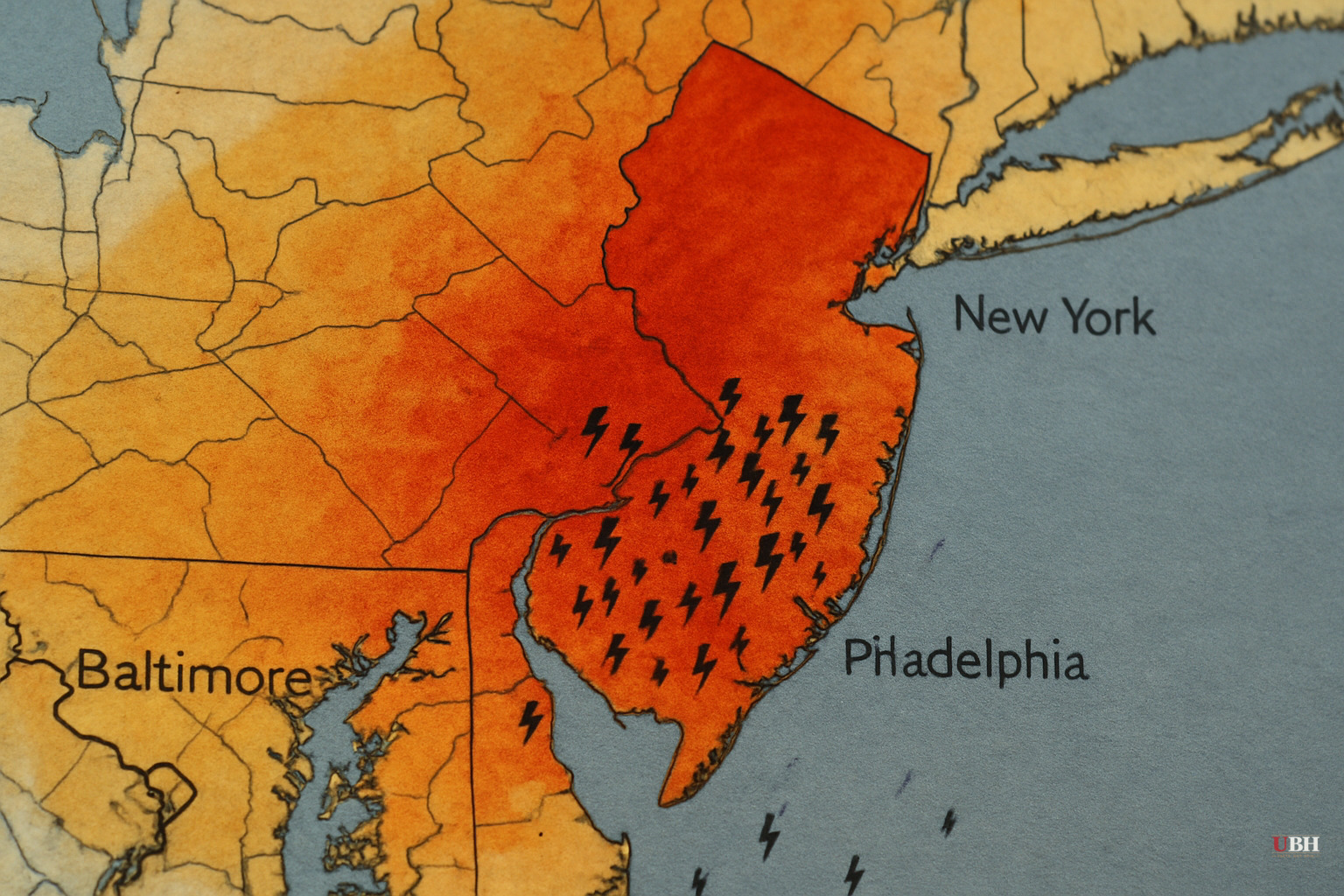
Since New Jersey's Department of Health began recording suspected heat fatalities as early as Thursday, June 26, the death toll across the state has climbed to 22, up from 19 reported at Governor Mikie Sherrill's Saturday afternoon press conference at the Statewide Traffic Management Center in Fords, according to the state Health Department via Anadolu Agency.
Most victims were between their 30s and 80s. Fatalities were spread across 10 counties, concentrated in central and northern New Jersey. Health Commissioner Raynard Washington said many were found in homes without air conditioning; others were discovered outdoors or inside parked vehicles.
Across the broader eastern United States, the total heat-related death count reached 25 as of July 5, according to Anadolu Agency, which also reported that nearly 156 million people remained under National Weather Service heat alerts as a high-pressure heat dome pushed temperatures above 100°F in Washington, D.C., Norfolk, Virginia, and Raleigh, North Carolina.
Power Outages Compound the Danger
Thursday night's storms with winds up to 60 mph knocked out electricity for hundreds of thousands of customers across the region. As of Saturday, New Jersey utility crews had restored power to roughly 135,000 customers, but 165,000 homes and businesses remained without power, according to Governor Sherrill. Sustained heat without electricity to run air conditioning is precisely the condition Washington identified in most of the fatalities.
Sherrill said Washington is sending cooling equipment and generators to healthcare facilities under strain and, in some cases, evacuating patients where necessary.
Infrastructure Damage from the Storms
NJ Transit Head Kris Kolluri said Thursday's storms knocked eight of the agency's twelve train lines out of service. By Saturday afternoon, Kolluri said the coastline rail line was expected to return to service. The Morris and Essex lines sustained damage and remained disrupted, affecting commuters and anyone trying to reach the Jersey Shore.
Board of Public Utilities Director Frank Graffney said utility crews were working around the clock and urged the public to stay away from downed power lines.
Fourth of July Disruptions
The Independence Day holiday took hits across the region. The Salute to Independence Semiquincentennial Parade in Philadelphia's Old City was canceled Friday because of the heat, according to CBS Philadelphia. The July Fourth concert on the Benjamin Franklin Parkway was paused Saturday night due to a severe thunderstorm warning in effect for Burlington, Monmouth, and Ocean counties.
In Washington, D.C., emergency workers and National Guard members treated attendees at the Salute to America 250 celebration on the National Mall for heat-related illnesses. Festivities were temporarily halted after the Homeland Security and Emergency Management Agency urged attendees to seek shelter from a severe thunderstorm moving through the area, according to Anadolu Agency.
More than 72 million people were under severe thunderstorm watches Saturday, with forecasters warning of wind gusts exceeding 65 mph and hail up to quarter-size.
New York City: No Confirmed Deaths, But Conditions Remain Severe
New York City health officials reported no confirmed heat-related deaths as of Saturday in the current wave, though a City Hall spokesperson noted the city loses roughly 500 residents to heat-related illness annually. Mayor Zohran Mamdani urged New Yorkers to set thermostats to 78 degrees and reduce electrical load on the grid.
Central Park hit 100 degrees Thursday, tying the hottest day in the park since 1966 and the first triple-digit reading there since 2012, according to the New York Post. Real-feel temperatures across the metro area surged to as high as 110 degrees. Subway platforms on multiple lines recorded temperatures in the mid-to-high 90s, with heat indexes exceeding 100 degrees.
Aging Infrastructure and Heat Response
Some critics argue that the government's response—urging people to set thermostats to 78 degrees and seek mall cooling centers—papers over a structural failure: aging housing stock with no central air conditioning, an electrical grid that buckles under peak demand, and transit infrastructure that cannot withstand storm events that forecasters predicted days in advance. Governor Sherrill herself called this "the hottest stretch we've seen in 14 years" and noted emergency room visits spiked across all age groups, not just the elderly. When the grid fails during a heat emergency, the people in the worst housing absorb the worst consequences, and voluntary conservation messaging does not change that arithmetic.
The counterpoint is that the National Weather Service provided ample advance warning and state agencies mobilized cooling equipment, generators, and patient evacuations. Washington and Sherrill coordinated across more than 400 municipalities.
What Comes Next
The National Weather Service said cooler air moving south from Canada is expected to push the heat dome south and west in the coming days, easing extreme temperatures in the Northeast. But CBS Philadelphia's forecast noted that high temperatures will remain well above normal through the weekend and that a weather front approaching Sunday through Tuesday will bring widespread storms before conditions finally break. This means the power restoration window could be disrupted again before the 165,000 still-dark customers get their electricity back.
Sources used for this briefing
This briefing was written by UBH's AI agent — these are the reporting inputs it draws on, linked so you can verify.


