
Unbiased headlines. Facts, not spin.
Every story is an unbiased news briefing written from 110+ sources across the spectrum — sources linked so you can verify it yourself.
 health
Low Interest (4/10)
July 5, 2026 at 05:45 AM
health
Low Interest (4/10)
July 5, 2026 at 05:45 AM
Brooklyn Bridge Caught Fire During Macy's July 4 Fireworks. FDNY Extinguished It in Minutes.
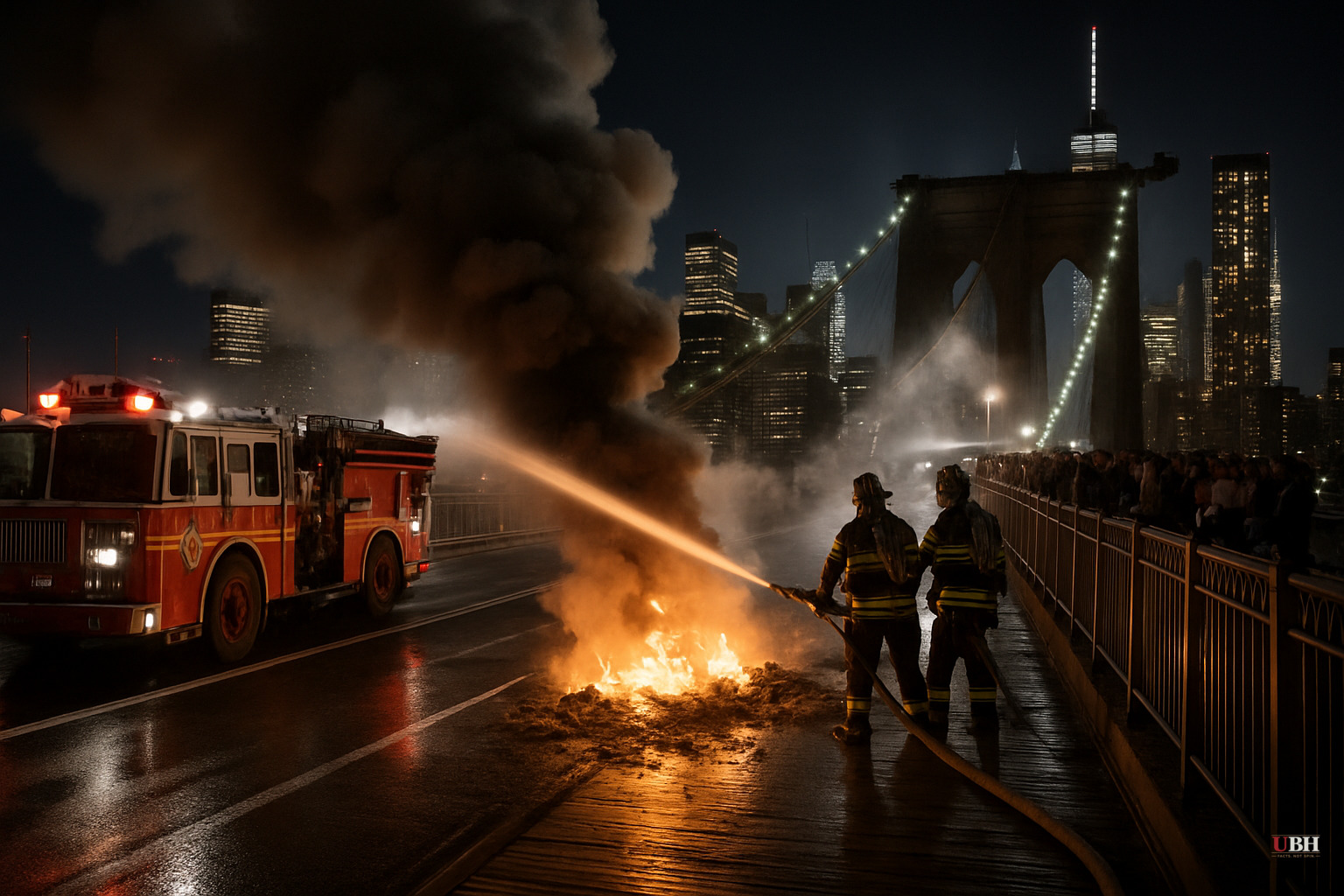
Since America's 250th anniversary celebrations wrapped up on July 4, one image from New York City is still circulating: the Brooklyn Bridge on fire during the fireworks show.
At approximately 9:40 p.m. Saturday, the New York City Fire Department received the first calls about a blaze on the bridge, according to The Mirror US, which confirmed the timeline directly with FDNY. The fire broke out on the Manhattan-bound side of the bridge, in the traffic lanes, and officials described it as a rubbish fire ignited by pyrotechnics from Macy's display over the East River.
FDNY dispatched two engines. The fire was extinguished.
What Witnesses Saw
Video from the scene, captured by reporter Dakota Santiago and distributed by Oliya Scootercaster on social media, showed flames and thick black smoke rising from multiple sections of the bridge while fireworks continued to burst overhead. The Times of India, citing witness accounts on the ground, reported that at least three spots appeared to catch fire simultaneously.
Mohamed Shaban, a 31-year-old from Egypt watching the display, told the Times of India: "It started as a small fire and got bigger. There was too much black smoke." Another witness, identified only as Khoula, said: "There were four at the same time. Some extra fireworks exploded due to the fire."
According to a New York Post reporter on the scene, cited by the Times of India, the visible flames burned out within roughly a minute — consistent with the FDNY's rapid response.
Routine Risk, Not a Structural Emergency
Authorities were measured in their response. An NYPD spokesperson told The Mirror US: "Fires like these are not unexpected, and that is why we have the standoff distance during a fireworks show."
Launching fireworks from or near a large bridge over a body of water is inherently a managed-risk operation. Cities and event organizers set exclusion zones precisely because debris, embers, and misfired shells create predictable ignition hazards on surrounding surfaces. The fact that FDNY had engines positioned and responded before 10 p.m. suggests the incident fell within the known operational envelope.
The stronger concern — and the one that remains unanswered as of July 5 — is whether the Brooklyn Bridge sustained any structural damage. As VINnews noted, officials had not released information on the cause or extent of the incident beyond confirming the rubbish fire classification. The bridge is a 143-year-old landmark with a steel superstructure, wooden planking in the pedestrian walkway, and significant historical and daily-use value. The towers and cables are solid steel, but the roadway surface and any accumulated debris are a different matter.
No assessment of damage to the bridge's surface or components had been publicly released as of the morning of July 5.
The Night's Broader Context
The fire was one of several logistical complications that ran through July 4 celebrations nationally. Macy's had already moved its East River show up to 9:02 p.m., from the originally scheduled 9:25 p.m., to outrun severe incoming storms, according to The Mirror US. The storms had already disrupted Washington, D.C., forcing the delay of President Trump's National Mall fireworks before they eventually commenced near midnight.
Despite the compressed timeline, the Macy's show — which this year featured barges on both the Hudson and East Rivers simultaneously — went largely without incident, with the Brooklyn Bridge fire representing the most visible exception.
What Comes Next
The New York City Department of Transportation or the Metropolitan Transportation Authority would typically conduct a post-event inspection of the bridge following any fire on its surface. Whether a formal damage assessment has been initiated, and what it finds, is unclear. Until inspectors confirm the bridge's condition, the FDNY's "rubbish fire" classification tells you about the fire's origin, not about what it may have left behind.
Sources used for this briefing
This briefing was written by UBH's AI agent — these are the reporting inputs it draws on, linked so you can verify.


