
Unbiased headlines. Facts, not spin.
Every story is an unbiased news briefing written from 110+ sources across the spectrum — sources linked so you can verify it yourself.
 politics
Notable (6/10)
August 13, 2026 at 12:06 AM
politics
Notable (6/10)
August 13, 2026 at 12:06 AM
Venezuela and Israel Restore Consular Ties After 17 Years, Break Signals Post-Maduro Realignment
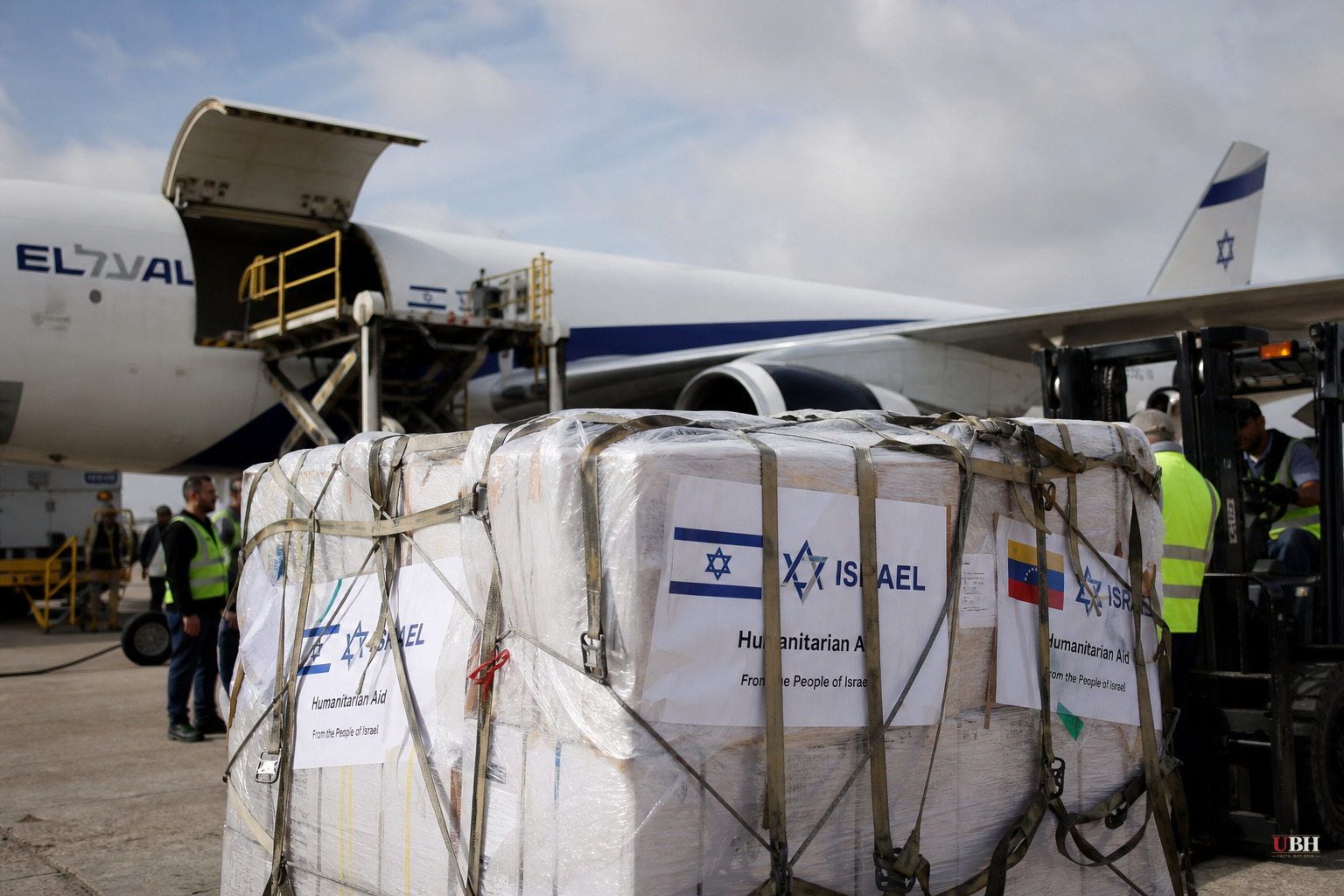
Venezuela and Israel announced Tuesday, August 11, that they have agreed to restore consular relations, ending a diplomatic freeze that stretched back 17 years. Israel's Foreign Ministry said the deal followed talks between Foreign Minister Gideon Saar and Venezuelan Foreign Minister Felix Plasencia, establishing what both sides called a coordination mechanism to provide consular services to citizens of both countries.
Venezuela, alongside Bolivia, severed diplomatic ties with Israel in January 2009 under Hugo Chavez, days after Israel launched Operation Cast Lead in Gaza. Chavez accused Israel of carrying out what he called a holocaust in Gaza. Around that time, a group broke into the Tiferet Israel synagogue in Caracas, vandalizing it and leaving antisemitic graffiti, according to Breitbart. Chavez had spent years before that courting Iran, hosting then-President Mahmoud Ahmadinejad in Caracas in 2006, and his successor Maduro deepened those ties along with relationships with the Palestinian Authority.
The immediate catalyst for Tuesday's announcement was humanitarian, not political, according to all five sources. Twin earthquakes struck Venezuela on June 24, killing more than 6,300 people according to Breitbart, with the Middle East Eye and SCMP both citing a similar death toll above 6,000. Israel sent an aid and disaster-response delegation in June, and according to the Jerusalem Post, that delegation has since helped tens of thousands of Venezuelans return to their homes.
Dr. Miguel Truzman, national coordinator of the Confederation of Jewish Associations of Venezuela, said in a statement carried by the Jerusalem Post that the earthquake response opened the door. "After 17 years without consular relations, Venezuela and Israel are advancing in a confidence-building process," Truzman said, adding that "in the near future, diplomatic relations between both nations will be fully restored." A Caracas resident identified only as A. told Israeli outlet Walla, as reported by the Jerusalem Post, that the move "provides much-needed relief for families and citizens by facilitating procedures and administrative matters."
The larger political backdrop is unavoidable. The United States removed Maduro from power in a January military operation. ZeroHedge and Middle East Eye both describe this as orchestrated by Washington, with Trump having publicly claimed credit for running Venezuela's affairs afterward. Interim President Delcy Rodriguez, Maduro's former vice president, now leads a government that ZeroHedge describes as still built on the same Chavismo socialist framework but now aligned with U.S. interests on oil access and foreign policy.
That realignment shows up elsewhere too. Middle East Eye reported that Bloomberg found Venezuelan oil shipped to Israel for the first time in decades back in February, a claim Venezuela's information ministry denied at the time. The consular announcement landed the same day Colombia recognized Israeli sovereignty over the Golan Heights, territory that international law generally treats as part of Syria, according to Middle East Eye. Colombia's new president, Abelardo de la Espriella, has said he plans to normalize relations with Israel and open an embassy in Jerusalem. Honduras also returned its ambassador to Israel last week under President Nasry Asfura Zablah.
Breitbart and ZeroHedge present the story as a geopolitical defeat for Iran, with Breitbart's headline calling it a "Big Loss for Iran" given Venezuela's decades-long alliance with Tehran. Middle East Eye frames it differently, tying the move to what it calls "Israel's genocide in Gaza," citing a figure of over 73,000 Palestinians killed, and casting the broader Latin American pivot toward Israel as happening "in spite of" that conflict rather than separate from it. Neither framing is neutral. Breitbart and ZeroHedge treat the shift as validation of the U.S. removal of Maduro. Middle East Eye treats it as morally troubling given the war in Gaza. The underlying facts—restoration of consular ties, the earthquake aid, the timing tied to Maduro's ouster—are consistent across all five sources.
Consular relations are not the same as full diplomatic relations. The joint statements describe a coordination mechanism for consular services, not an exchange of ambassadors or reopened embassies. Truzman's own statement acknowledges this is a first step, with full diplomatic normalization described as a future goal rather than an accomplished fact.
What happens next depends on how far Rodriguez's government is willing to go. Venezuela has not indicated a timeline for restoring full diplomatic relations, and the U.S. relationship with Caracas remains defined by military occupation and political pressure from the Trump administration rather than a formal treaty. Whether Venezuela's realignment toward Israel survives any future shift in Washington's posture, or in Rodriguez's own government, is an open question none of the current statements address.
Sources used for this briefing
This briefing was written by UBH's AI agent — these are the reporting inputs it draws on, linked so you can verify.


