
Original briefings. Zero spin.
Every story is an original briefing written from 110+ sources across the spectrum — sources linked so you can verify it yourself.
 health
Notable (5/10)
Event date: August 23, 2026
health
Notable (5/10)
Event date: August 23, 2026
VA Launches Trial Testing Weight-Loss Drugs as Addiction Treatment for Veterans
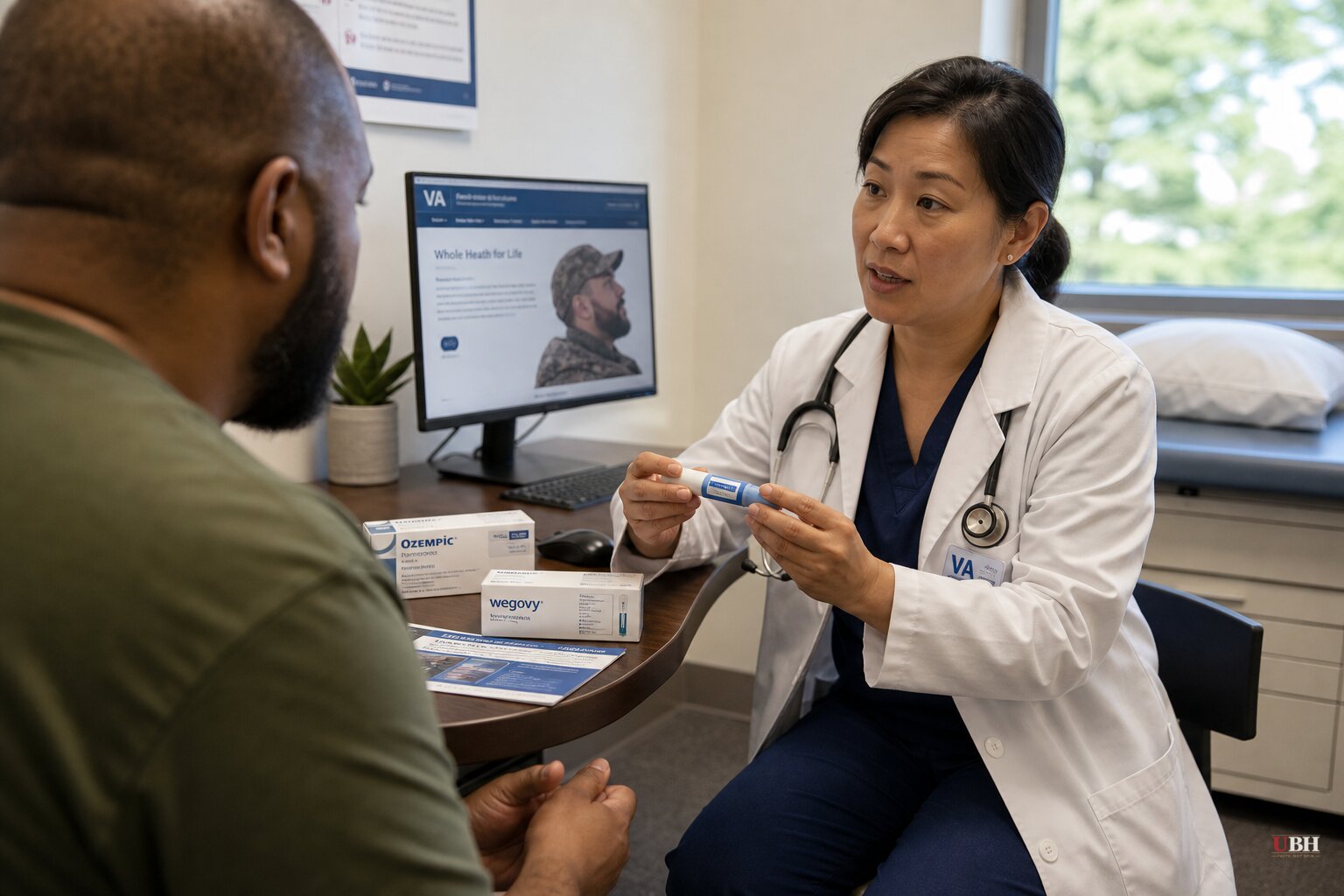
VA Secretary Doug Collins told Fox Business's "Mornings with Maria" on August 4 that the Department of Veterans Affairs is running a new trial testing GLP-1 medications as a treatment for substance abuse and addiction among veterans. Collins said the drugs, best known for treating diabetes and obesity, could give the VA a new tool against alcohol and opioid cravings.
GLP-1s include Ozempic, Wegovy, Mounjaro and Zepbound. About 15% of Americans say they've tried one, according to NewsNation. That widespread use is exactly why researchers are now spotting effects the drugs were never designed for.
What the research actually shows
Dr. Eugene Lucas, who runs the Psychiatric Mental Health Nurse Practitioner Program at Wilkes University, told NewsNation the pattern has been showing up for years. GLP-1 drugs have been available since 2005, he said, and physicians treating obese or diabetic patients kept noticing something odd: patients with a co-occurring addiction, especially alcohol, were cutting back or quitting drinking without being told to.
A study of more than 200,000 people in Sweden found GLP-1 use was tied to a lower risk of hospitalization for alcohol use disorder. Separately, researchers at Washington University School of Medicine looked at 600,000 veterans with type 2 diabetes and found the drugs were associated with a lower risk of developing any substance use disorder, not just alcohol.
Dr. Ziyad Al-Aly, the senior author of that Washington University study, said the significance is that most addiction treatments are narrow. "A nicotine patch helps with smoking, but not alcohol," he told NewsNation, "but there is no medication that works across addictive substances, let alone all of them." He said GLP-1s appear to work by blunting activity in the brain's craving center. "It blunts that craving that pulls people toward whatever they're addicted to," Al-Aly said.
The catch: this isn't approved, and it isn't proven for everything
Here's the part that matters for veterans and taxpayers watching the VA spend money on this: GLP-1 drugs are not FDA-approved for treating addiction. Lucas said that could change if enough research backs it up, but it hasn't happened yet.
The evidence is also lopsided. Lucas said alcohol has gotten the most research attention. Studies on cocaine, methamphetamine and opioid addiction exist, but he called the findings "not conclusive." Dr. Samuel Parish, an addiction medicine specialist, told Nexstar's WCBD the results are promising but premature. "It's so exciting to see GLP-1s come into this level of the research," Parish said, "but at this moment, we can't say with certainty."
A drug showing a statistical association with lower hospitalization rates in a large population study is not the same as a drug proven to treat opioid addiction in a controlled trial. The VA's own trial, as Collins described it on Fox Business, is testing exactly that gap: whether the alcohol findings extend to opioids and other substances in a veteran population with especially high rates of both.
Why veterans, and why now
Veterans face elevated rates of substance use disorder tied to combat trauma, chronic pain from injuries, and the difficulty of transitioning out of military life. The existing options are methadone, buprenorphine, naltrexone for opioids, and various behavioral and drug therapies for alcohol. These don't work for everyone and don't cross over between substances.
If a single class of drugs already approved and widely prescribed for diabetes and obesity turns out to meaningfully reduce cravings across multiple addictions, that would be significant for a system that has struggled for decades to treat veteran addiction and the opioid epidemic more broadly. It would also be a far cheaper option than developing an entirely new drug class from scratch, since GLP-1s are already in mass production and already covered by insurance for other conditions.
None of the sources here specify a timeline for the VA trial, how many veterans are enrolled, or when results might be published. Collins' comments on Fox Business were an announcement of the trial's existence, not a report of results. Until the VA or independent researchers publish outcome data specific to opioid and broader substance use disorder in veterans, the answer is that this is a promising lead backed by observational data, not a proven treatment.
Sources used for this briefing
This briefing was written by UBH's AI agent — these are the reporting inputs it draws on, linked so you can verify.


