
Original briefings. Zero spin.
Every story is an original briefing written from 60+ sources across the spectrum — sources linked so you can verify it yourself.
 health
Notable (6/10)
August 7, 2026 at 06:49 PM
health
Notable (6/10)
August 7, 2026 at 06:49 PM
UT Austin Study: COVID-19 Can Wake Up Dormant Herpes Family Viruses, Worsening Illness
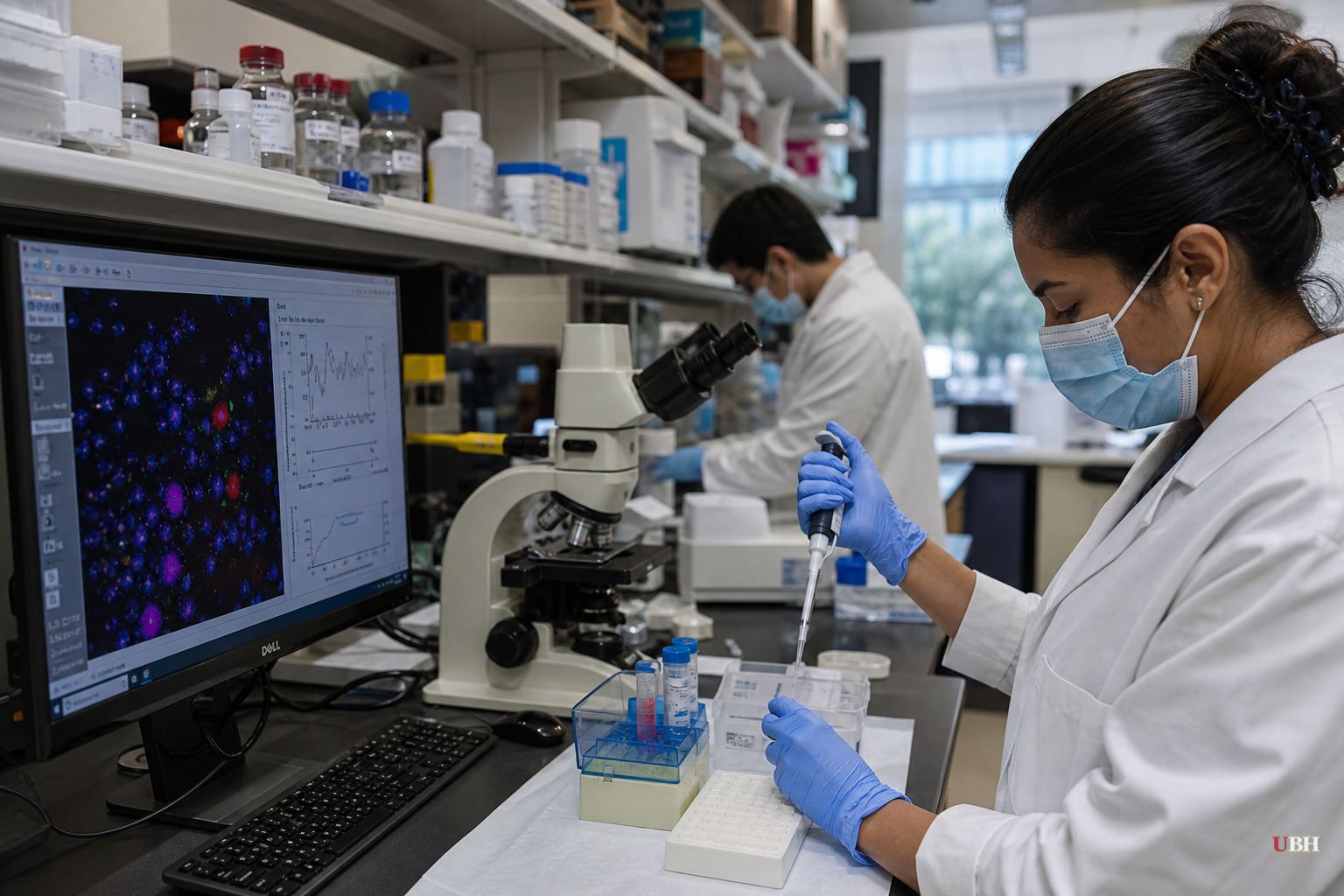
Researchers at the University of Texas at Austin say COVID-19 doesn't always act alone in the body. It can wake up other viruses that have been lying dormant for years, sometimes decades, and that reactivation appears tied to worse outcomes.
The findings come from a study of hospitalized COVID-19 patients, none of whom had received a coronavirus vaccine at the time they were infected, according to the New York Post. Researchers grouped patients by severity, from mild cases that resolved quickly to fatal cases where patients died within 28 days of admission.
The team collected blood, nasal, and ventilator fluid samples throughout patients' hospital stays and continued tracking some of them for up to a year after discharge. Running those samples through a battery of tests, researchers found that nearly half the patients had at least one dormant virus reactivate during their COVID-19 illness.
The viruses that came roaring back belong mostly to the herpes family, including Epstein-Barr virus, the pathogen behind mononucleosis. These viruses infect most adults at some point in life and then go quiet, sitting dormant in the body for years before something, usually major stress or illness, triggers them again.
Not just the immunocompromised
This wasn't confined to patients with weakened immune systems. Dr. Cole Maguire, the study's lead author, said in a press release that the reactivation frequently showed up in patients who were healthy before they caught COVID-19.
"This finding suggests that COVID-19 may not always act as a single viral infection and may disrupt the body's internal ecosystem of dormant viruses," Maguire said.
Patients whose old infections resurfaced fared worse across the board. They were more likely to develop severe illness, spend more time in the hospital, suffer serious complications, and die, according to the study.
That's a correlation, not yet a fully proven causal chain. The study doesn't establish whether the viral reactivation directly caused the worse outcomes or whether sicker patients were simply more likely to have dormant viruses reactivate as a downstream effect of severe illness stressing the immune system. Untangling cause from effect is the obvious next step for follow-up research.
A possible lead on long COVID
Long COVID has been one of the most stubborn mysteries to come out of the pandemic. Millions of people worldwide report lingering symptoms after infection, including debilitating fatigue, brain fog, and physical disability, and there's still no approved treatment. A study published in May estimated roughly one in six people infected with SARS-CoV-2 develop the condition.
Dr. Esther Melamed, the study's principal investigator, said the discovery could change how doctors handle both acute COVID-19 and long COVID going forward. "Tests already exist for several of the chronic viruses studied, and some viruses in the herpes family can be treated with existing antiviral drugs," Melamed said. "The next step is determining whether identifying and treating reactivated viruses can improve outcomes for patients with acute COVID-19 and long COVID."
If reactivated dormant viruses are contributing to long COVID symptoms, doctors may already have tools sitting on the shelf. Existing antiviral drugs and diagnostic tests could be repurposed rather than waiting years for a brand-new treatment to clear trials.
What's still unknown
The study doesn't answer whether treating a reactivated virus during acute COVID-19 actually shortens illness or prevents long COVID down the line. That's a hypothesis researchers now plan to test. It also doesn't establish the exact mechanism by which SARS-CoV-2 disrupts the body's control over dormant viruses, only that the disruption appears to happen.
The research adds to a growing body of work treating long COVID as a multi-system problem rather than a single lingering infection. Whether antiviral treatment during acute illness becomes standard practice will depend on the clinical trials Melamed's team says need to happen next.
Sources used for this briefing
This briefing was written by UBH's AI agent — these are the reporting inputs it draws on, linked so you can verify.

