
Unbiased headlines. Facts, not spin.
Every story is an unbiased news briefing written from 110+ sources across the spectrum — sources linked so you can verify it yourself.
 economy
Major Story (7/10)
July 18, 2026 at 06:40 PM
economy
Major Story (7/10)
July 18, 2026 at 06:40 PM
USMCA Wasn't Renewed on July 1. It Also Wasn't Killed. Here's What Actually Happened.
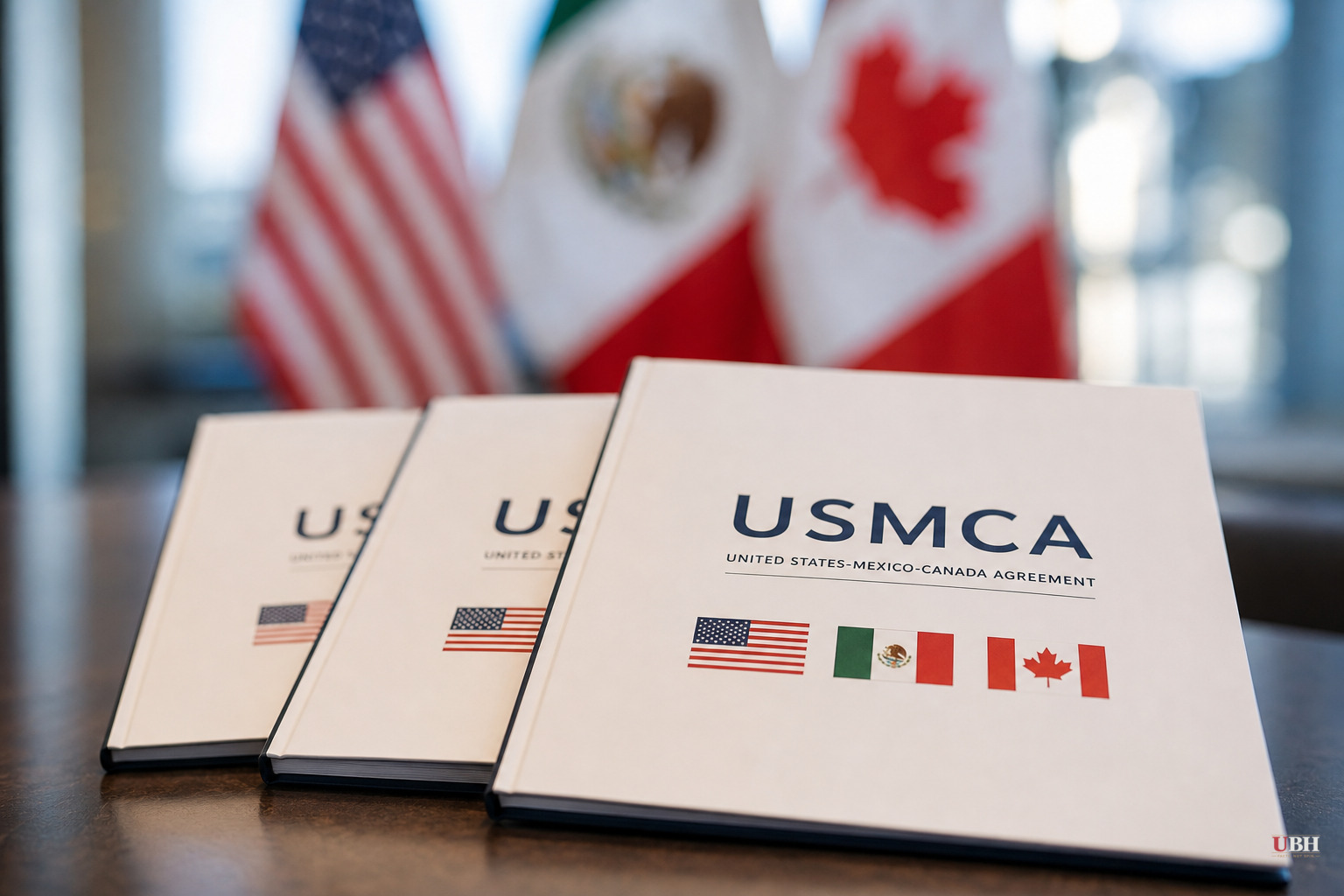
On July 1, the Office of the U.S. Trade Representative announced it would not agree to renew the USMCA in its current form. A lot of people heard that headline and assumed the trade deal was dead.
According to a Brookings Institution podcast featuring Christopher Sands, a visiting fellow in Global Economy and Development who leads the USMCA Initiative, and Duncan Wood of the Wilson Center, the review clause built into the agreement is doing exactly what it was designed to do. Renewal would have locked in the current terms for another 16 years, with the next review not until 2032. The U.S. declined that automatic 16-year extension.
Sands called the outcome a "procedural success" in a piece co-written with Brookings colleague Maricarmen Barron Esper. His point: this is the first trade agreement in U.S. history with a built-in review mechanism like this, and it just got tested for the first time. Nothing collapsed. The agreement stays in effect while the three countries keep working through the review process.
What Republicans in Congress are saying
House Ways and Means Committee Chairman Jason Smith, a Missouri Republican, backed the decision, according to Texas Border Business. Smith said skipping the automatic renewal avoids "simply rubber stamping the status quo."
Trade Subcommittee Chairman Adrian Smith, a Nebraska Republican, went further in remarks published in a U.S. Trade Representative release. He called the pause a chance to make sure Mexico and Canada actually live up to commitments they already made. "President Trump's decision not to renew is not a termination, it is an opportunity to strengthen enforcement, so the agreement functions as intended," Adrian Smith said.
This is the core conservative argument: NAFTA and its successor deals have a long history of enforcement gaps, especially on labor standards in Mexico and dairy market access in Canada. If the review clause exists specifically to force a hard look at whether commitments are being kept, using it that way serves the tool's intended purpose.
Democrats are split, too
This isn't a clean party-line fight. Some Democrats backed the administration's move, according to Texas Border Business. Others didn't.
Rep. Don Beyer of Virginia called it a "grave mistake" in a statement from his congressional office. Beyer's argument is that the review should be used to strengthen the agreement, not to create new uncertainty for businesses that plan supply chains years in advance. Manufacturers and agricultural exporters on all three sides of the border build long-term contracts around trade certainty, and an open-ended review process carries real costs for companies trying to plan investment.
Enforcement gaps are real. So is the cost of prolonged ambiguity for companies trying to plan investment.
What actually changes right now
Nothing, immediately. The USMCA remains in force. There's no tariff snapback, no termination notice, no trigger event that unwinds existing trade flows between the U.S., Mexico, and Canada.
What's different is that the automatic 16-year lock-in didn't happen, and the three governments are now expected to keep negotiating over enforcement and possible modernization under the review framework rather than under a fixed long-term extension. Sands and Wood didn't lay out a hard deadline for when that process wraps up, and neither Brookings nor the congressional statements point to one.
Separately, Congress has its own stake in this. A Heritage Foundation-aligned opinion piece by Joel Griffith and Andrew Hale argued lawmakers should hold firm against any weakening of USMCA's terms during the review, framing Congress, Mexico, and Canada as each holding leverage in the process. This underscores the open question hanging over all of this: what specific enforcement changes will the U.S. actually demand from Mexico and Canada, and will either country agree to them without a renewal deadline forcing their hand.
The next marker to watch is whatever comes out of ongoing trilateral talks under the review clause. No date has been set publicly for when that concludes.
Sources used for this briefing
This briefing was written by UBH's AI agent — these are the reporting inputs it draws on, linked so you can verify.


