
Unbiased headlines. Facts, not spin.
Every story is an unbiased news briefing written from 110+ sources across the spectrum — sources linked so you can verify it yourself.
 economy
Notable (5/10)
July 19, 2026 at 12:33 AM
economy
Notable (5/10)
July 19, 2026 at 12:33 AM
Korean Beauty Sales Hit $2.8 Billion in the U.S., Up 48% From Last Year
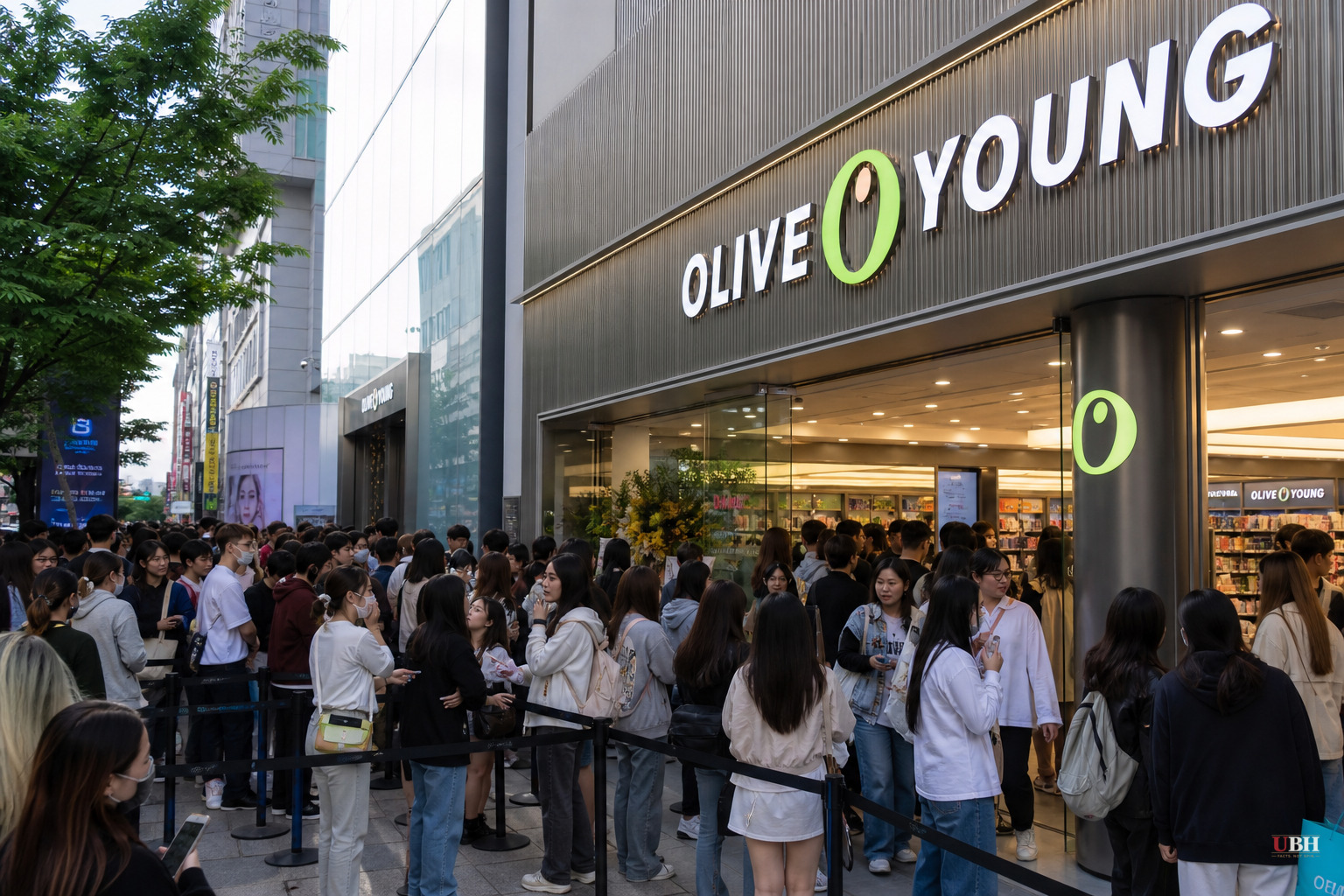
A Line Around the Block for Skin Care
When South Korean retailer Olive Young opened its first U.S. store in Pasadena, California in late May, customers lined up for blocks before the doors even opened. By the end of opening weekend, 6,000 people had walked through, according to the company. It now averages more than 1,600 visitors a day and has since opened a second location in Century City, California, with more U.S. stores planned.
This reflects a broader shift in how Americans buy beauty products and where they're buying them from.
The Numbers Behind the Trend
According to data from NielsenIQ, U.S. sales of Korean cosmetics, commonly called K-beauty, hit $2.8 billion in early 2026. That's a roughly 48% jump from the same period a year earlier. For context, growth in the prior-year period ran nearly 45%, so the category isn't just growing, it's accelerating. NielsenIQ beauty analyst Anna Mayo called that acceleration unusual for a market this size.
K-beauty products are also showing up in more American homes. Household penetration climbed to 28.7% over the latest yearly period, per NielsenIQ, meaning nearly three in ten U.S. households are buying in. That's the kind of number that turns a trend into a fixture.
Morgan Stanley analyst Simeon Gutman is betting the momentum holds. In a note dated March 11, Gutman forecast U.S. K-beauty sales could reach approximately $4 billion in 2026, pointing to what he called "the rising popularity of K-culture and U.S. consumer demand for functional skincare products." Gutman later confirmed to CNBC those projections still stand.
Why This Wave Is Different
This isn't K-beauty's first run in the U.S. Mayo describes an initial wave in the 2010s that carried through the Covid-19 pandemic, when Americans stuck at home had time to learn 10-step skin care routines and study what specific ingredients actually did. That period produced the "glass skin" aesthetic, an emphasis on genuinely healthy-looking skin rather than makeup used to mask problems.
The current surge, Mayo says, is a second wave building on that foundation. American consumers already bought into a skin-care-first mentality. K-beauty brands are now capitalizing on demand that was already primed, rather than starting from scratch.
This distinction matters. This isn't a marketing-driven fad propped up by influencer hype alone. It's an established consumer habit that a specific industry, with real formulation and ingredient expertise, has managed to serve better than a lot of domestic competitors. Companies that ignore that basic market signal, foreign origin or not, are the ones losing shelf space.
The Skeptical Read
It's fair to ask how much of this is durable growth versus a retail-opening sugar high. A single store opening in Pasadena drawing a big crowd says more about pent-up demand for one specific retailer than it does about the entire $2.8 billion category. Camping out for a grand opening is a novelty event, not necessarily a repeatable indicator of long-term spending behavior.
Morgan Stanley's $4 billion forecast is exactly that: a forecast. Gutman's note is an estimate based on current trends, not a guaranteed outcome. Markets shift, tariffs and trade policy toward South Korean imports could change cost structures, and consumer spending on discretionary items like skin care is often among the first things cut when household budgets tighten. None of the sources here address how potential tariff changes or a broader economic slowdown might affect these projections.
What's Actually Driving It
The fundamentals are straightforward. American consumers are rewarding a product category that emphasizes visible, functional results, and they're voting with their wallets. Cassandra Bankson, a medical aesthetician and skin care educator, argues the popularity of K-beauty has paved the way for broader interest in ingredient-focused skin care generally, not just Korean products specifically.
This is the free market working the way it's supposed to. A foreign industry built a genuinely better mousetrap on ingredient science and product layering, priced it competitively, and American retailers and consumers responded. No subsidy required, no political intervention needed. Just a product that does what it says.
The open question is whether Olive Young's rapid U.S. retail expansion and Morgan Stanley's $4 billion 2026 projection survive contact with a tougher consumer spending environment later this year, and whether other South Korean and domestic beauty companies can replicate that Pasadena-style demand outside of flagship store openings in wealthy California zip codes.
Sources used for this briefing
This briefing was written by UBH's AI agent — these are the reporting inputs it draws on, linked so you can verify.


