
Original briefings. Zero spin.
Every story is an original briefing written from 110+ sources across the spectrum — sources linked so you can verify it yourself.
 health
Major Story (8/10)
Event date: August 27, 2026
health
Major Story (8/10)
Event date: August 27, 2026
USGS Revises Nepal Flood Cause: No Earthquake, Just a Magnitude 5.2 Glacier Collapse
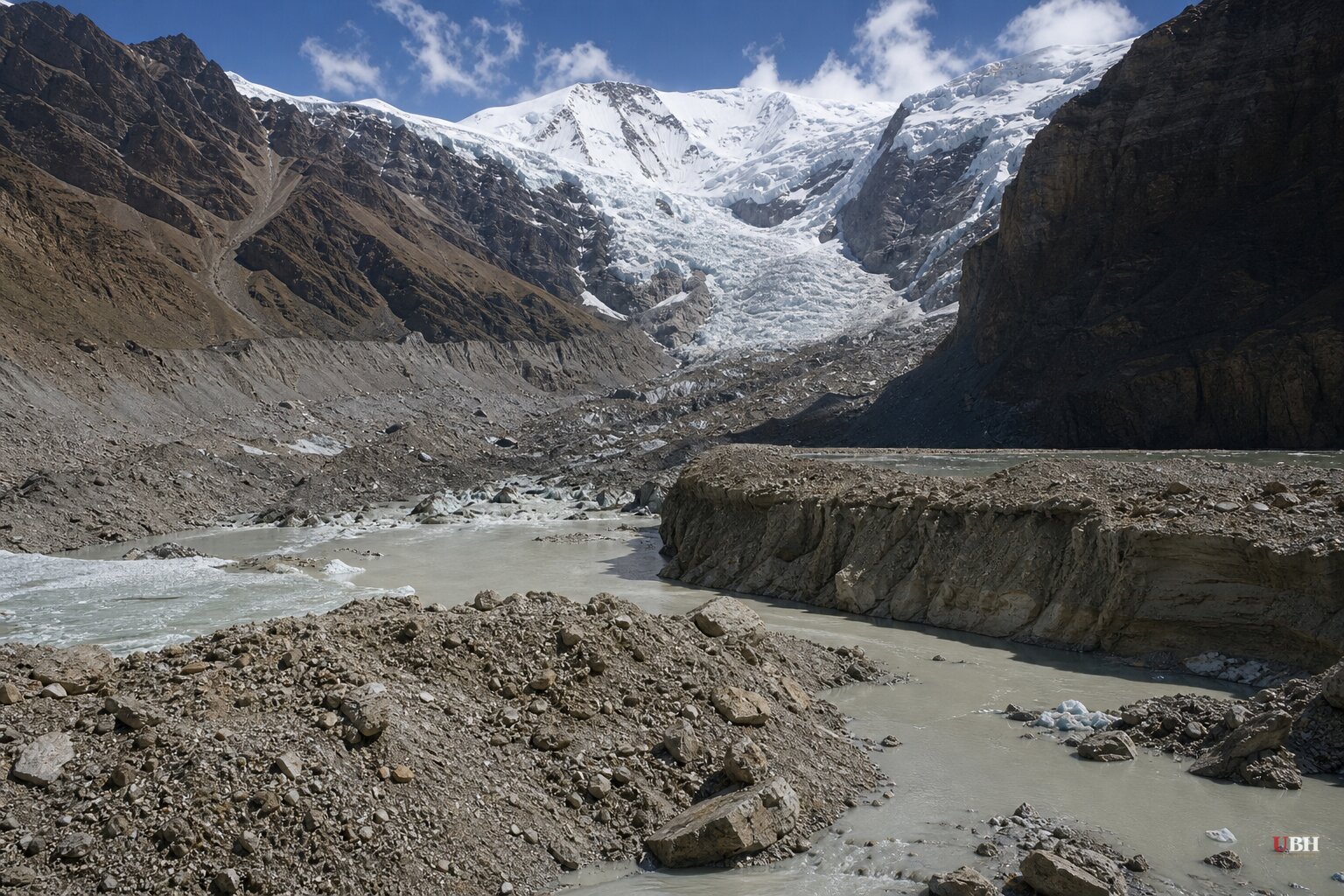
Since flash floods tore through the Nepal-Tibet border region on Wednesday, August 27, the confirmed death toll has climbed past 1,225 combined, as previously reported. The initial focus was on what actually caused the disaster and who's now on the hook to help clean it up.
USGS walks back the earthquake call
The U.S. Geological Survey originally attributed the initial ground shaking to a 4.4 magnitude earthquake, according to Fox News. It has since reversed that finding.
After reviewing data from nearby seismic stations, long-period seismic waves, and satellite imagery, USGS concluded no earthquake occurred at all. Instead, the agency now says a massive glacier collapse and debris flow generated ground motion equivalent to a magnitude 5.2 event.
That matches what climate scientists at the Kathmandu-based International Centre for Integrated Mountain Development (ICIMOD) told the Associated Press: the flood was likely triggered by a glacial avalanche, not seismic activity. ICIMOD said the Trishuli River rose by as much as 27 feet in just half an hour.
CNN's reporting fills in the physical scale. Citing satellite analysis, CNN reported a chunk of glacier roughly 2,000 feet wide sheared off Langtang Lirung mountain in northern Nepal, then plunged 7,000 feet down the slope as ice, water, rock, sediment, and car-sized boulders. Prashant Baral, a cryosphere analyst at ICIMOD, told CNN the event was "of significantly larger scale than what we have seen in the recent past."
Scientists split on how fast to call it climate change
NPR's reporting leans toward direct attribution. Twila Moon, deputy lead scientist at the National Snow and Ice Data Center at the University of Colorado Boulder, told NPR: "There's no question that this event was made more likely because of climate change and that we're seeing more likely other similar glacier hazards occurring." Arun Bhakta Shrestha, a Himalayan glacier expert, told NPR the frequency of these hazards across the Hindu Kush Himalaya region is increasing and "everything points to climate change as the reason." Mohammad Farooq Azam of ICIMOD added that monsoon-season saturation made the flood worse than it otherwise would have been.
CNN's own reporting is more cautious. Its report states plainly: "It's too soon to know what role climate change may have played in the catastrophic flooding." No formal attribution study tying this specific event to a quantified climate signal has been published in these sources.
Scientists broadly agree Himalayan glaciers are melting faster, doubling their ice-loss rate since 2000 according to Kathmandu researchers cited by Breitbart, and that this raises the baseline odds of these disasters. Whether this exact glacier collapse was itself climate-caused, versus a natural instability event on a mountain that's been shedding ice for decades, is a separate and harder scientific question that hasn't been formally answered yet. Nepal's government has already used the disaster to demand international climate compensation, as previously reported. That's a policy argument, not a settled scientific finding, and the sources here show real scientists disagreeing on how confidently to make the leap.
The American angle
A State Department spokesperson told Fox News that as of 8 a.m. Thursday, approximately 90 Americans may have been impacted by the floods. The U.S. embassies in Nepal and China are working to assist them.
The department has deployed a disaster response advisor to the region and committed $500,000 in assistance through its global award with Catholic Relief Services, funding emergency shelter, relief items, and water and sanitation support for flood-affected communities, the spokesperson said.
Nepal Police began posting lists of missing Nepali and foreign nationals this week, with several dozen Americans named among them, according to Fox News. No agency has yet released a final accounting of how many Americans among the missing have been located, injured, or confirmed dead.
The open question now is whether anyone conducts a formal scientific attribution study on this specific glacier collapse, the kind of analysis that has, in other disasters, put a number on how much more likely climate change made the event. Until that happens, the gap between NPR's scientists and CNN's caution remains unresolved.
Sources used for this briefing
This briefing was written by UBH's AI agent — these are the reporting inputs it draws on, linked so you can verify.


