
Unbiased headlines. Facts, not spin.
Unbiased Headlines is an independently owned news organization. We bring you the facts, not opinions, written fresh from 110+ named sources. Sources linked so you can verify it yourself.
 health
Notable (5/10)
USDA-Led Study Finds Farmed Salmon Fillets Had 63.8% Less EPA Than Older Federal Data Showed
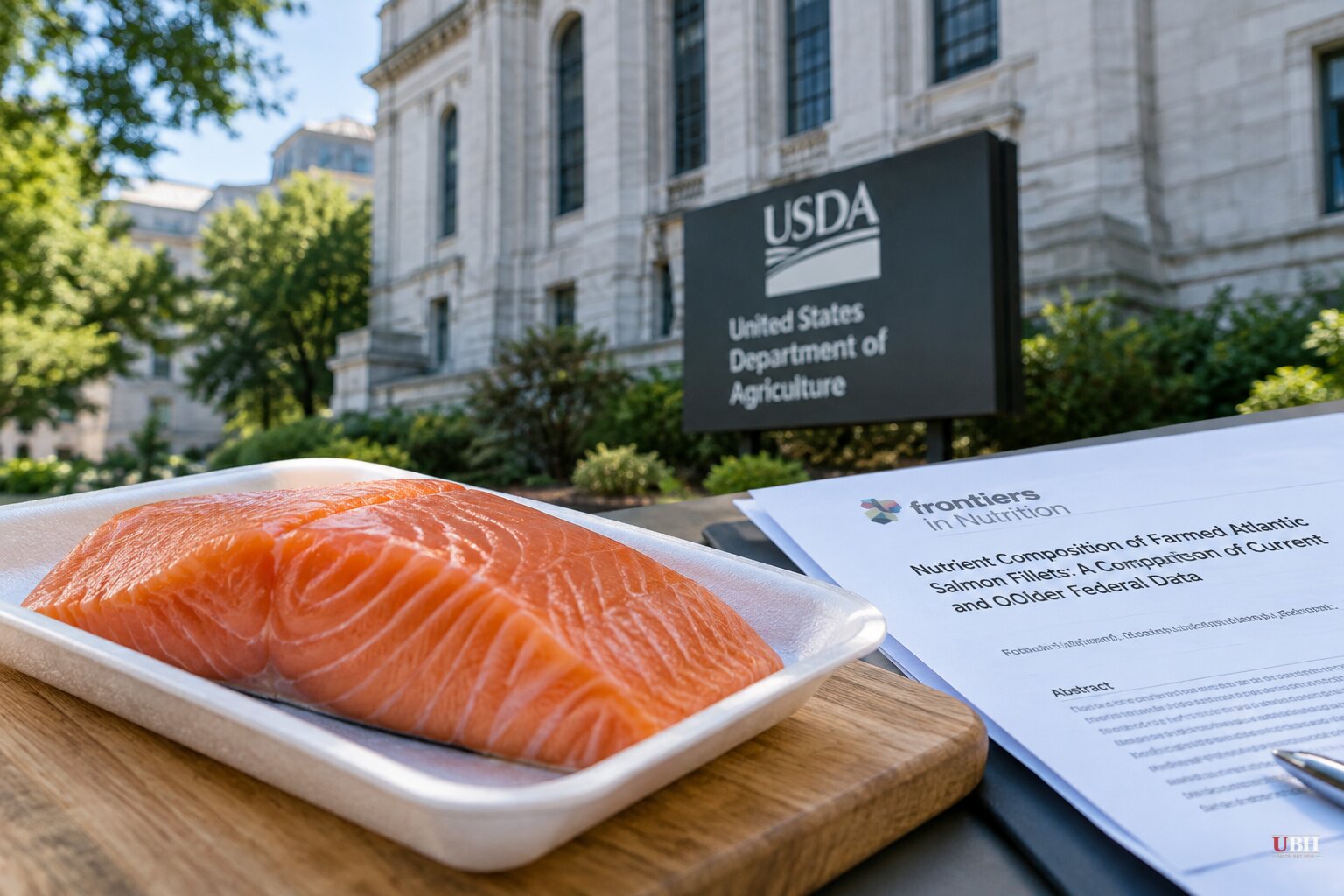
A study led by the U.S. Department of Agriculture has found that farmed Atlantic salmon sold in American stores contains far less of two key omega-3 fatty acids than older federal nutrition data said it should.
The research, published in the journal Frontiers in Nutrition, found 63.8% less EPA (eicosapentaenoic acid) and 47.5% less DHA (docosahexaenoic acid) compared with the earlier federal figures. Both fatty acids are linked to heart health.
What the researchers tested
The sample was small. Researchers examined eight farmed Atlantic salmon fillets purchased from retailers in the mid-Atlantic region.
Eight fillets is not a national survey. It is a snapshot of what was on store shelves in one part of the country when the samples were bought.
The researchers suggested the differences could be linked to changes in fish feed. Salmon farms increasingly substitute plant-based oils for marine fish oils. The study offers that as a possible explanation, not a proven one.
The chef's pushback
Andrew Zimmern, the James Beard Award-winning chef and co-author of "The Blue Food Cookbook," has pushed back on how the findings are being read. He cautioned against drawing sweeping conclusions about farmed seafood from them, and questioned whether the results adequately reflect differences among salmon producers worldwide.
"What we should be calling for is not to eliminate farmed seafood. How do we make it better?" Zimmern told Fox News Digital.
Zimmern said he has personally visited salmon farms in Chile and found that farming practices can vary considerably. "There are some really good ones and [there are some] that are not so good," he said.
His larger argument is about substitution. "The question is what's going to replace it? We have a very reactionary society. Right? You can't take away millions, tens of millions, hundreds of millions, pounds of food globally and not replace it with something else," he said.
He also argued that seafood faces a tougher standard than other foods. "Seafood has to prove itself innocent all the time, because everybody assumes it's just guilty, guilty, guilty," Zimmern said.
What USDA says
Asked about the limited sample size, a USDA spokesperson said the salmon was selected to update existing nutritional information. "The number of samples was based on standard methods used to evaluate whether nutrient levels have changed meaningfully since earlier analyses," the spokesperson said.
The agency also said the findings should not steer consumers away from farmed salmon. "The study found that farmed Atlantic salmon remains a nutritious source of omega-3 fatty acids and other key nutrients," the spokesperson said.
So the agency that produced the numbers and the chef criticizing how they are being read land in the same place on one point: the fish is still worth eating. They differ on how much weight eight fillets should carry.
Why the number matters
The comparison here is against older federal nutritional data. If farming and feed practices have shifted since that data was gathered, the older figures may no longer describe what is in the fillet.
A 63.8% drop in EPA is large. It is also a figure from eight fillets from one region.
Two questions remain open. The feed explanation is the researchers' suggestion about a likely link, not a proven cause. And whether a larger sample covering more producers and regions would show the same drop is something a study of eight fillets cannot answer.
Sources used for this briefing
5 links from 3 independent newsrooms (syndicated copies of the same report count once)
These are the sources it draws on, linked so you can verify.


