
Unbiased headlines. Facts, not spin.
Unbiased Headlines is an independently owned news organization. We bring you the facts, not opinions, written fresh from 110+ named sources. Sources linked so you can verify it yourself.
 politics
Major Story (8/10)
USCIS Says It Has Taken 2.2 Million Actions to Revoke or End Immigration Status Since January 2025
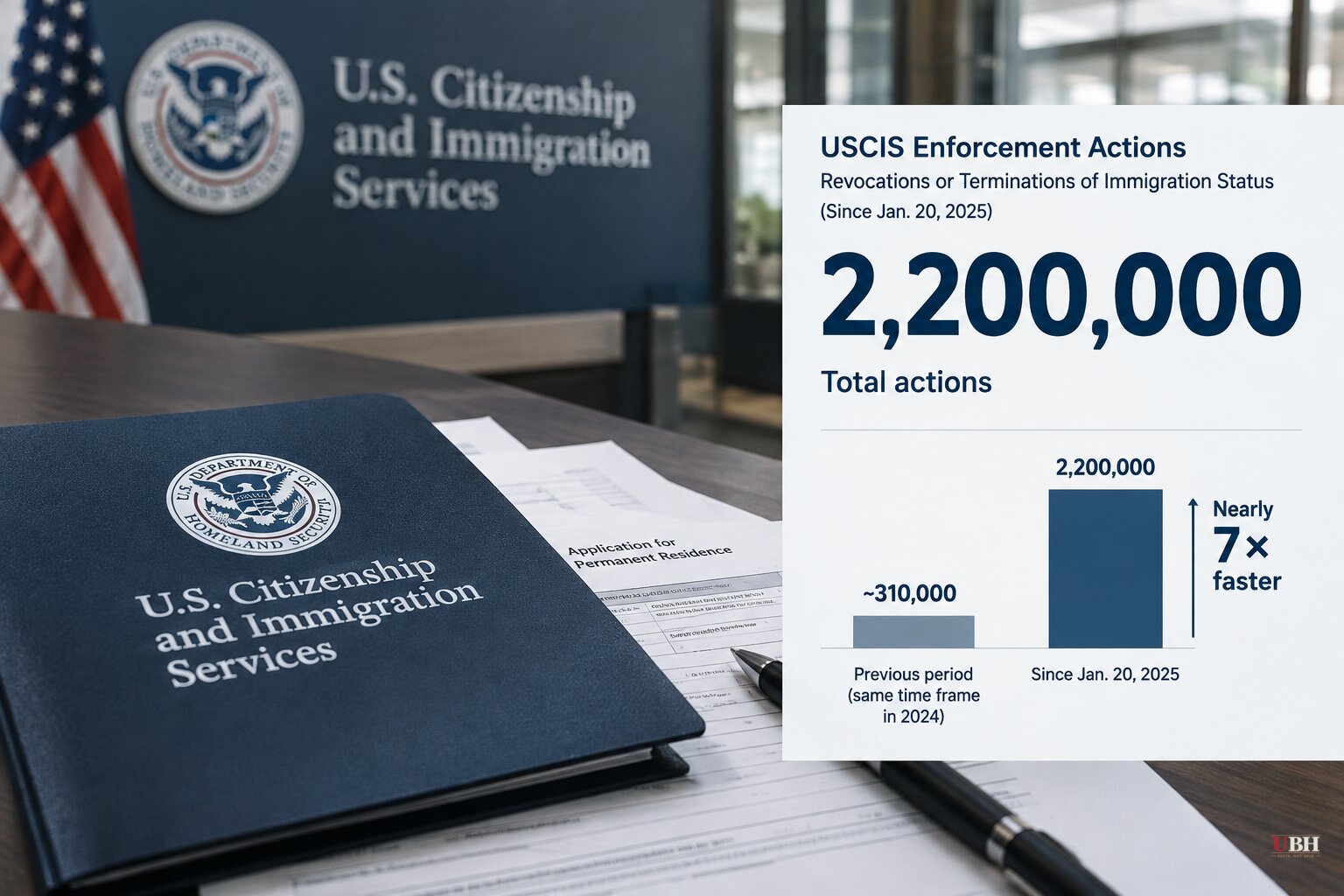
The Department of Homeland Security said Thursday, Oct. 29, that U.S. Citizenship and Immigration Services has carried out enforcement actions to revoke or terminate the status of approximately 2.2 million people since Jan. 20, 2025.
DHS says that is nearly seven times the number of comparable actions in the final two years of the Biden administration combined. DHS has not published the underlying comparison data.
Secretary Markwayne Mullin framed it as follow-through. "President Trump promised the American people that our immigration laws would be enforced, and these numbers reflect the scale of that commitment," he said. "Securing our border was only the beginning."
What is in the number
The 2.2 million is not a deportation count. DHS says the figure is separate from State Department visa revocations and denials, and separate from removals by Immigration and Customs Enforcement.
The agency lists several categories of action:
- Ending Temporary Protected Status for more than one million people from 13 countries.
- Denying requests to extend or change nonimmigrant status when no legal basis exists.
- Issuing Notices to Appear, which put people into removal proceedings before an immigration judge.
- Ending the automatic extension of employment authorization documents.
- Terminating categorical parole programs and returning parole to case-by-case review.
The parole rollback includes the program that let roughly 500,000 Cubans, Haitians, Nicaraguans and Venezuelans fly into the country after receiving authorization.
DHS has not given a numerical breakdown of the 2.2 million actions by category.
Counting actions is not counting outcomes
Some of the terminations are tied up in court. That means not every action has produced a final loss of status, and the number of people who have ultimately lost status is not yet known.
The Law Offices of Spar & Bernstein, an immigration practice, made the same point in its analysis of the release. It said the announcement names no specific countries, termination dates or individual eligibility determinations, so it does not tell any one person whether their TPS or work permit remains in effect.
Breitbart reports that the agency faces resistance from pro-migration lawyers, judges and advocacy groups, and says DHS lawyers have repeatedly defeated the courtroom opposition. That claim comes from the administration side and has not been independently tallied.
The administration's argument is simple. It says TPS was meant to be temporary and has been misused, and that categorical parole programs should return to strict case-by-case review as Congress intended. Its position is that this restores the law as written.
There is a fair point on the other side of the ledger, too. People holding TPS or parole held those statuses because the government granted them. Ending them is a policy decision that courts are reviewing, and the label "illegal aliens" is DHS's description of the whole group.
Stricter screening
USCIS says it has revived security reviews and fact checks. One result, according to Breitbart's reporting, is that citizenship approvals have been cut roughly in half while the checks are conducted. USCIS has not published that figure in the release.
The agency also points to enforcement against fraud. "Every fraudulent application identified, every ineligible benefit denied, and every national security threat flagged represents an immigration system working to uphold the law and protect the American people," USCIS said. It is also asking the public to report suspected benefit fraud through its tip form.
The case for tighter vetting is easy to understand. A work permit or green card is a government promise, and checking who gets one is the job. The test is whether the agency can show what its screening found, which the release does not do.
The enforcement side
ICE reported about 421,000 removals from October 2025 through late August 2026. That is a separate measure of actual departures, and it is far smaller than 2.2 million.
The gap between the two numbers is the open question. Removing someone's status is the first step. Getting an order from an immigration judge, surviving appeals, and carrying out the removal are the steps that decide the outcome.
The administration's number is large and the intent is plain. What happens next depends on pending court challenges to the TPS and parole terminations, and on whether DHS releases the category-by-category data that would show how many of the 2.2 million actions have become final.
Sources used for this briefing
7 links from 7 independent newsrooms (syndicated copies of the same report count once)
These are the sources it draws on, linked so you can verify.


