
Unbiased headlines. Facts, not spin.
Unbiased Headlines is an independently owned news organization. We bring you the facts, not opinions, written fresh from 110+ named sources. Sources linked so you can verify it yourself.
 defense
Major Story (7/10)
US to Mediate Working-Level Ukraine-Russia Talks in Abu Dhabi Nov. 10-11, Witkoff Says
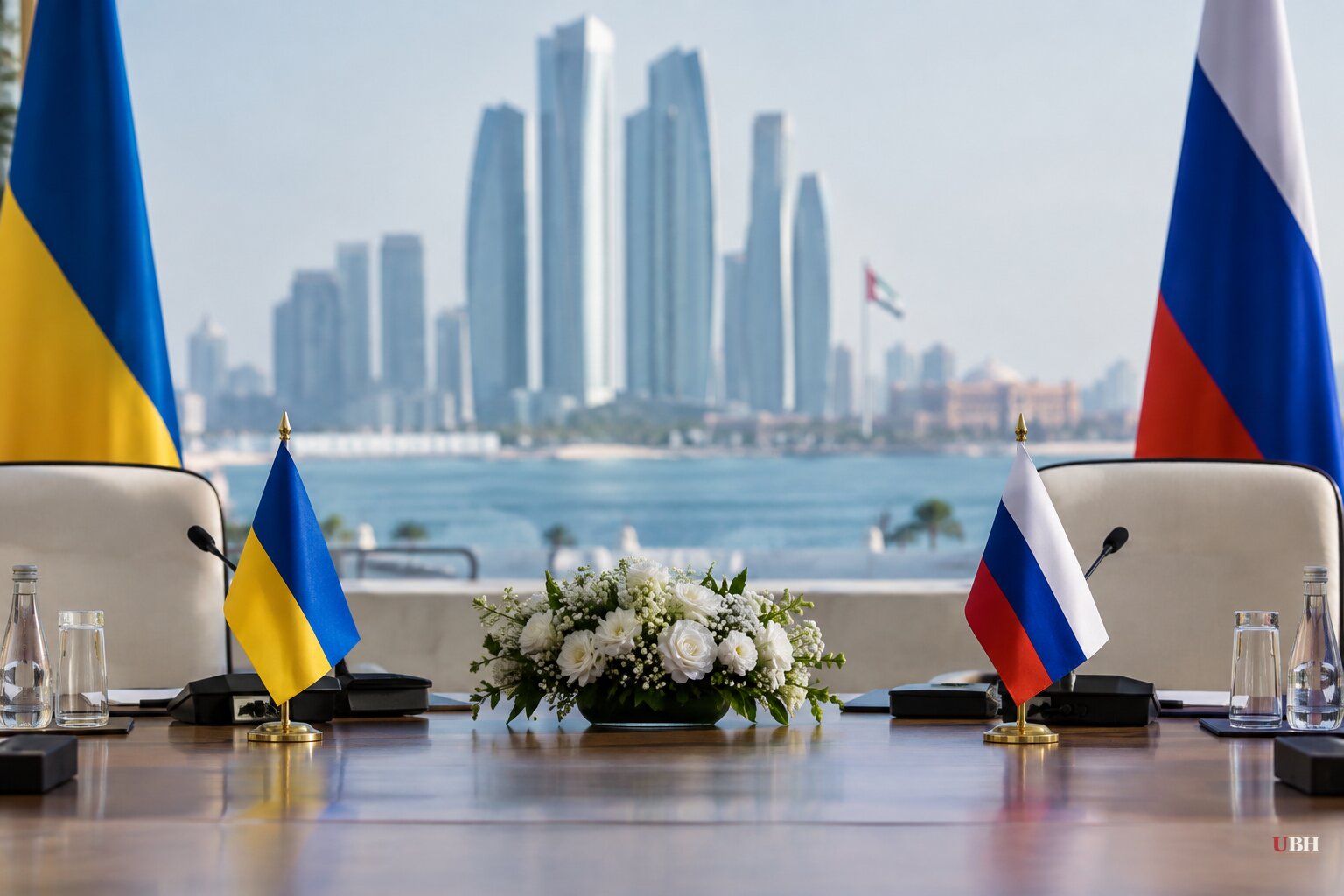
After Vladimir Putin agreed to a new round of trilateral talks following his St. Petersburg meeting with U.S. envoy Steve Witkoff, and after the Kremlin pointed to Abu Dhabi in the first half of November, Witkoff has put dates on it: Nov. 10 and 11.
"The United States will mediate working-level negotiations between Ukraine and Russia on November 10–11 in Abu Dhabi, advancing President Trump's mission to end the war," Witkoff wrote on X. He said the discussions will focus on "post-war security arrangements, de-escalation, humanitarian efforts, and next steps toward peace."
A senior U.S. official told Reuters that Witkoff and Jared Kushner are expected to represent Washington.
What "working level" means
Working-level generally means discussions among technocrats, not at the senior diplomatic or national leadership level. Ukraine and Russia have held several U.S.-mediated rounds during Trump's second term, often yielding prisoner exchanges or other low-level agreements, not a settlement.
The last U.S.-mediated trilateral talks took place in February, before the United States and Israel launched a war against Iran.
Witkoff also said U.S. negotiators will meet this week in Brussels with representatives from France, Germany, the U.K., the EU and NATO. The topics are security guarantees for Ukraine, Europe's post-war security architecture and economic opportunities to support Ukraine's reconstruction.
He said the effort builds on "the progress made in Kyiv, Oslo, and St. Petersburg." A White House official has said the Oslo and St. Petersburg discussions reflected "a positive and constructive spirit." Trump said last month that efforts to resolve the war were "maybe now the closest we've been."
The gap has not moved
Nothing announced so far closes the central disagreement. Putin has refused to drop his demand that Ukraine accept Russia's annexation of some territory seized during the war. Zelenskyy has consistently ruled out accepting Russia's seizure of territory by force, and many U.S. allies in Europe agree that legitimizing Putin's land grab would set a dangerous precedent. After the St. Petersburg meeting, Putin reiterated Moscow's territorial claims over Donbas, which Kyiv has firmly rejected.
On Oct. 21, Zelenskyy told Fox News he would accept a ceasefire that froze the front lines. "Right now, we have to freeze, and I think this is a real way to end this war," he said. He said he would ask Trump and Ukraine's European allies for security guarantees if a ceasefire deal is reached.
Russian officials have framed it differently. After Putin met Witkoff, Kremlin aide Yuri Ushakov said the talks would be about building a security system for Russia and Ukraine. Kremlin spokesman Dmitry Peskov said the security issue concerns the two countries "but only after a peaceful settlement has been achieved." Other Russian officials said progress toward ending the war is theoretically possible but will require Ukraine to make necessary decisions, and warned that Ukraine's situation will be worse if it does not. Peskov also said Moscow would study Witkoff's proposals and that talks would take a long time.
Peskov has also said that while the negotiations would begin with trilateral talks, it would be "impossible to discuss the European security architecture without other participants." That sits awkwardly beside Washington's plan to take European security questions to Europeans in Brussels first.
Strikes continue around the diplomacy
A rare local ceasefire in Russian-occupied Oleshky, in Kherson region, ended Sunday. It allowed humanitarian supplies into the city and the evacuation of residents. Both sides credited U.S. first lady Melania Trump and Pope Leo.
Russia has kept hitting the rest of Ukraine during and after that ceasefire. Zelenskyy and Ukraine's emergency services said Russian forces bombed a school used as an aid distribution point in a village in Zaporizhzhia region on Monday, killing 26 people. "The Russians struck first just as people were arriving – a few aerial bombs," Zelenskyy said, adding that a second strike hit the shelter. Rescue efforts were hampered by Russian drone attacks, according to military official Mykhailo Semikin.
Authorities said Tuesday that at least 29 people were killed in a village in the Zaporizhzhia region. In Kharkiv, the regional administration said a Russian strike hit a medical facility, wounding 25 people and forcing the evacuation of around 200 patients.
Russia's defense ministry said it carried out a "massive strike" on energy facilities in the Vinnytsia, Dnipropetrovsk and Kharkiv regions and on port infrastructure in the Odesa region.
Ukraine is also hitting Russia. Moscow's mayor said 500 Ukrainian drones heading toward the capital were destroyed overnight. Yaroslavl Governor Mikhail Evrayev said a Ukrainian drone attack damaged an oil refinery there and injured two employees.
Zelenskyy had warned that Ukraine had intelligence that Russia was preparing a new massive attack on energy and logistics, timed on the assumption that the world would be watching the American midterms. He cited Ukraine's difficulties with air defense and Patriot missiles.
Europe's force and the next dates
Separately, London and Paris said about 2,800 troops from 10 European countries will stage the first exercise of the "Multinational Force – Ukraine" in Poland this month. The force, led by France and the U.K., has no offensive mission and is to be deployed only once a ceasefire is agreed. The joint statement said the exercise will test the speed and efficiency at which several nations can deploy forces on land, sea and air.
The next concrete test is the Brussels meeting this week, followed by Abu Dhabi on Nov. 10-11. Russia insists on territory Ukraine refuses to cede, Ukraine wants security guarantees Moscow says can only be discussed after a settlement, and the working-level delegations meeting in the UAE are not the leaders who could change either position.
Sources used for this briefing
8 links from 8 independent newsrooms (syndicated copies of the same report count once)
These are the sources it draws on, linked so you can verify.


