
Unbiased headlines. Facts, not spin.
Unbiased Headlines is an independently owned news organization. We bring you the facts, not opinions, written fresh from 110+ named sources. Sources linked so you can verify it yourself.
 economy
Major Story (8/10)
Event date: October 16, 2026 ·
U.S. Producer Prices Rose 1.3% in September, the Biggest Jump Since March 2022, as Energy Costs Spread
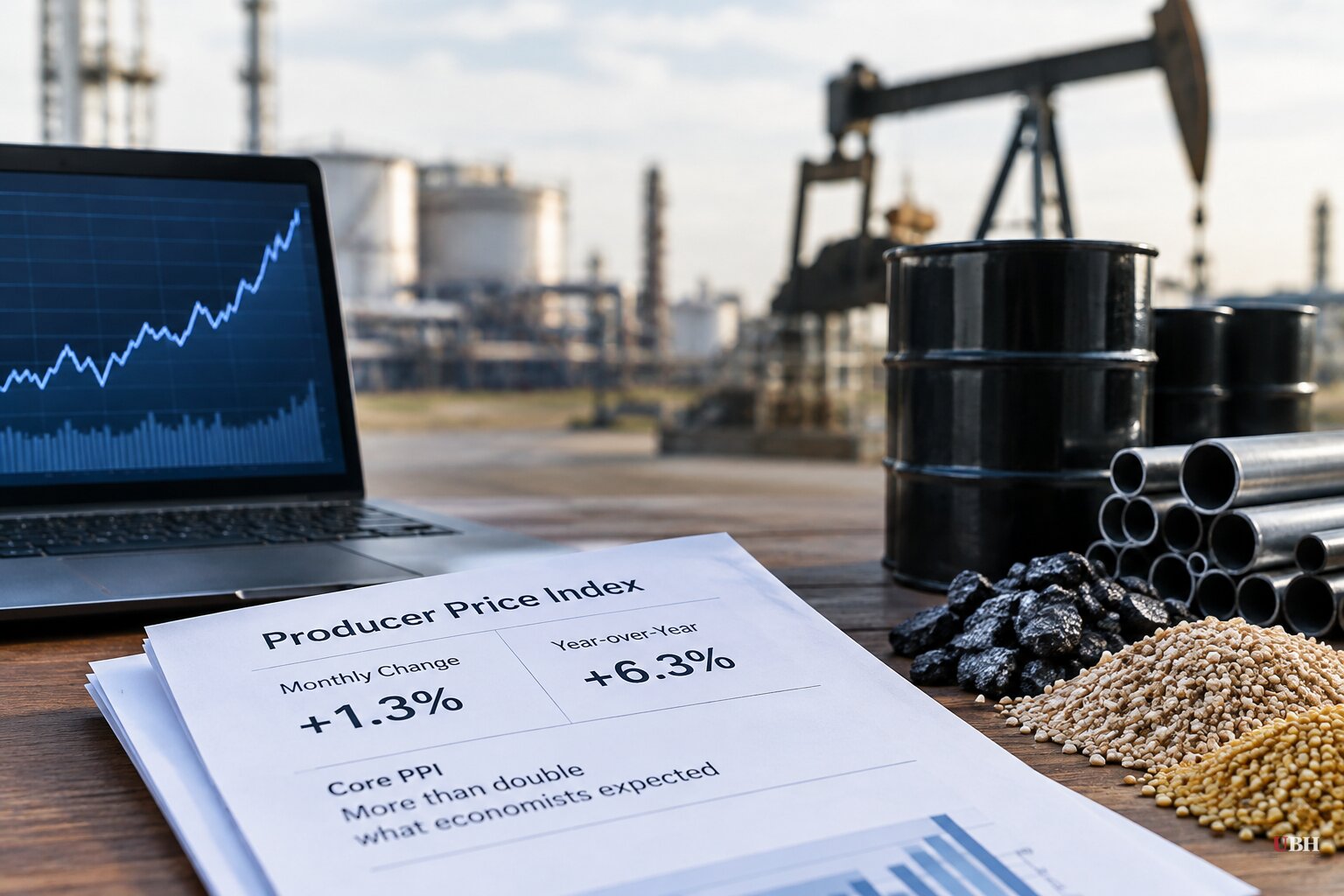
The Labor Department said the producer price index rose 1.3% in September, the largest monthly increase since March 2022. It is up 6.3% over the past year.
That report followed a consumer price index that showed U.S. inflation rising to 3.7%.
Most of it is energy. Not all of it.
The bulk of the producer-price surge is fuel. Goods prices jumped 2.6% in the month and are up 9.8% from a year earlier. More than 80% of the monthly goods increase came from energy, where prices rose 10.8%. Gasoline alone accounted for roughly half of the goods gain, soaring 20.3%.
Diesel prices for intermediate demand rose 21.0%. That helps explain why the transportation and warehousing index climbed 3.4% in a single month and is up 16.0% for the year.
But strip out food and energy and the numbers still run hot. Core PPI rose 0.7% in September. Economists had expected 0.3%. Core goods rose 0.3% on the month and are up 5.1% year over year, the fifth straight month above 5%.
Services prices rose 0.8% in the month and are up 4.9% annually. Excluding trade, transportation and warehousing, services rose 0.3% for the month and 3.8% for the year.
What it means for the Fed
Wall Street Journal reporter Nick Timiraos estimates, based on the CPI and PPI data, that the September personal consumption expenditures price index will rise about 0.51%, up from 0.31% in August. He puts core PCE at around 0.34%, up from 0.25%. Those estimates would lift annual PCE inflation to roughly 3.6% and the core rate to about 3.1%.
The official PCE figures come out the day after the Federal Reserve's next meeting. Fed officials will be setting rates without them.
The Breitbart Business Digest summed up its read of the data this way: "an inflationary oil spill that is now contaminating the broader economy." The same analysis concedes that energy drove the overwhelming share of the headline jump. The disagreement is over whether the core readings signal a lasting problem or noise layered on top of a fuel shock.
Seniors get a 3.6% raise
The Trump administration announced a 3.6% Social Security cost-of-living adjustment, the largest in four years. The agency said about 7.3 million recipients will see higher payments starting in December. More than 72 million beneficiaries will get the roughly $75 monthly increase beginning in January 2027.
"Social Security will implement this cost-of-living adjustment for 76 million Americans, giving them greater financial stability," said Social Security Commissioner Frank J. Bisignano. "Under President Donald J. Trump, Social Security is delivering better, faster, higher-quality service for the American people."
The Bureau of Labor Statistics data shows prices have risen 14% since January 2022. A 3.6% raise does not erase that.
The program's finances are the bigger problem. The Social Security Administration projects its reserves will be depleted in the fourth quarter of 2032. After that, continuing income would cover only 78% of scheduled benefits, a cut of more than 20%.
Canada and New Zealand see the same pressure
The U.S. is not alone. Statistics Canada reported that consumer prices rose 3.1% year over year in September, up from 3.0% in August. Energy prices were 19% higher than a year earlier and drove most of the increase.
Bank of Canada Governor Tiff Macklem sounded hawkish in an interview with reporters at an International Monetary Fund meeting. Economists now wonder whether the central bank will keep shrugging off above-target inflation or hike before the end of 2026.
New Zealand reports third-quarter CPI on Thursday. The median estimate in a Bloomberg survey of 16 economists is 3.8% year over year, down from 4.1% in the second quarter and slightly below what the Reserve Bank projected in its early September monetary policy statement.
Those same economists expect the pause to be short-lived. A weaker currency and surging oil prices are expected to push inflation higher in the final three months of the year, building the case for rate hikes.
What to watch
New Zealand's report lands Thursday. The Fed's next meeting comes one day before the September PCE data. If the core readings that surprised on the upside in the PPI report show up in PCE too, the argument that this is only a fuel problem gets harder to make.
Sources used for this briefing
7 links from 7 independent newsrooms (syndicated copies of the same report count once)
These are the sources it draws on, linked so you can verify.


