
Original briefings. Zero spin.
Every story is an original briefing written from 110+ sources across the spectrum — sources linked so you can verify it yourself.
 finance
Notable (6/10)
September 3, 2026 at 07:48 AM
finance
Notable (6/10)
September 3, 2026 at 07:48 AM
US Mint's New $1 Trump Coins Sell Out Fast, Democrats Question the Legal Basis
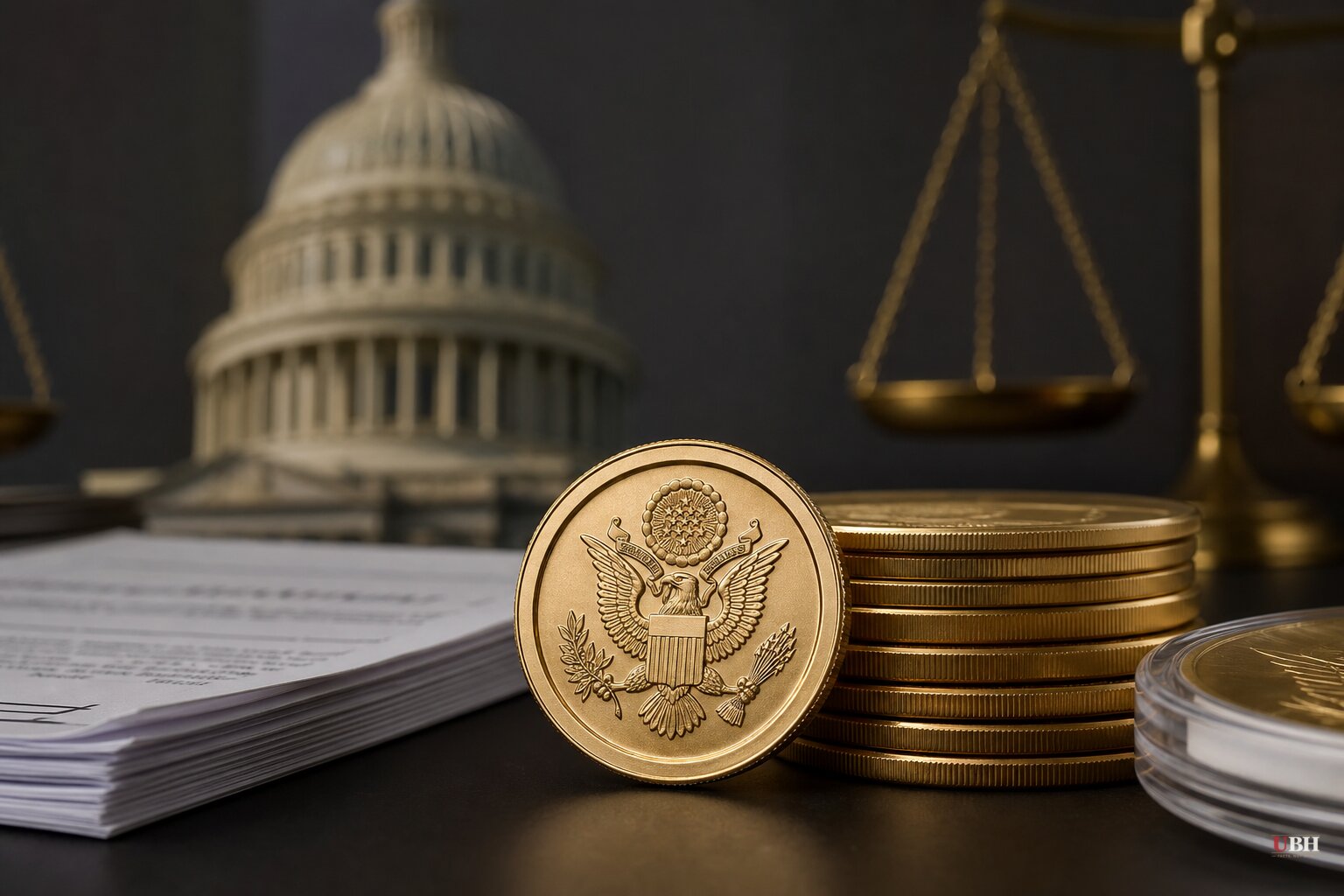
The U.S. Mint began selling $1 coins featuring President Donald Trump's portrait at noon ET on Wednesday, September 2, 2026, according to Politico, CBS News, CNN and TIME. It's the first time a sitting president has appeared on U.S. currency in a century, and the first time any living person has since 1866, per Politico.
The coin's front shows Trump's face with "LIBERTY," "IN GOD WE TRUST" and "1776 ~ 2026." The back carries the presidential seal and a "250" marking the nation's semiquincentennial, according to CBS News and CNN. A 25-coin roll runs $61, a 100-coin bag runs $154.50—that's $1.55 to $2.44 per coin for something with a $1 face value, TIME reported.
Despite the gold color, there's no actual gold in it. CBS News reported the coin is mostly copper, with 6% zinc, 3.5% manganese and 2% nickel. The Mint randomly slipped 250,000 special "July 4th" privy-mark coins, struck on Independence Day in Philadelphia, into the rolls and bags, according to CBS, CNN and TIME.
Demand was heavy. CNN reported the Mint's website put buyers in an hour-long virtual waiting room shortly after launch, and by mid-afternoon the 25-coin roll showed as backordered while the 100-coin bag was listed unavailable. The Epoch Times reported a similar wait, saying it took a reporter more than 20 minutes to get through initially. A two-per-household purchase limit is in place through 2 p.m. ET today, Thursday, September 3, according to CNN and TIME.
Is it even legal?
Federal law states "only the portrait of a deceased individual may appear on United States currency and securities," and the Presidential $1 Coin Act of 2005 barred any coin in that series from depicting a living or recently deceased president, TIME reported. Democratic lawmakers have cited both provisions to question whether the Trump coin is lawful.
Congress wrote that restriction for a reason: to keep sitting presidents off money, a norm dating back to an 1866 law passed after a Treasury official put his own face on a 5-cent note, per Politico.
But the administration isn't relying on that 2005 law. It's using the Circulating Collectible Coin Redesign Act, a bipartisan bill Trump signed in 2020 authorizing new $1 coin designs "emblematic of the United States semiquincentennial," according to Politico. CNN reported that law bars a "head and shoulders portrait or bust" of any person, living or dead, only on the reverse side of the coin. Trump's portrait sits on the obverse, the front. On its face, that appears to satisfy the statute Congress actually passed for this specific coin. No lawsuit or court ruling has been reported as of this writing, so the legal question remains open rather than settled.
The politics
Sen. Elizabeth Warren didn't wait for a court to weigh in. "Americans can't afford the basics: groceries, housing, or health care. So what is Donald Trump doing? Trying to put his face on every flat surface he can find," she said on social media, according to Politico.
This isn't Trump's only branding push. Politico noted his name or image now appears on the Kennedy Center, banners on federal buildings, U.S. passports, National Park passes, and the $1 million "gold card" visa program launched last year. Treasury Secretary Scott Bessent has also floated a $250 bill with Trump's face, and the Commission of Fine Arts approved a separate 24-karat gold commemorative coin in March, per TIME. Treasury announced in March it will put Trump's signature on all new paper currency, with U.S. Treasurer Brandon Breach calling it "not only appropriate, but also well deserved."
Whether this counts as wasteful government spin or a legitimate anniversary commemoration is a matter of taste. The $1 coins are legal tender businesses can choose to accept or refuse, they contain zero gold despite the color, and the Mint is charging collectors 55% to 144% above face value to get one. CNN reported that surcharge money is supposed to fund "organizations and projects that benefit the community" under the Mint's general policy, but Treasury did not respond to CNN's request for specifics on where this particular coin's proceeds are going.
The purchase cap lifts at 2 p.m. ET today. Whether the Mint restocks the 100-coin bags that went unavailable within hours, and whether any lawmaker or outside group actually challenges the coin in court, remains to be seen.
Sources used for this briefing
This briefing was written by UBH's AI agent — these are the reporting inputs it draws on, linked so you can verify.


