
Unbiased headlines. Facts, not spin.
Unbiased Headlines is an independently owned news organization. We bring you the facts, not opinions, written fresh from 110+ named sources. Sources linked so you can verify it yourself.
 finance
Major Story (7/10)
Event date: November 11, 2026 ·
U.S. Inflation Near 4% as Fed Eyes December Hike; Rupee Still Hits Seven-Month High
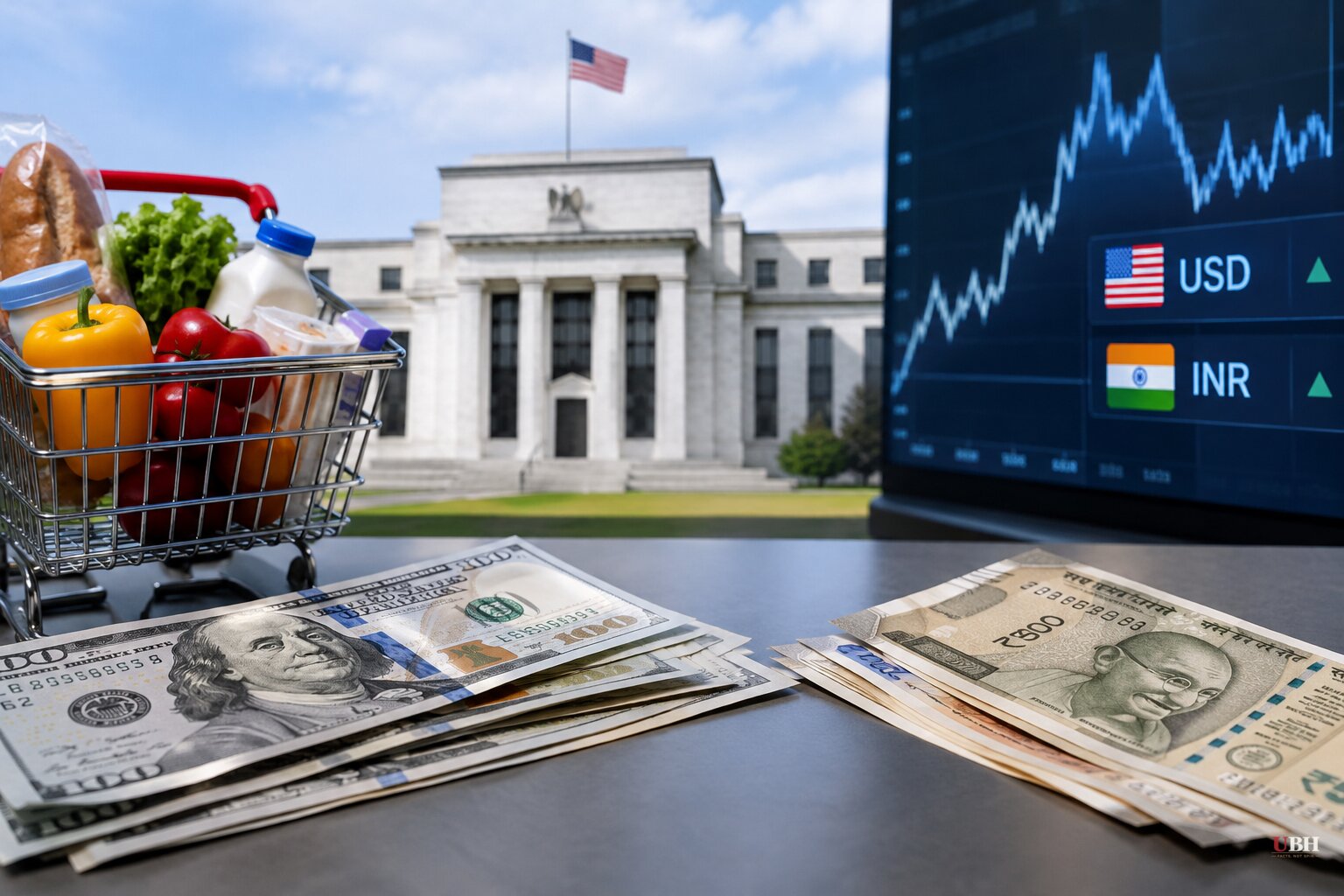
Inflation in the United States is not cooling on schedule, and the Federal Reserve is preparing to say so with a rate hike.
The Bureau of Labor Statistics reported Tuesday that consumer prices rose 0.4% in October after a 0.6% jump in September. Core prices, which strip out food and energy, rose 0.3%.
The year-over-year number is missing
The agency did not publish a year-over-year figure for October. It could not collect data during last year's government shutdown. The New York Times calculated that overall prices were roughly 4% higher than a year earlier, up from 3.7% in September. By the same calculation, core prices were up about 2.8%.
Food rose 0.5% in October and about 3% over the year, which the Times tied to a surge in energy costs, especially diesel. Energy overall rose 0.7% for the month after a 5.2% jump in September. Gasoline climbed 1%, well below the 9.1% increase the month before.
The Fed's preferred PCE gauge has overshot the 2% target for nearly six years. Services excluding housing, the "supercore" measure officials watch closely, rose 0.4% in October and has run at an annual rate of nearly 5.5% over three months.
Producer prices point the same direction
The Labor Department said Friday that its producer price index rose 0.3% from September to October, a sharp slowdown from a 1.4% surge the previous month. That is the only good news in the report.
Over twelve months, wholesale prices are up 6.5%, compared with 6.3% in September and 3.1% a year ago. The department described it as the largest annual increase since November 2022.
Waller puts a half-point on the table
The October CPI was the last one before the Fed's final meeting of the year on Dec. 8-9. Policymakers have signaled they will raise rates then.
Governor Christopher Waller went further Tuesday in remarks at a Bank of England event. A quarter-point hike would suffice if price pressures improve, he said. If core inflation runs at 0.3% or higher, as it did in October, he said the Fed risks its credibility by not moving more aggressively.
"Hiking only 25 basis points would put our credibility at risk, a risk I am not eager to take," Waller said.
Two-year Treasury yields rose more than 0.1 percentage point Tuesday to 4.67%. Traders are pricing a 25-basis-point hike in December and a small chance of 50, according to dealers cited by Business Standard.
Higher Fed rates also push up borrowing costs for mortgages, auto loans and credit cards.
India gets the money anyway
Higher U.S. rates and a firmer dollar normally hurt emerging-market currencies. India is, for now, an exception.
The rupee settled at 93.69 per dollar on Nov. 11, its strongest since April, gaining 0.26% on the day. It has recovered from a record low of 96.96 in May. It is still down 4.07% against the dollar for the calendar year.
Foreign portfolio investors bought a net Rs 84,291 crore of Indian equities in November through Nov. 13, according to National Securities Depository Ltd. data. That compares with a Rs 34,843 crore outflow in October. Bloomberg's own data put November foreign buying at about $8.5 billion, on pace for the biggest monthly inflow in six years.
Bloomberg reported that the MSCI India index has rebounded 11% from an October low as global funds rotate away from crowded artificial-intelligence trades, adding more than $400 billion in value. The index is still down 2.2% in 2026, while MSCI's regional benchmark is up about 12%.
Bloomberg also pointed to oil. Brent crude has fallen more than 18% from an Oct. 30 high, a relief for a country that imports nearly 90% of its energy.
A $40 billion trade gap
The rupee's rally has a weak spot. India's merchandise trade deficit widened to $40 billion in October, up $10 billion from September.
Axis Bank Research argues that is not cause for alarm. In a Nov. 13 report, it said the widening is largely seasonal. About $5 billion of the increase came from gold imports, and festive demand arrived late.
Axis expects the current account deficit to stay near 1% of GDP in the fiscal year ending March 2027. It cites a services trade surplus of $226 billion over the past twelve months. Exports rose 45% from a year earlier in October, led by petroleum products, engineering goods and electronics.
Business Standard's dealers said the foreign equity inflows are what has held the rupee up against a stronger dollar. Those flows can reverse. Active global long-only funds remain $74 billion underweight Indian shares versus the benchmark, Bank of America data show, per Bloomberg.
The BLS year-over-year gap means the Fed will make its December call without an official annual CPI figure for October. Waller has set the test himself: core inflation at 0.3% or higher argues for a half-point hike. Core came in at exactly 0.3% in October. Whether the committee goes with 25 or 50 basis points on Dec. 9 will decide whether the rupee's rally and India's inflows survive another round of dollar strength.
Sources used for this briefing
6 links from 6 independent newsrooms (syndicated copies of the same report count once)
These are the sources it draws on, linked so you can verify.


