
Unbiased headlines. Facts, not spin.
Unbiased Headlines is an independently owned news organization. We bring you the facts, not opinions, written fresh from 110+ named sources. Sources linked so you can verify it yourself.
 finance
Notable (6/10)
BlackRock Raises Equity Overweight to 3% From 1% in Model Portfolios Above $300 Billion
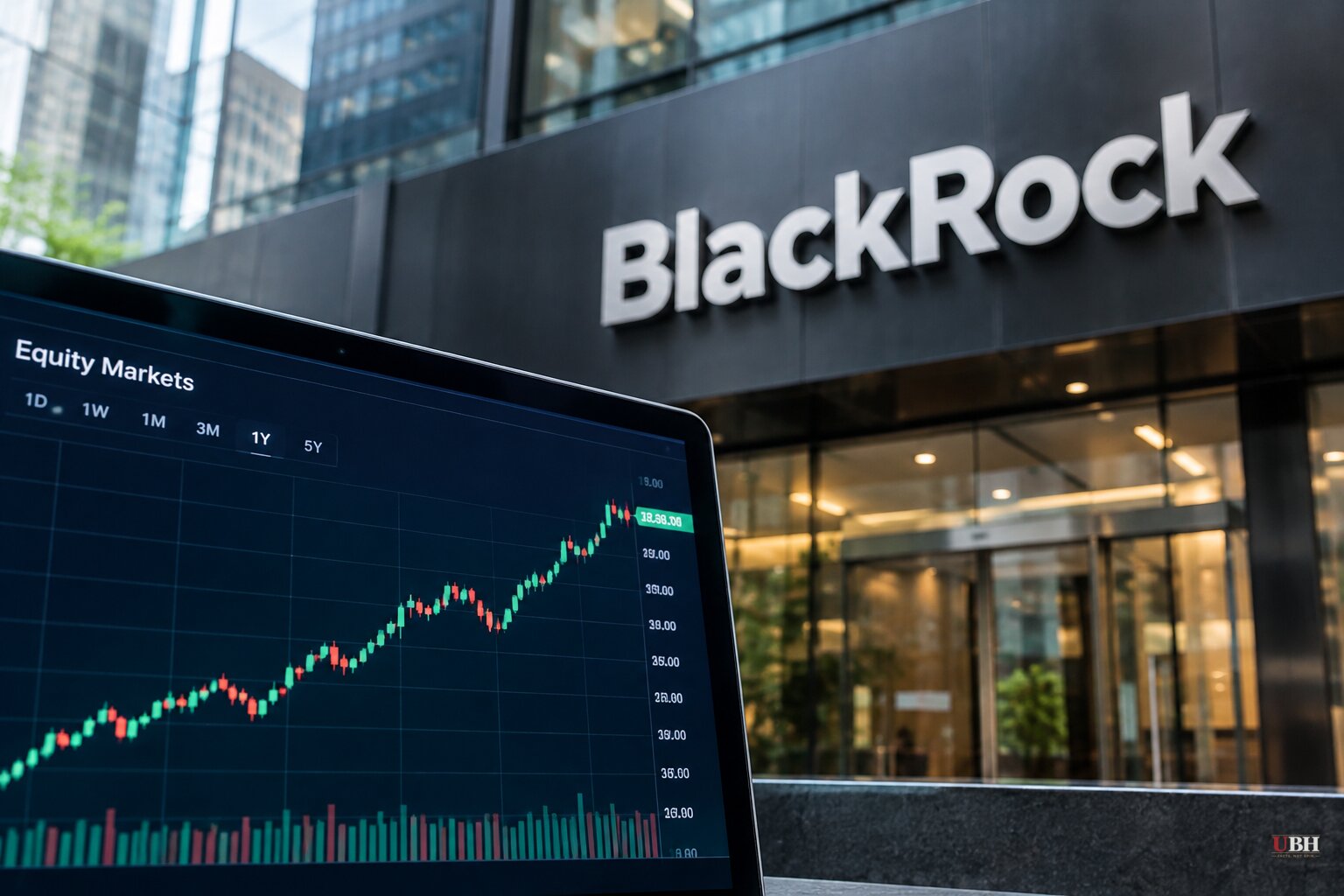
Amid a slide in AI-linked shares and Jensen Huang's exit from Nvidia, one of the world's biggest asset managers has chosen to add risk rather than cut it. BlackRock raised the equity overweight in its model portfolios, which total more than $300 billion, from 1% to 3%. The move was announced Nov. 16.
BlackRock described it as its final model portfolio adjustment of the year. It used the market pullback to buy, with the stated focus on large-cap stocks in the United States and in international markets.
What BlackRock changed
The firm cited resilience in the economy and in corporate earnings as the reason for adding equities. It said it aims to add equity risk at what it considers more attractive entry points.
On AI, BlackRock said it kept its confidence in the sector. It did change how it holds the theme. Exposure that had been concentrated in a handful of names was broadened into a wider allocation to reduce concentration risk.
The bond side moved too. BlackRock added longer-dated government bonds and selectively restored credit exposure, mainly in portfolios with larger bond weightings. The firm said higher bond yields give the portfolios a cushion.
The adjustment produced billions of dollars in flows across several of BlackRock's ETFs. The firm also said it is keeping flexibility for sticky inflation, rising interest rates and continued market volatility. Bloomberg's headline list for the day also carries an interview in which BNP Paribas chief economist Isabelle Mateos y Lago discusses persistent inflation risk.
The selloff it is buying into
The pullback has been building for weeks. In the week ended Oct. 30, the Nasdaq Composite fell 2%, the weakest of the major U.S. indexes. The S&P 500 slipped 0.57% to 7,580 and the Dow lost 0.85% to 51,770.
Alphabet closed down 12.29% on Thursday, Oct. 29, after disappointing advertising revenue raised questions about its AI spending. The next day Intel dropped more than 28%, its worst single-day decline in decades, after issuing fourth-quarter guidance tied to sluggish PC sales growth. The iShares Semiconductor ETF fell 8.24% that Friday.
Small caps held up better. The Russell 2000 gained 1.29% for that week as investors rotated away from the largest technology names.
The financing question
BlackRock's message is that the AI trade is not broken. Others are asking who pays for it. Richard Saperstein, chief investment officer at Treasury Partners, told The Epoch Times that the focus is on "what these companies expect to spend on AI going forward and whether this spending can continue to be financed by cash flows, or if equity and debt issuance will be necessary, too."
That question runs straight through Nvidia. Jay Goldberg, senior analyst at Seaport Research Partners, has called the company "the central bank of AI." He told CNN that "very aggressive vendor financing" is a more accurate description than "circular financing" for how Nvidia backs customers that buy its chips.
Nvidia committed $105 billion in August to an OpenAI data center and holds a major equity stake in CoreWeave. It is expected to take a $10 billion stake in Anthropic's IPO. In its latest quarterly report Nvidia warned that "commitments, guarantees and other commercial arrangements expose us to financial, counterparty and execution risks and may not provide anticipated benefits."
Neil Wilson, a strategist at Saxo, told CNN that Huang "was key in Nvidia being the backer of last resort across the AI ecosystem." CNN reports Huang resigned amid revelations of extramarital affairs and a board investigation into whether he was the target of a "foreign intelligence effort."
No source ties BlackRock's decision to Huang's departure. The firm's stated reasons are economic and earnings resilience, a better entry point, and lower concentration in a few AI names.
What comes next
BlackRock's overweight is a measured step. Three percent over benchmark in model portfolios is a tilt, not an all-in bet. Its AI broadening also trims reliance on the names that have taken the hardest hits.
The open question is financing. Nvidia is expected to take a $10 billion stake in Anthropic's IPO, and whether Nvidia's financing commitments calm or inflame the concerns Saperstein describes will show whether BlackRock bought the dip or caught it early.
Sources used for this briefing
6 links from 6 independent newsrooms (syndicated copies of the same report count once)
These are the sources it draws on, linked so you can verify.


