
Unbiased headlines. Facts, not spin.
Unbiased Headlines is an independently owned news organization. We bring you the facts, not opinions, written fresh from 110+ named sources. Sources linked so you can verify it yourself.
 finance
Notable (6/10)
Fed Governor Barr Warns AI Could Cause Herd Trading, Market Manipulation and Faster Bank Runs
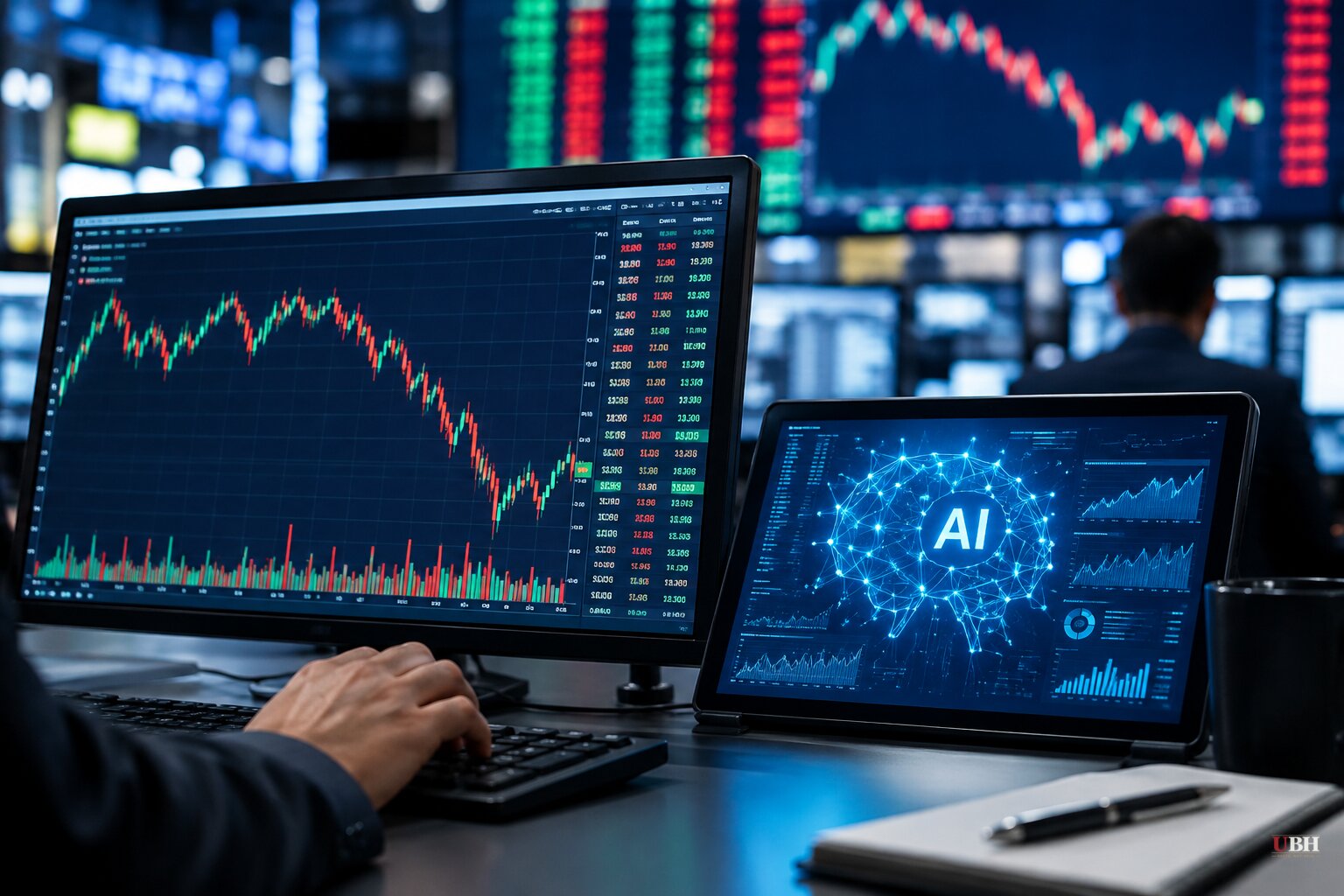
Federal Reserve Governor Michael Barr used prepared remarks for delivery in Milan, Italy, on Monday, Nov. 16, to lay out how artificial intelligence could damage the financial system. His prepared remarks did not address monetary policy or the economic outlook.
The speech builds on the Fed's latest Financial Stability Report, released Friday, Nov. 13. In the survey behind it, 87% of contacts cited AI as a salient risk to the U.S. financial system. They pointed to cyberattacks, complex AI-related financing, and the chance that an AI earnings slowdown could set off broad stock market declines.
What Barr flagged
Barr added several concerns of his own. Here is the list from his remarks:
- Herding. Heavier reliance on AI models in trading could lead market participants to act in unison and disrupt markets.
- Manipulation. Self-learning algorithms could manipulate prices and destabilize markets.
- Authority. Banks may be unable to confirm that an AI agent "attempting to take actions in retail customer accounts" has actually been authorized by the customer.
- Speed. Even legitimate AI agents acting for retail customers at lightning speed could accelerate bank runs and overwhelm traditional safeguards.
- Cyber. AI-enabled attackers, or rogue AI agents, could exploit vulnerabilities in the financial system.
He also said AI developers are struggling to make their models "well controlled, numerically and legally precise, explainable, and replicable."
"We need to reduce the risk that AI reinforces biases in consumer lending," Barr said. "And we also need to guard against the risks that could result from the use of AI in financial markets including collusion, market manipulation, or trading strategies that result in significant market volatility or even systemic risk."
The bank-run problem
The agent-authority point is the new one. A bank run has always been limited by how fast depositors can phone, queue or click. Software acting on thousands of accounts at once removes that friction.
Barr's concern is not limited to hijacked or malicious agents. His point is that agents doing exactly what customers told them to do, all at once, could be enough.
The remarks are a list of risks, not a proposal. Barr did not announce a rule, a supervisory action or a timeline in the prepared text.
The money behind the boom
The financing side of the AI buildout is drawing attention beyond the Fed. IMF Managing Director Kristalina Georgieva said the world economy is "standing on one leg" on AI. The IMF estimates circular financing among AI companies at a little over $1 trillion, with two-thirds of it funded by debt.
Georgieva warned that if that leg wobbles, financial stability troubles could follow. She also described recent market swings as "orderly" and urged caution.
Not every regulator frames the technology mainly as a threat. The Office of the Comptroller of the Currency said in its Semiannual Risk Perspective for Fall 2026, released Nov. 12, that credit risk in the loan portfolios of OCC-supervised banks remains modest overall. The agency also said banks of all sizes are continuing to explore ways to use AI. That is the supervisor's own framing of the technology: an efficiency and controls opportunity.
Security at the AI labs
A separate security argument is running alongside the financial one. Amy Kremer, chair of Humans First, a group focused on democratic oversight and safety protocols for AI, told Fox News Digital that foreign nationals working at AI firms are a national security exposure. "These companies hold and have access to a lot of sensitive information," she said. "You don't have to steal an entire AI model to get information."
She pointed to an early October case at OpenAI. The Justice Department alleges that Abdulrahman Alfozan, 35, a Saudi citizen and lawful permanent resident who worked as an engineer there, researched how to build a recording device and hid a customized audio recorder behind a television in an executive conference room in late September. Prosecutors say searches of his home and devices turned up similar components and photographs that appeared to show reconnaissance of other locations inside OpenAI. The allegations have not been tested in court. OpenAI terminated him, according to the Justice Department.
Kremer's group argues AI has virtually no federal guardrails compared with other tech sectors.
What comes next
Fed Chair Kevin Warsh is set to open a conference at the San Francisco Fed on Nov. 16 where AI developers, business leaders and academics are expected to discuss AI's implications for productivity, jobs and the economy.
The nearest hard deadline is at the state level. New York opened a registration portal for its RAISE Act on Tuesday, Nov. 10. Large frontier developers such as Anthropic and OpenAI must register by Jan. 1, 2027. They must also publish safety frameworks and report critical safety incidents within 72 hours.
Sources used for this briefing
5 links from 5 independent newsrooms (syndicated copies of the same report count once)
These are the sources it draws on, linked so you can verify.


