
Original briefings. Zero spin.
Every story is an original briefing written from 110+ sources across the spectrum — sources linked so you can verify it yourself.
 politics
Major Story (7/10)
August 21, 2026 at 07:34 AM
politics
Major Story (7/10)
August 21, 2026 at 07:34 AM
US Has Sent 2,284 Mexican Deportees to Guatemala This Year to Keep Them Away From the Border, Mexico Objects
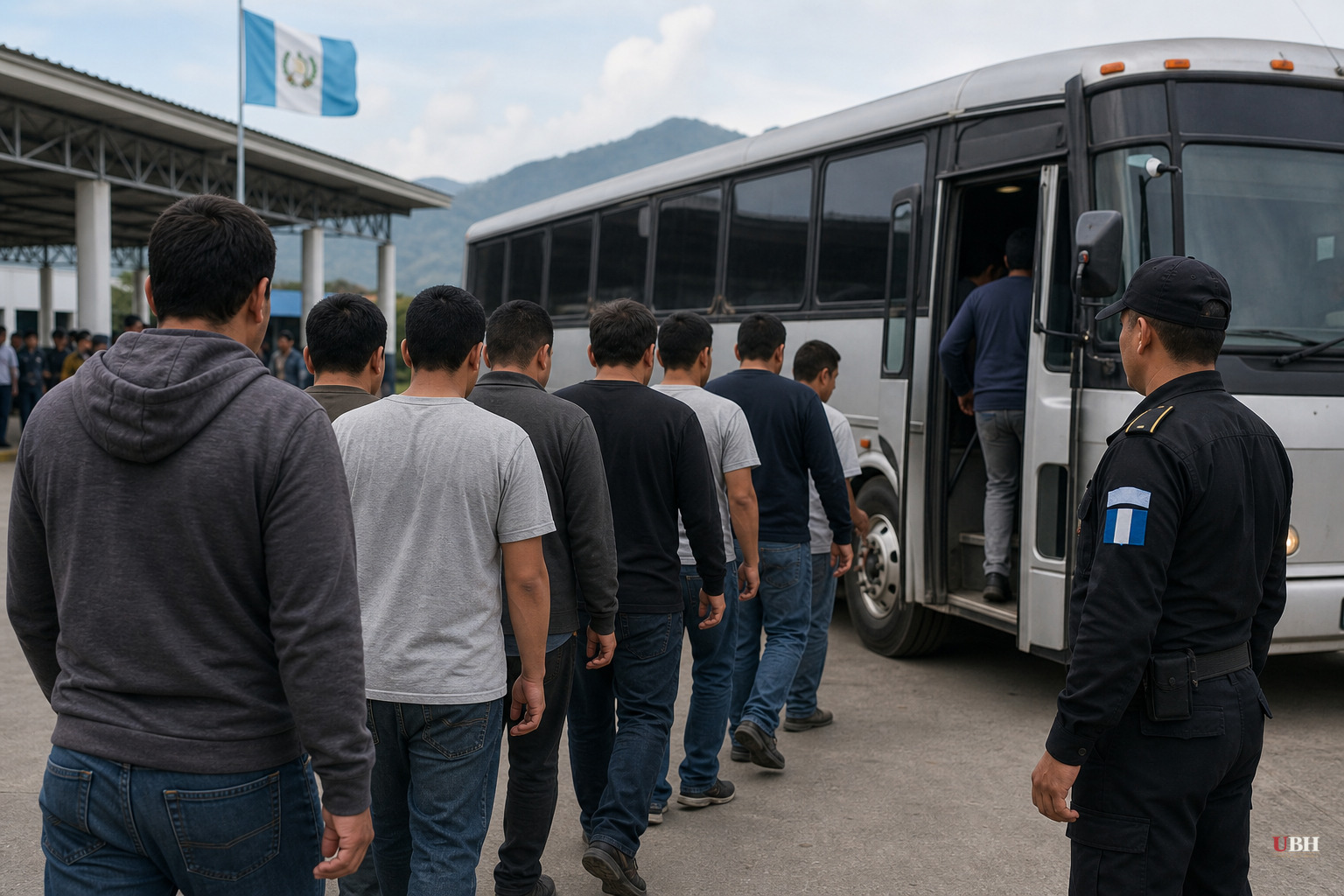
Since Guatemala's government confirmed this week that 2,284 Mexican deportees have passed through its territory in 2026, up from just 15 in all of 2025, the scale of this practice has become clear for the first time. Honduras has taken in dozens more, with government records reviewed by the Associated Press showing 82 Mexicans arriving in San Pedro Sula on flights August 13 and 15 alone, and another 35 scheduled for August 20.
The mechanics are straightforward. ICE flies Mexican nationals to Guatemala or Honduras instead of straight to Mexico. Guatemalan President Bernardo Arévalo says his country treats it as a "transit stopover," holding deportees for up to 24 hours before busing them into southern Mexico in coordination with Mexican immigration authorities. Mexico or the U.S. government picks up the cost, according to Arévalo.
Mexico's National Migration Institute confirmed the practice to the Associated Press, saying it has been happening mostly since April. The institute was blunt about the purpose: "The reason is that the United States wants to prevent them from crossing back into its territory."
Every previous administration, Republican and Democrat, has deported Mexican migrants deep into Mexican territory away from border towns to discourage quick re-entry attempts. What's new here, according to the Washington Office on Latin America's Adam Isacson, is routing Mexicans through entirely different countries first. Isacson called the practice "almost entirely punitive," telling CBS News it adds distance and friction on top of the usual deterrence and also "sends a message."
Mexico is not on board. Its Foreign Ministry issued a formal objection Thursday: "The Mexican government has expressed its opposition to this practice to U.S. authorities and has reiterated that every Mexican citizen has the right to enter the country." Mexico says it accepts the return of all its nationals and has no agreement allowing third-country deportation. Mexico isn't refusing anybody, unlike Cuba or Venezuela, which is normally the justification for routing deportees through third countries in the first place.
The Department of Homeland Security hasn't offered a detailed rebuttal to that point. Its statement, given to multiple outlets including Breitbart and CBS News, is the standard line: the administration "is utilizing all lawful options to carry out the largest deportation operation in history, just as President Trump promised." DHS has not formally announced the Guatemala-Honduras routing as policy, and officials who confirmed details to CBS News did so anonymously because they weren't authorized to speak publicly.
There's a broader diplomatic backdrop here that several outlets, including the Los Angeles Times and Washington Post's shared Associated Press reporting, flagged: this comes as Mexico has been protesting the deaths of 17 Mexican nationals in U.S. immigration custody or during enforcement operations, and as Trump has been pushing Mexico for more security cooperation against cartels. Some civil society groups quoted in that reporting believe the third-country routing is partly leverage in that larger fight. That's a plausible read, but it's an inference, not something DHS or the White House has confirmed as motive.
The administration's stated goal, deterring illegal re-entry, is a legitimate policy objective, and every White House has tried variations of it. Making a crossing attempt logistically harder by adding a thousand extra miles isn't the same as denying due process; these are people who have already been ordered removed. Guatemala's Arévalo has also stressed the deportees aren't seeking asylum or refugee status there, and Guatemala isn't holding them against their will beyond the transit window.
Routing a country's own citizens through a third nation, over that government's explicit objection, when the home country has said yes to direct returns, is a break from past practice. ABC News noted this comes in the same week the first-ever forced third-country transfer landed in Liberia and the first Haiti deportation flight since TPS ended touched down in Cap-Haitien, part of a broader expansion of third-country removals this year.
Mexico hasn't said whether it will escalate beyond formal protest, and no lawsuit or diplomatic retaliation has been announced. Whether Guatemala and Honduras keep absorbing these transfers, and whether Mexico's objections translate into anything beyond a strongly worded statement, is still an open question.
Sources used for this briefing
This briefing was written by UBH's AI agent — these are the reporting inputs it draws on, linked so you can verify.


