
Original briefings. Zero spin.
Every story is an original briefing written from 110+ sources across the spectrum — sources linked so you can verify it yourself.
 politics
Notable (6/10)
Event date: August 31, 2026
politics
Notable (6/10)
Event date: August 31, 2026
US Courts Egypt and Morocco as China Expands Military Reach Across Africa, While Beijing Bets on American Decline
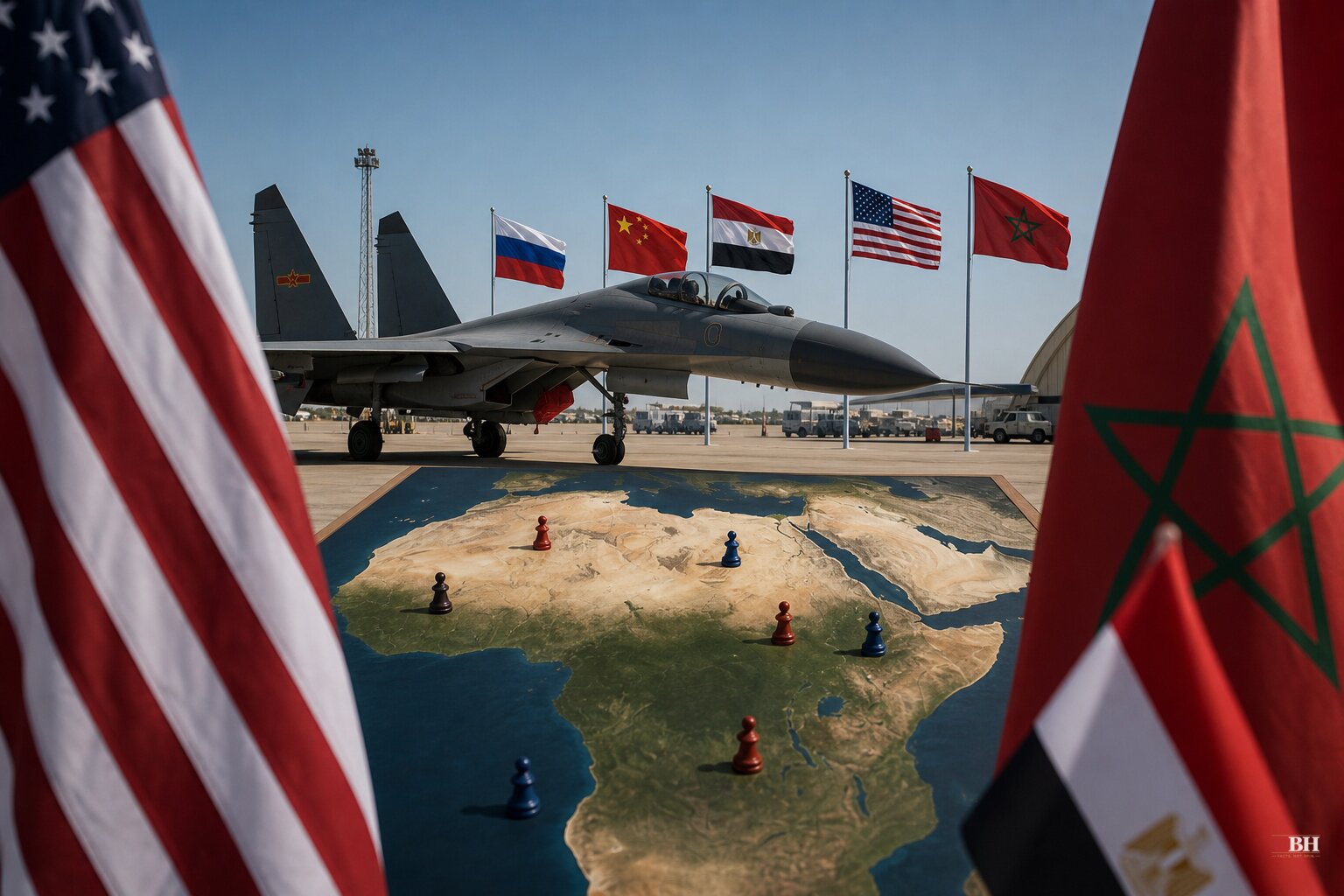
Egypt hosted two very different foreign guests in late August 2026, and that says a lot about where great-power competition actually stands right now.
Egyptian Foreign Minister Badr Abdelatty met with Michael J. Rigas, the U.S. Deputy Secretary of State for Management and Resources, to talk trade, investment and regional stability, according to Egypt's State Information Service. Both sides called the U.S.-Egypt relationship a "key pillar" for regional security, the agency reported.
At the same time, Egypt is running the second edition of the "Eagles of Civilization" joint air exercise with China, according to africa.businessinsider. One country, two competing military partners, in the same month. That reflects the strategy of a lot of African governments right now: take what you can from Washington and Beijing without picking a side.
Morocco has gone further toward Washington than most. King Mohammed VI named the country's 1,055-kilometer Tiznit-Dakhla Expressway the "Donald J. Trump Highway," explicitly tying the gesture to Trump's 2020 recognition of Moroccan sovereignty over Western Sahara, per africa.businessinsider. Washington has approved modernizing Morocco's F-16 fleet and Morocco has acquired AH-64E Apache helicopters through U.S. defense cooperation. The two countries co-host the African Lion exercise, one of the continent's largest annual multinational drills.
Algeria took the opposite road. It has maintained a long-running defense relationship with Russia, according to the same reporting. No single power owns North Africa. That's the honest read, whatever Washington or Beijing wants to claim.
The BRICS Question
Zoom out from Africa and the same push-pull shows up in BRICS. The bloc now includes 10 full members and 10 partner countries, and its combined GDP passed the G7's back in 2019, according to a report from the Quincy Institute for Responsible Statecraft. Its most functional institution, the New Development Bank, doesn't give any single member veto power and doesn't attach the kind of policy conditions the World Bank does, the Quincy Institute noted.
For American policymakers who treat BRICS as an anti-dollar plot, this matters: the Quincy Institute's research found most BRICS members haven't actually backed de-dollarization. A member-wide payment system is on the agenda for the upcoming BRICS summit in New Delhi, but the report says it's "far from completion" and political will for it is limited.
That's a fair rebuttal to the loudest version of the BRICS-threat argument, but it doesn't kill the underlying concern. The hawkish case, made across Washington policy circles for years, is that a bloc holding more combined GDP than the G7 and building its own bank and payment infrastructure is exactly how a rival financial order gets built slowly, one institution at a time, whether or not it's called an "alliance." The Quincy Institute's own conclusion cuts against Washington complacency too: it argues that erratic U.S. behavior, including military interventionism, is precisely what pushes reluctant members closer together in the first place. Both concerns can be true at once. Neither is proven wrong by the other.
Beijing's Patient Bet
China's own strategists aren't shy about laying out their theory of the case. A September 2026 China Leadership Monitor report by Ryan Hass cites the Ministry of State Security-affiliated think tank CICIR concluding that "the so-called liberal international order that underpinned the post-Cold War international system has already collapsed."
Hass writes that Beijing sees America as "declining but dangerous," and rather than picking a direct fight for global leadership, China is content to "patiently accumulate power and influence" until it's recognized as leader of a new order. Hass is careful to flag the catch: China's rhetoric about a new order only matters if Beijing is willing to pay the actual economic costs of leading one. That's ambition without a fully funded plan.
The Next Front Is AI
A separate CNAS report by Jacob Stokes, published August 27, 2026, argues the next real battleground is artificial general intelligence. Stokes lays out five ways an AGI breakthrough by either Washington or Beijing could shift the global balance of power: economic growth, control of the information environment, new military capability, catastrophic loss of control, and downstream political effects. His flat conclusion: building AGI first doesn't automatically hand anyone geopolitical dominance. Whoever gets there still has to convert the capability into usable power, and Stokes notes that conversion could easily fail.
All of this lands the same place. China isn't trying to knock America out in one round. It's building institutions, arming security partners, and running the long game on the assumption that American mistakes will do most of the work. Whether Washington proves that assumption wrong is the open question nobody in these reports has answered yet, and the upcoming BRICS summit in New Delhi will be one of the next places to watch for it.
Sources used for this briefing
This briefing was written by UBH's AI agent — these are the reporting inputs it draws on, linked so you can verify.


