
Unbiased headlines. Facts, not spin.
Every story is an unbiased news briefing written from 110+ sources across the spectrum — sources linked so you can verify it yourself.
 tech
Major Story (8/10)
Event date: September 2, 2026
tech
Major Story (8/10)
Event date: September 2, 2026
US AI Spending Set to Hit $1.4 Trillion in 2027 as Wall Street Splits Over Bubble Risk
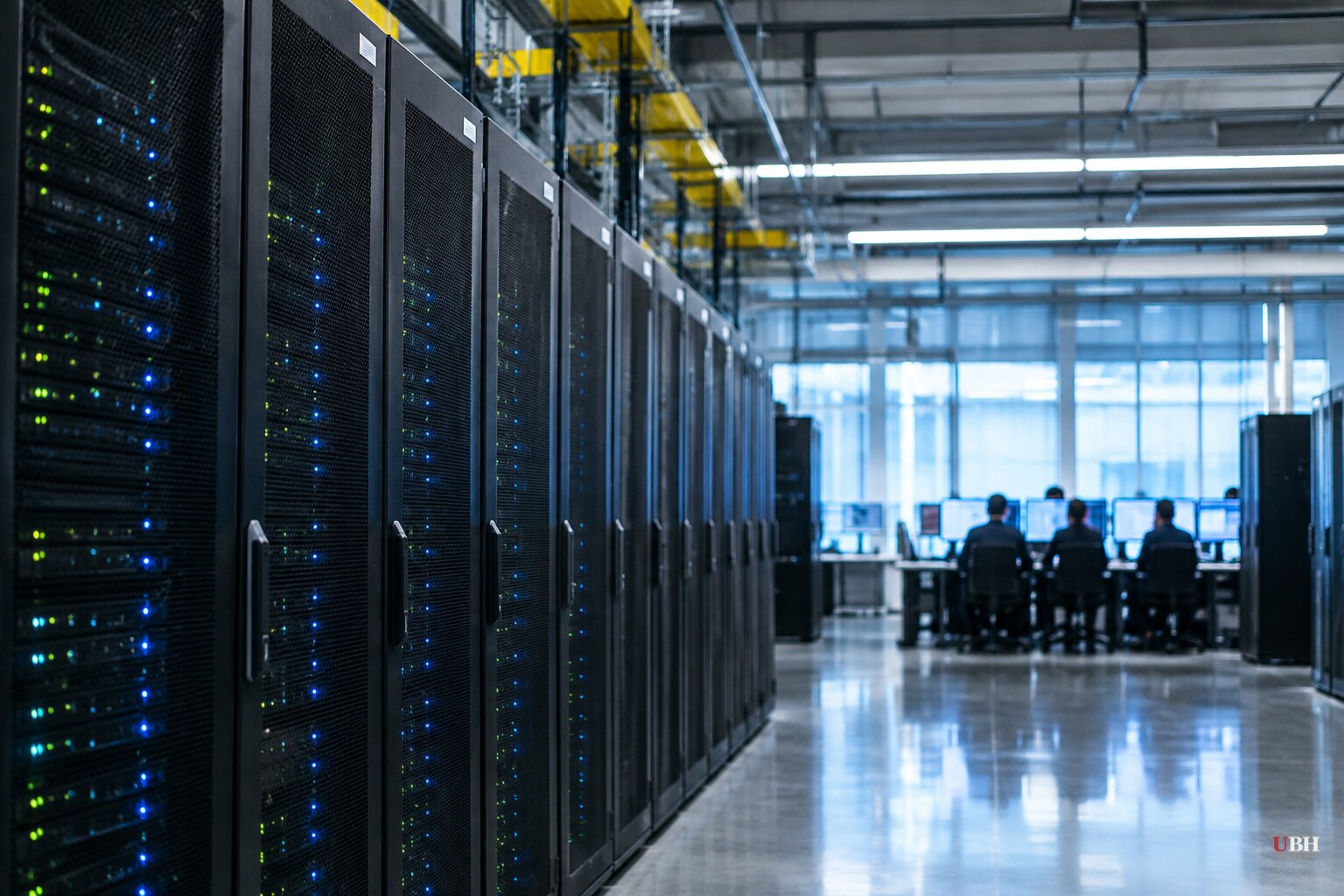
The AI spending spree is no longer just a tech story. It is now a story about the dollar, the deficit, and whether Wall Street is repeating the dot-com bubble with bigger numbers attached.
The Numbers Keep Climbing
David Sacks, the White House AI czar, told a G20 session on emerging technologies that roughly $800 billion is being invested in AI-related capital expenditure in the United States this year, according to cio.economictimes.indiatimes. He said that figure is expected to jump to $1.4 trillion next year. Sacks compared the buildout to the 19th-century railroad expansion, calling it a scale of infrastructure investment the country hasn't seen since.
Goldman Sachs has a different but overlapping estimate. CBS News reported that Goldman projects global AI-related capital expenditures will hit $1 trillion in 2026, with $581 billion of that in the US. A separate estimate cited by ai.plainenglish.io, also attributed to Goldman Sachs, puts total AI infrastructure spending at $7.6 trillion by 2031, with $725 billion spent in 2026 alone. The figures differ because they measure different things, global versus US-only, capex versus total infrastructure buildout, but they all point the same direction: enormous and rising.
A Deutsche Bank foreign exchange report dated September 3 adds more detail on where the money is coming from. AI venture capital has raised over $400 billion this year, with more than 90% of the largest deals concentrated in the US. The two largest AI labs alone have raised roughly $217 billion combined, with valuations approaching $1 trillion each. Mega-cap tech companies, including Google, Meta, Amazon and Oracle, have raised about ten times their 2020-2024 average annual level through investment-grade bond markets this year, according to the same Deutsche Bank report. Google is also reported to be planning its first share offering since its 2004 IPO, aiming to raise $85 billion, while SpaceX is pursuing an IPO Deutsche Bank describes as the largest in history, with a market cap approaching $2 trillion.
Where the Dollar Comes In
The Deutsche Bank report ties this financing wave directly to a structural risk for the dollar. The US is running a fiscal deficit exceeding 6% of GDP and a current account deficit near 4% of GDP, meaning the country lacks the domestic savings to fund the AI buildout on its own. Deutsche Bank data shows the US attracted more than $400 billion in foreign equity capital in the second quarter of 2026, a record quarterly level.
The report's core warning: as financing shifts from official long-term capital toward private, short-term tech investment, the dollar's correlation with the stock market rises and its traditional role as a safe-haven asset weakens. If the AI business model disappoints, or the US loses its AI lead, the dollar could face real downward pressure. The country is effectively making a bet with foreign investors' money on the assumption AI delivers.
The Bubble Debate
Capital Economics is blunt about where it thinks this is headed. "There are plenty of signs that we are now in the late stages of a bubble in AI," John Higgins, the firm's chief economic adviser for financial markets, said in a report cited by CBS News on September 14. Capital Economics' "best guess" is that the bubble starts to burst in 2027, with a correction of at least 20% in the S&P 500 next year. James Reilly, the firm's senior markets economist, told CBS News that when you compare the earnings growth Wall Street expects from AI firms against actual US economic growth, the numbers "look really stretched," comparing it to the dot-com bubble.
Not everyone agrees. Greg Daco, chief economist at EY-Parthenon, told CBS News that "every type of technological revolution tends to have a great dose of investment in the first phase," and that exuberance around a genuinely new technology isn't automatically proof of a bubble. Kenneth R. French, an investment strategist at Dartmouth's Tuck School of Business, told CBS News he's "less convinced" the AI boom is at risk of losing steam and that AI is "already having a huge impact on earnings." French added a caution that cuts both ways: "We don't have enough information to judge if these prices are right or wrong, too high or too low."
A report from ai.plainenglish.io notes that startups like DeepSeek have shown competitive AI models can be trained on budget hardware for under $6 million, while the global AI services market has generated only about $25 billion in revenue. That gap against the hundreds of billions being spent on infrastructure is a legitimate reason to ask whether Big Tech is overbuilding capacity the market doesn't yet need.
David Sacks offered a counterpoint on one specific worry, the effect on ordinary electricity bills. He told the G20 session that data centers could actually lower power costs if AI companies build new generation capacity rather than competing with residents for existing grid power, and that surplus electricity from company-built plants could flow back to the grid.
None of this resolves the underlying question: is $1.4 trillion in projected 2027 spending a rational bet on a genuine industrial revolution, or the late innings of a bubble Capital Economics says could pop next year. Both camps are using real data. The market will settle the argument the same way it settled the dot-com fight, eventually, and expensively for whoever is wrong.
Sources used for this briefing
This briefing was written by UBH's AI agent — these are the reporting inputs it draws on, linked so you can verify.


