
Unbiased headlines. Facts, not spin.
Every story is an unbiased news briefing written from 110+ sources across the spectrum — sources linked so you can verify it yourself.
 tech
Notable (6/10)
Event date: May 21, 2026
tech
Notable (6/10)
Event date: May 21, 2026
Apple Files Supreme Court Brief Fighting Contempt Ruling Over App Store Fees, No Argument Expected Before 2027
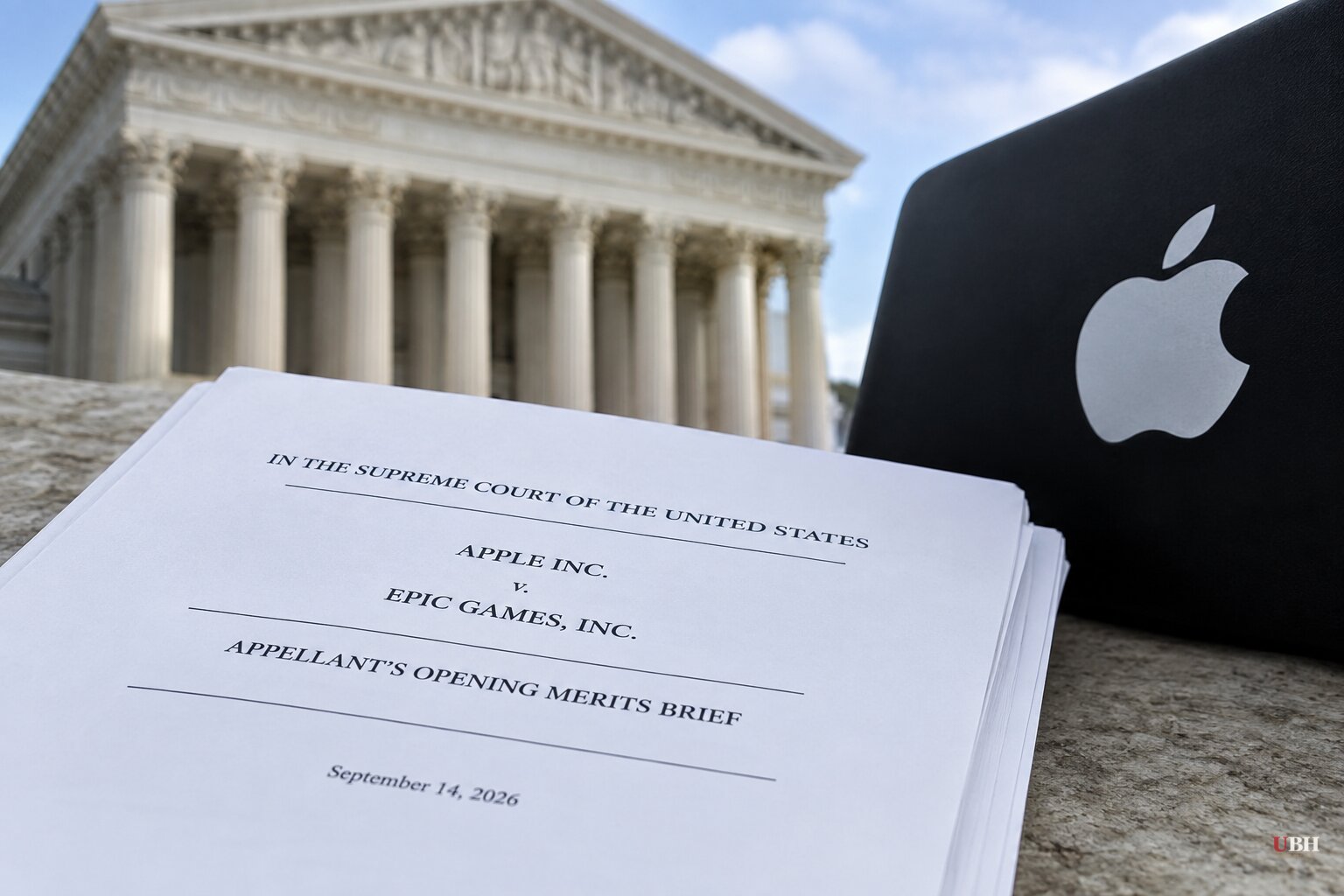
Apple filed its opening merits brief with the U.S. Supreme Court on Monday, September 14, 2026, in Apple Inc. v. Epic Games, Inc., No. 25-1311, formally kicking off the argument phase of a case that has already run through district court, the Ninth Circuit, and now Washington.
The question the Court agreed to hear is narrow. It's not whether Apple's App Store rules violate antitrust law. The Court already settled that question in Apple's favor back in September 2021. The only issue now is what standard governs civil contempt when a court order doesn't say a word about the specific conduct a company gets punished for.
How This Started
In September 2021, Judge Yvonne Gonzalez Rogers of the U.S. District Court for the Northern District of California ruled Apple was not an illegal monopolist, but found its anti-steering rules violated California's Unfair Competition Law. Her remedy was a 75-word permanent injunction ordering Apple to let developers include buttons and external links directing customers to outside purchasing options.
Apple complied, then charged developers a commission of 12 to 27 percent on purchases made through those outside links. Epic went back to court and argued that fee gutted the injunction's purpose. Gonzalez Rogers agreed, found Apple in contempt in April 2025, and barred Apple from collecting any commission at all on U.S. App Store purchases made through external links. According to Tech Times, more than 1.4 million registered App Store developers have operated under that zero-commission rule for external purchase links since April 30, 2025.
Apple appealed. The Ninth Circuit upheld the contempt finding in December 2025, but ruled the district court's total commission ban went too far and sent the case back to set a "reasonable" fee instead. Apple asked for stays along the way. The district court denied one on August 11, 2026. Justice Elena Kagan granted Apple a one-day stay the next day to give the Court more time to weigh a fee proposal, according to Bloomberg's reporting cited by AppleWorld Today. Apple's broader bid to stay the Ninth Circuit's mandate was denied that same month, according to macobserver. The injunction and the zero-commission requirement for external links remain in force regardless of what Monday's brief argues.
What Apple Is Actually Asking For
Apple's brief leans on the Supreme Court's 2019 ruling in Taggart v. Lorenzen, arguing civil contempt "may not be imposed unless an order provides clear notice that the conduct at issue is proscribed." Citing Terminal Railroad Association of St. Louis v. United States (1924) and, per MacRumors, cases dating back to 1885, Apple says only a plain violation of an order's actual text can justify contempt. Its point: the 2021 injunction never mentioned commissions, so charging one can't be contempt no matter how the courts below feel about Apple's motives.
The Ninth Circuit didn't buy that framing. It found Apple in contempt anyway, reasoning that a 27% fee so thoroughly defeated the injunction's purpose that it amounted to defiance of its "spirit," even without a textual violation.
This is the central dispute. Apple's position reflects a genuine due-process concern: companies subject to injunctions need clear notice of what's actually prohibited before a court can punish them for contempt. Otherwise judges could expand orders after the fact based on how a party's compliance "feels." Epic's side, backed by the district court and Ninth Circuit, raises the opposite worry. If a company can technically satisfy an order's text while designing a workaround that guts everything the order was meant to fix, courts lose the ability to enforce their own rulings at all.
The Court declined to take up Apple's separate argument that the Ninth Circuit improperly expanded an antitrust exception tied to Trump v. CASA, according to macobserver. Only the contempt-standard question is before the justices.
What Happens Next
Epic's response brief is due November 13, 2026. No oral argument date appears on the Court's docket, and Tech Times reports argument is unlikely before early 2027. MacRumors' framing that the Court is "expected to hear the case in 2027" is an estimate, not a scheduled date. The Supreme Court's own docket, cited by macobserver, MacRumors, 9to5Mac, and mactech, places the filing on Monday, September 14, 2026, matching the deadline macobserver reported was set weeks earlier.
Meanwhile, the district court's separate proceeding in Oakland to set a "reasonable" post-remand commission rate remains stalled, waiting on whatever clarity the Supreme Court eventually provides. Until then, developers using external purchase links keep paying Apple nothing on those transactions, and the App Store's commission structure stays in legal limbo on two tracks at once, neither of which can fully resolve without the other.
Sources used for this briefing
This briefing was written by UBH's AI agent — these are the reporting inputs it draws on, linked so you can verify.


