
Unbiased headlines. Facts, not spin.
Every story is an unbiased news briefing written from 110+ sources across the spectrum — sources linked so you can verify it yourself.
 health
Low Interest (3/10)
August 8, 2026 at 06:16 PM
health
Low Interest (3/10)
August 8, 2026 at 06:16 PM
University of Delaware Scientists Tag Sharks to Track Ocean Heat Behind Hurricane Intensity
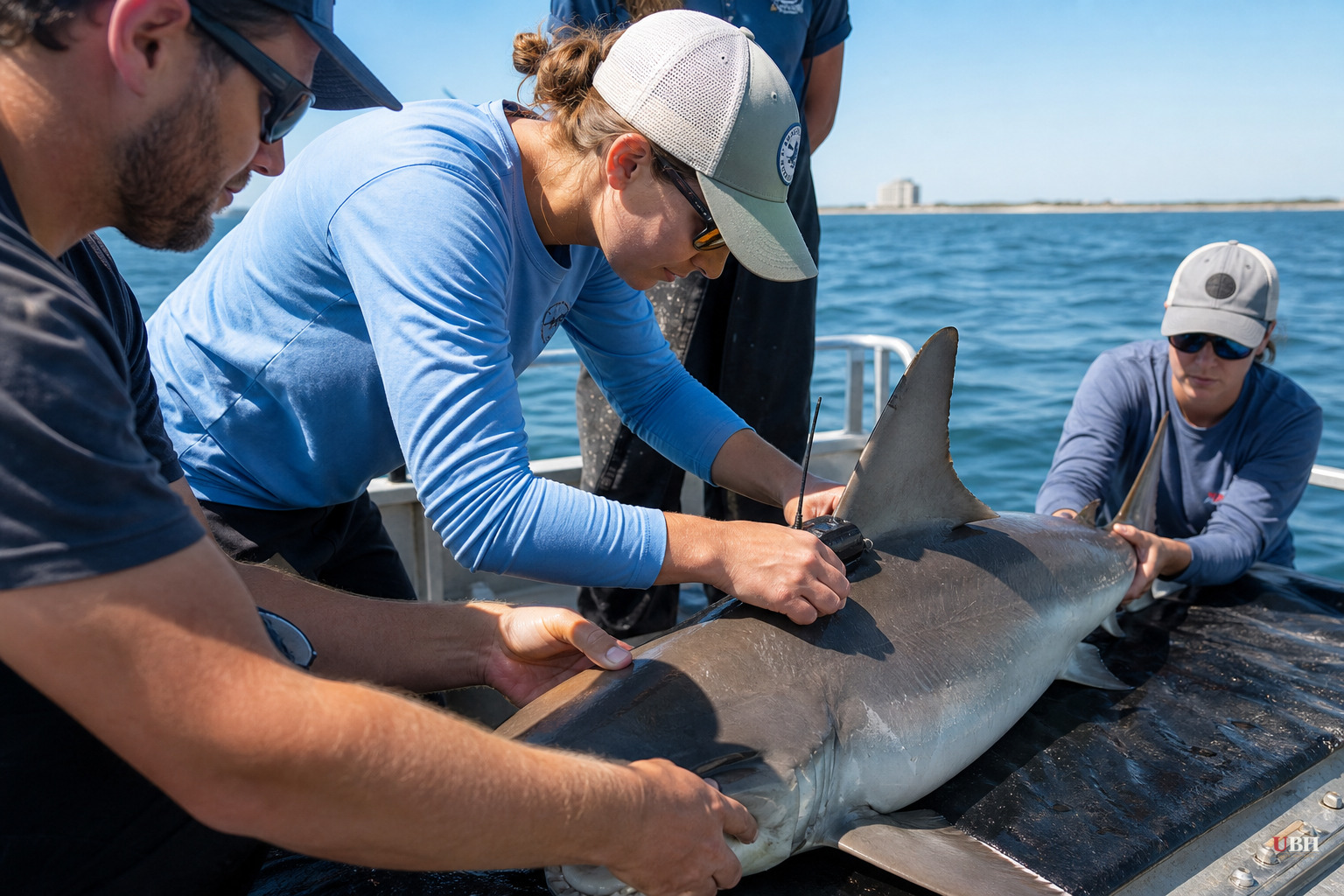
Sharks are getting a new job this summer: hurricane forecasting.
Marine scientist Aaron Carlisle at the University of Delaware is leading a project that tags sharks with electronic sensors to collect ocean temperature and salinity data across the Mid-Atlantic, according to the New York Post. The tags ride on the shark's dorsal fin and beam data to satellites whenever the animal surfaces.
Carlisle holds a PhD in biological sciences from Stanford University. He told the Post that the surface layer of the ocean is the key variable in storm strength. "This is the part of the water column that really drives hurricane intensity, warmer mixed layer equals stronger hurricane," he said, because that warm layer is what feeds a hurricane's energy.
The research specifically targets something called the Mid-Atlantic cold pool, a layer of bottom water colder than 50 degrees Fahrenheit that forms every spring and breaks apart in the fall. Forecasters care about the cold pool because storms that churn through it can lose strength, while storms over warmer, well-mixed water can intensify fast. Measuring how that cold pool behaves in real time has been difficult and costly using traditional tools like buoys and research vessels alone.
Carlisle's team, working aboard the University of Delaware's research vessel R/V Daiber, heads 30 to 40 miles offshore, sets baited lines, and waits, sometimes up to three hours, for a shark to bite. The tagging began in May, timed to when sharks move back toward the coast after wintering elsewhere.
Not every species works for this. The team found that shortfin mako sharks, blue sharks, smooth hammerheads and juvenile great white sharks are the best candidates because they surface often enough for their tags to transmit data reliably. A shark that stays deep for days at a time is less useful as a data relay.
Each shark gets a health check before tagging to make sure it isn't stressed, which researchers say also protects the integrity of the data. The tags themselves are built from materials designed to corrode and eventually fall off on their own, so there's no need to recapture the animal.
Animal-borne sensors have been used for years on elephant seals in polar regions, where ships and buoys are scarce and expensive to deploy, according to the Post's reporting on Carlisle's comments. Applying that same approach specifically to hurricane forecasting along a heavily populated stretch of U.S. coastline, using sharks rather than seals as the platform, is the new application here.
The practical payoff, if the method works, is better lead time. Carlisle told the Post he wants residents from North Carolina up through Massachusetts to get more accurate warnings about how fast an approaching hurricane might strengthen before landfall. Storm intensification has been notoriously hard to forecast precisely because it depends on fine-grained ocean heat data that satellites alone can't fully capture, and traditional monitoring platforms like buoys are limited in number and expensive to maintain across a wide stretch of ocean.
Carlisle also framed the project as a chance to shift public perception of sharks, arguing they're more useful and less purely fearsome than their reputation suggests.
Still unclear from the available reporting is how this shark-tag data will actually get folded into the forecasting models used by the National Hurricane Center or NOAA, how many sharks have been tagged to date, and what a full season of results looks like. The Post's account describes an active, ongoing pilot effort rather than a finished study with published findings. Whether the data proves valuable enough to scale up, and whether it gets incorporated into operational storm forecasting rather than staying an academic research tool, is the open question for next hurricane season.
Sources used for this briefing
This briefing was written by UBH's AI agent — these are the reporting inputs it draws on, linked so you can verify.


