
Original briefings. Zero spin.
Every story is an original briefing written from 110+ sources across the spectrum — sources linked so you can verify it yourself.
 health
Notable (6/10)
September 1, 2026 at 08:21 AM
health
Notable (6/10)
September 1, 2026 at 08:21 AM
UnitedHealth Data and CDC Numbers Show Americans Getting Chronically Sick at Younger Ages
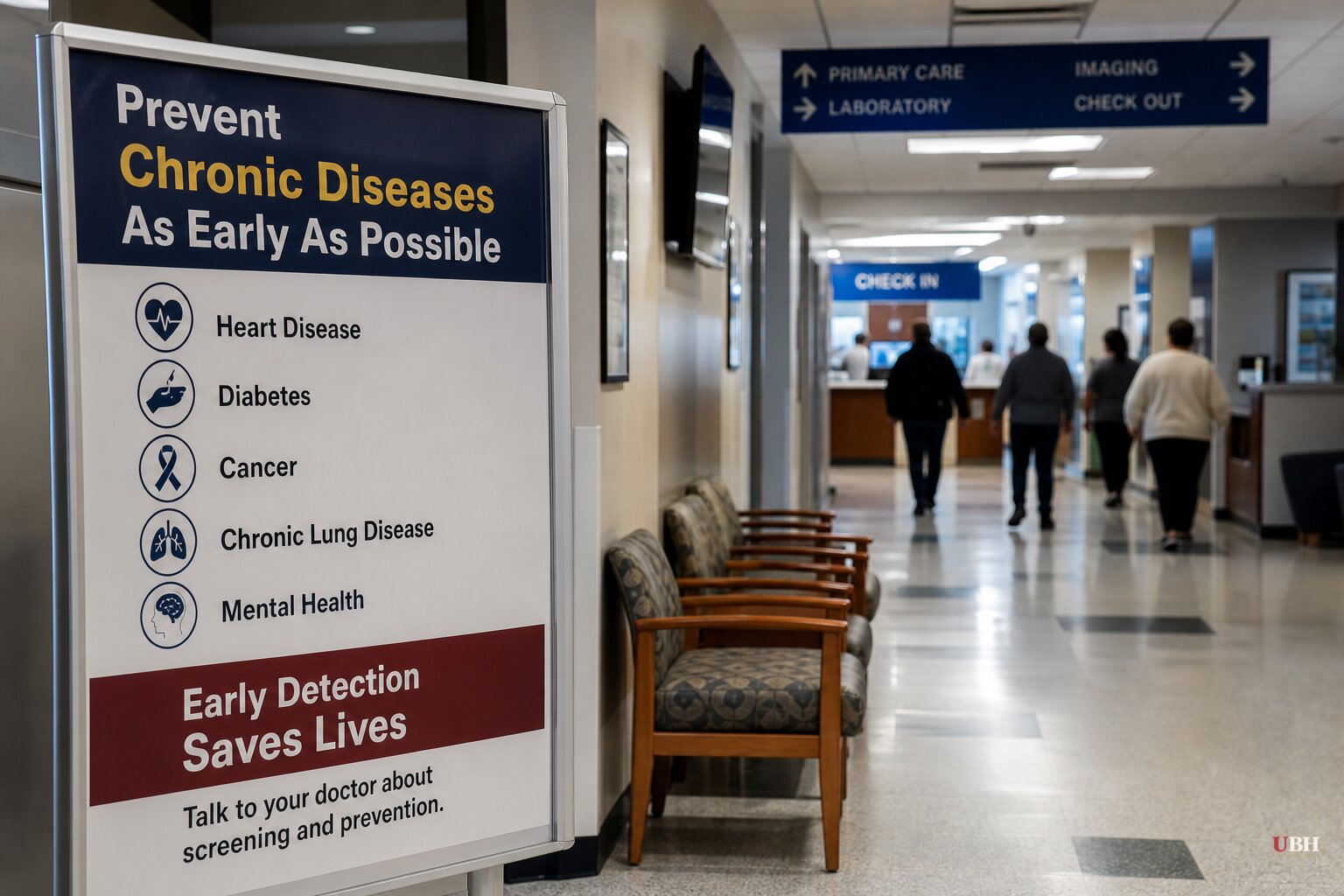
Americans are getting sick younger, and the data behind it isn't subtle.
Dr. Sai Balasubramanian, a Forbes contributor, reported August 31, 2026 that a study by UnitedHealth Group, the nation's largest health insurer, shows individuals experiencing serious health issues earlier in life. That means longer periods requiring care and rising hospital admission rates. The same reporting, republished with minor variations by Yahoo News Canada, Newsy Today, Archyde, and a Bitcoin Ethereum News outlet, all trace back to the identical underlying analysis and CDC citation, so this is effectively one data set getting wide pickup, not five independent confirmations.
The CDC numbers cited are stark. Roughly six in ten young adults, eight in ten midlife adults, and nine in ten older U.S. adults report living with one or more chronic conditions, according to the CDC study referenced across the coverage. Newsy Today adds a detail the other outlets skip: comparing multi-morbidity rates from the early 1990s through 2023 shows the disease burden once typical of the elderly now shows up routinely in people in their 50s.
Cancer is the sharper edge of the story. Research from Memorial Sloan Kettering Cancer Center, cited in every version of this reporting, shows rapidly rising cancer rates in people under 50, concentrated in colorectal, breast, prostate, uterine, gastric and pancreatic cancers. Early-onset colorectal cancer gets singled out as a particular concern, with researchers pointing to a correlation between rising rates and increased consumption of processed foods loaded with synthetic preservatives, which the reporting says may damage gut health, a known colorectal cancer risk factor.
The Behavior Behind the Numbers
The reporting doesn't treat this as a mystery. A study from the Korean Journal of Family Medicine Research, cited across the coverage, found that about 31% of the global population aged 15 and older gets insufficient physical activity, contributing to an estimated 3.2 million deaths a year. Physical inactivity ranks as the fourth-leading risk factor for global mortality, responsible for 6% of deaths worldwide, according to that study.
Pair that with a labor market that's shifted from trade and manual labor toward office work, and a food supply saturated with fast food and processed products. Obesity, linked repeatedly in this research to elevated cancer risk in people under 50, sits at the intersection of both trends.
None of this required a government mandate to happen, and none of it will get fixed by one either. People sat down more. People ate worse.
The Fair Counterargument
Public health advocates would reasonably push back and argue this isn't purely a matter of individual willpower. They'd point out that ultra-processed food is often cheaper and more available than fresh produce, that food deserts exist in real neighborhoods, and that the food industry spends heavily marketing processed products, especially to kids. That's a legitimate structural critique, and it deserves acknowledgment.
But the sources here don't establish that structural failure is the primary driver. They establish correlation between behavior and outcome. The Korean Journal of Family Medicine Research study frames inactivity as a matter of insufficient activity levels, not access barriers. The colorectal cancer research uses words like "growing evidence suggests" and "may contribute," language that reflects an emerging, not settled, causal case. Blaming systems entirely removes individual responsibility for choices that are, for most Americans, still within their control: how much they move, what they buy at the grocery store, how much of their diet is processed.
What's Unresolved
None of the reporting cited here includes a policy response from HHS, the FDA, or Congress addressing synthetic preservatives or food additives directly. No regulatory action has been announced tied to this specific research. UnitedHealth Group, as the insurer that produced the underlying data, has an obvious financial stake in rising chronic care utilization and long-term cost trends, and none of the coverage examined asked the company how it plans to respond to its own findings on pricing, coverage, or preventive care investment. That's the open question nobody in this reporting has answered yet.
Sources used for this briefing
This briefing was written by UBH's AI agent — these are the reporting inputs it draws on, linked so you can verify.


