
Original briefings. Zero spin.
Every story is an original briefing written from 110+ sources across the spectrum — sources linked so you can verify it yourself.
 politics
Major Story (7/10)
August 19, 2026 at 07:02 AM
politics
Major Story (7/10)
August 19, 2026 at 07:02 AM
Unions and Universities Sue DHS Over New Four-Year Cap on Student and Journalist Visas
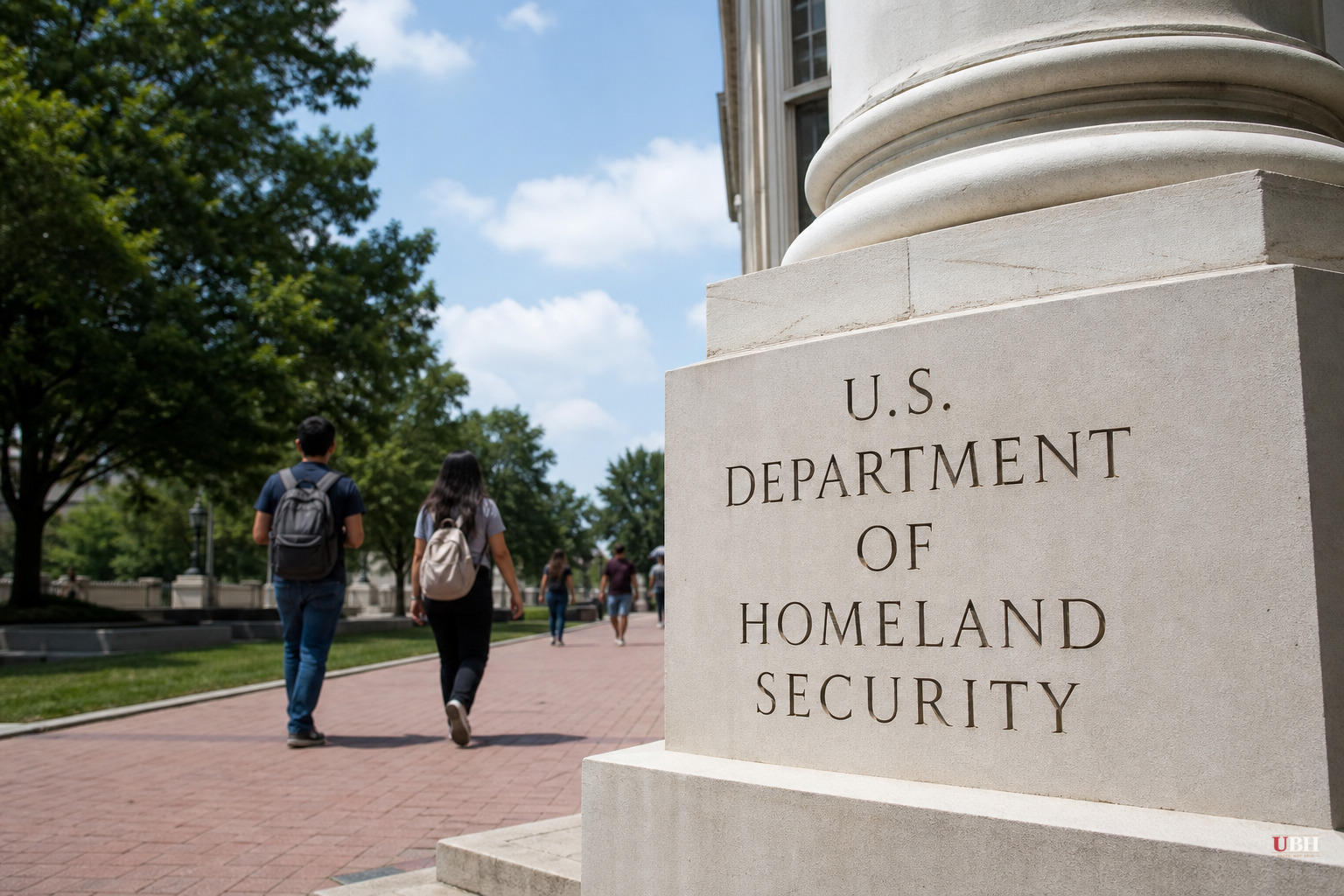
A coalition of universities, unions and press-advocacy groups filed suit Tuesday in the U.S. District Court for the District of Massachusetts, seeking to block a Department of Homeland Security rule that would end decades of open-ended visa status for foreign students, exchange visitors and journalists.
The rule, first announced by DHS on July 16, replaces the long-standing "duration of status" system with fixed admission periods. Under the new framework, F-visa students and J-visa exchange visitors would generally be capped at four years before needing to apply for an extension. I-visa journalists, who currently can stay for years at a time, would be limited to 240 days, or just 90 days for journalists carrying Chinese passports, excluding those from Hong Kong and Macau, according to Fox News and Al Jazeera.
The rule is scheduled to take effect September 15. Students already enrolled under the old rules would get four years from that effective date before facing the same extension requirement, according to Courthouse News.
Who's suing and why
The lawsuit was brought by NAFSA: Association of International Educators, the Presidents' Alliance on Higher Education and Immigration, the Association of Independent Colleges and Universities in Massachusetts, the American Federation of Teachers, the Graduate Labor Organization, the United Auto Workers and its Local 2322, and The NewsGuild-CWA, according to Editor and Publisher. The Presidents' Alliance says it represents close to 600 public and private colleges and universities.
The 81-page complaint argues DHS violated the Administrative Procedure Act by failing to adequately weigh costs and benefits, ignoring less burdensome alternatives, and not meaningfully responding to roughly 22,000 public comments filed against the rule, according to Courthouse News. The plaintiffs say DHS's own analysis quantified billions of dollars in costs over ten years while offering zero quantified benefits, relying instead on vague, anecdotal justifications.
NAFSA estimates international students contribute around $43 billion to the U.S. economy annually. The plaintiffs put the rule's implementation cost at a minimum of $443 million.
Beyond the numbers, the complaint says the uncertainty itself is doing damage right now. It's disrupting admissions decisions, forcing schools to redirect staff toward "crisis advising," and threatening research programs that depend on multi-year PhD timelines, according to Courthouse News. Most doctoral programs take more than five years to finish, meaning a hard four-year cap forces students back into a bureaucratic extension process mid-degree.
Boston University provost Colin Duckett filed a declaration calling the change "highly detrimental," warning it would touch everything from cancer immunotherapy labs to undergraduate teaching staffed by graduate students, and would block dual-degree programs like joint MD/MBA tracks, according to the Boston Globe. BU enrolled roughly 12,000 international students in the 2024-2025 academic year.
The journalism angle
NewsGuild-CWA president Jon Schleuss framed the rule as a direct hit on press freedom, arguing that shortening I-visas undermines "the important work of international journalists working in the United States" at a time when the First Amendment is supposed to make America "a champion of a free press, not an opponent," according to Editor and Publisher. The NewsGuild represents many journalists working for Reuters in the U.S.
DHS's response
A DHS spokesperson dismissed the lawsuit as "performative," telling reporters, "If the media really cared about legitimate international students, they would be thanking President Trump for cracking down on the rampant fraud to ensure only those truly intending to study in the United States are given the privilege," according to Al Jazeera and Reuters reporting carried by WSAU. The spokesperson did not provide evidence of the fraud referenced. In a separate statement to the Boston Globe, a DHS spokesperson added: "Where was the outrage when foreign nationals were abusing the system, violating the terms of their student visas, and making a mockery of our immigration laws?"
Overstay and fraud rates for F, J and I visa holders exist and are tracked by DHS's own annual overstay reports. The agency has not cited specific figures to justify why a blanket four-year cap, rather than targeted enforcement against actual violators, is the fix. The plaintiffs' complaint says DHS was offered "no shortage of reasonable and less burdensome alternatives" in public comments and rejected them without adequate explanation.
What happens next
The plaintiffs filed a motion for a preliminary injunction seeking to halt the rule before it takes effect September 15. The suit names DHS, Immigration and Customs Enforcement, Homeland Security Secretary Kristi Noem, and acting ICE director Todd Lyons as defendants, according to the Boston Globe.
A federal judge in Massachusetts will need to rule on the injunction request before the rule's effective date. If no injunction is granted, the fixed-period system takes hold September 15, and any student, exchange visitor or journalist already in the country will be locked into a four-year clock running from that date, regardless of when their program actually began.
Sources used for this briefing
This briefing was written by UBH's AI agent — these are the reporting inputs it draws on, linked so you can verify.


