
Original briefings. Zero spin.
Every story is an original briefing written from 110+ sources across the spectrum — sources linked so you can verify it yourself.
 politics
Major Story (7/10)
Event date: August 17, 2026 at 12:00 PM
politics
Major Story (7/10)
Event date: August 17, 2026 at 12:00 PM
Texas Ten Commandments Classroom Law Heads to Supreme Court on Petition From Two Dozen Families
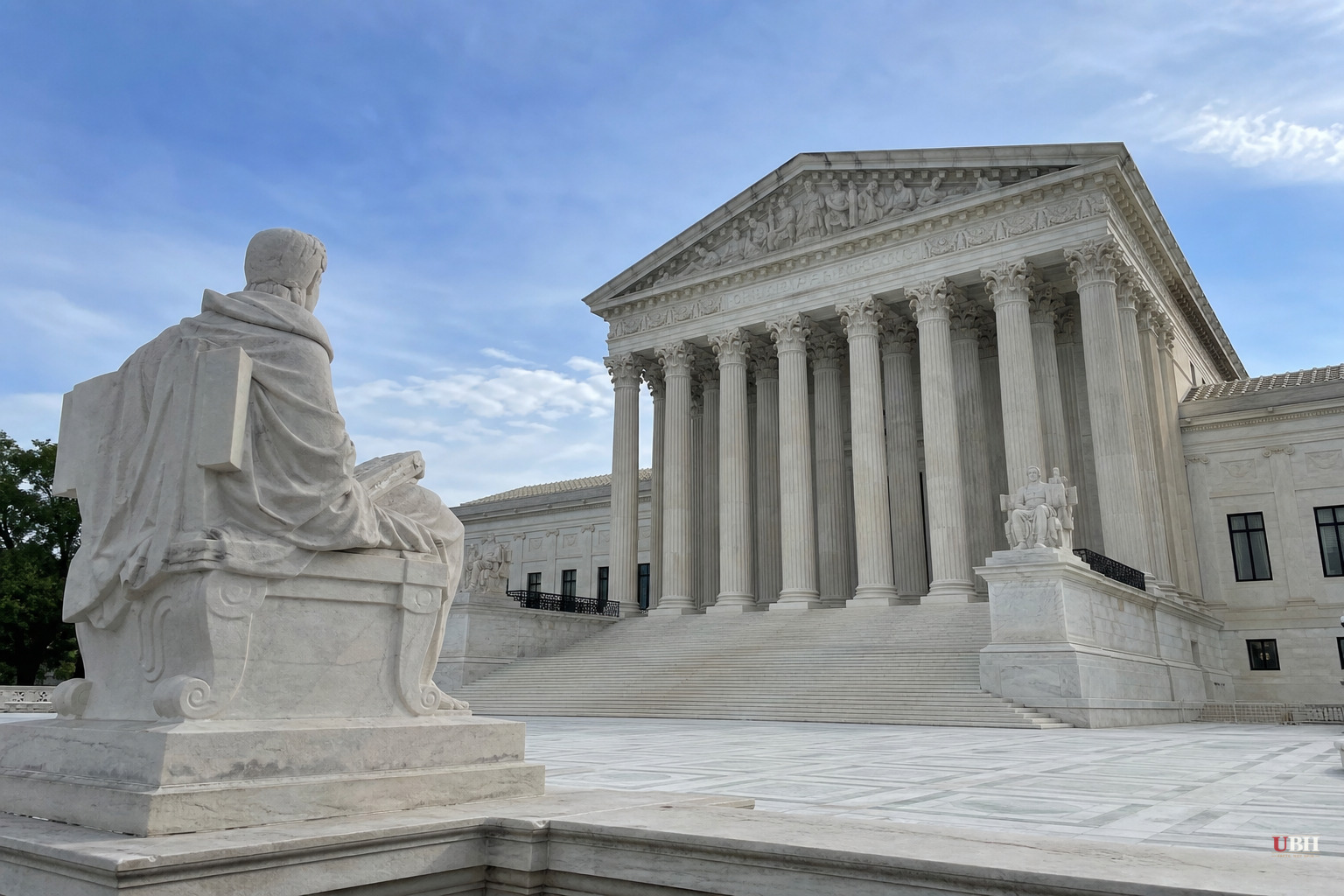
More than two dozen Texas families filed a petition with the U.S. Supreme Court on Monday, August 17, asking the justices to block a state law requiring every public school classroom to display the Ten Commandments, according to the ACLU of Texas and the ACLU.
The families are Christian, Jewish, Hindu, Baha'i, Unitarian Universalist and nonreligious, and they attend school across 22 Texas districts, per the ACLU. They're represented by the ACLU of Texas, the national ACLU, Americans United for Separation of Church and State, and the Freedom From Religion Foundation, with Simpson Thacher & Bartlett LLP handling the case pro bono.
At issue is Texas Senate Bill 10, signed by Republican Gov. Greg Abbott in 2025, according to Forbes. The law requires public schools to permanently post a state-selected version of the Ten Commandments, drawn from the King James Bible, in a "conspicuous" location in every classroom from kindergarten through 12th grade.
How we got here
A federal judge, U.S. District Judge Fred Biery, issued a preliminary injunction blocking the law, Forbes reported. Texas Attorney General Ken Paxton appealed, and on April 21, 2026, the full U.S. Court of Appeals for the 5th Circuit reversed that injunction in a 9-8 en banc ruling, according to the National Constitution Center. The New Orleans-based court is widely viewed as one of the most conservative federal appeals courts in the country.
The 5th Circuit majority leaned on the Supreme Court's 2022 ruling in Kennedy v. Bremerton School District, the case of a high school football coach who prayed on the field, arguing that decision effectively threw out the "Lemon test" that courts had used for decades to evaluate Establishment Clause claims, per Forbes and the Constitution Center. Without Lemon, the 5th Circuit reasoned, a 1980 precedent called Stone v. Graham, which struck down a nearly identical Kentucky law, no longer controls.
The families' petition disputes that reasoning directly. "Only the Supreme Court can overturn its own precedent," Forbes summarized the argument, calling the 5th Circuit "out of line (and out of step with other lower courts)" for treating Stone as effectively dead.
What the petition asks
The cert petition, filed jointly in Nathan v. Alamo Heights Independent School District and Cribbs Ringer v. Comal Independent School District, asks the Supreme Court to decide two questions, according to the National Constitution Center: whether the Establishment Clause forbids states from mandating permanent Ten Commandments displays in every classroom, and whether the mandate interferes with parents' Free Exercise Clause right to direct their children's religious upbringing.
Rabbi Joshua Fixler of Houston, a plaintiff, said in the ACLU's statement that "forcing a Christian version of the Ten Commandments on children in every classroom is particularly upsetting," adding he worries the displays "put children in the position of having to defend themselves and their families' religious beliefs against a government mandate that makes them feel different and separate from their classmates."
A kindergartner from a Jewish, Hindu, or nonreligious family sitting under a state-mandated Protestant text every day for years is a genuinely different situation than an adult glancing at a courthouse monument. The families' lawyers argue this is a "captive audience" problem the Supreme Court has flagged before, even quoting Kennedy v. Bremerton's own language warning that religious instruction to a "captive audience" of students is "problematically coercive."
The other side
Texas has defended the law throughout, and the 5th Circuit majority bought the state's argument: nobody is forced to recite the Commandments, believe them, or affirm they're divinely inspired, according to PBS. It's a passive display, not compelled speech or worship. Brittany McFarland, an Austin-area mother of a kindergartner, told Fox News Digital she was "pleasantly surprised" by the displays and sees the backlash as part of a broader effort to scrub any mention of faith from public schools. "I feel like our country, we've been kind of forced to erase religion and discussion of religion in schools in general," she said, saying the topic has become "taboo" to the point kids feel afraid to mention their own faith.
That argument has some force. A poster on a wall is a lower bar than a teacher leading a class in a religious exercise, and courts have long allowed some passive religious references in government spaces, from "In God We Trust" on currency to legislative prayer. Whether a permanent, unavoidable classroom display for five- and six-year-olds fits that same category is exactly the legal question now before the justices.
Louisiana passed the first such law in 2024, followed by Arkansas and Texas, with Alabama Gov. Kay Ivey signing a similar measure this year, per PBS. The 5th Circuit separately upheld Louisiana's version in February.
Justice Samuel Alito had extended the filing deadline for the Texas petition until Wednesday, the National Constitution Center reported. The Supreme Court has not yet decided whether to grant certiorari. If it takes the case, a ruling would likely arrive during the Court's next term and could settle, for every state, whether Stone v. Graham still stands as good law.
Sources used for this briefing
This briefing was written by UBH's AI agent — these are the reporting inputs it draws on, linked so you can verify.


