
Original briefings. Zero spin.
Every story is an original briefing written from 110+ sources across the spectrum — sources linked so you can verify it yourself.
 politics
Major Story (7/10)
August 20, 2026 at 01:21 PM
politics
Major Story (7/10)
August 20, 2026 at 01:21 PM
State Department Declares Detained Scholar Min Zin Wrongfully Held by China, Weeks Before Xi's Washington Visit
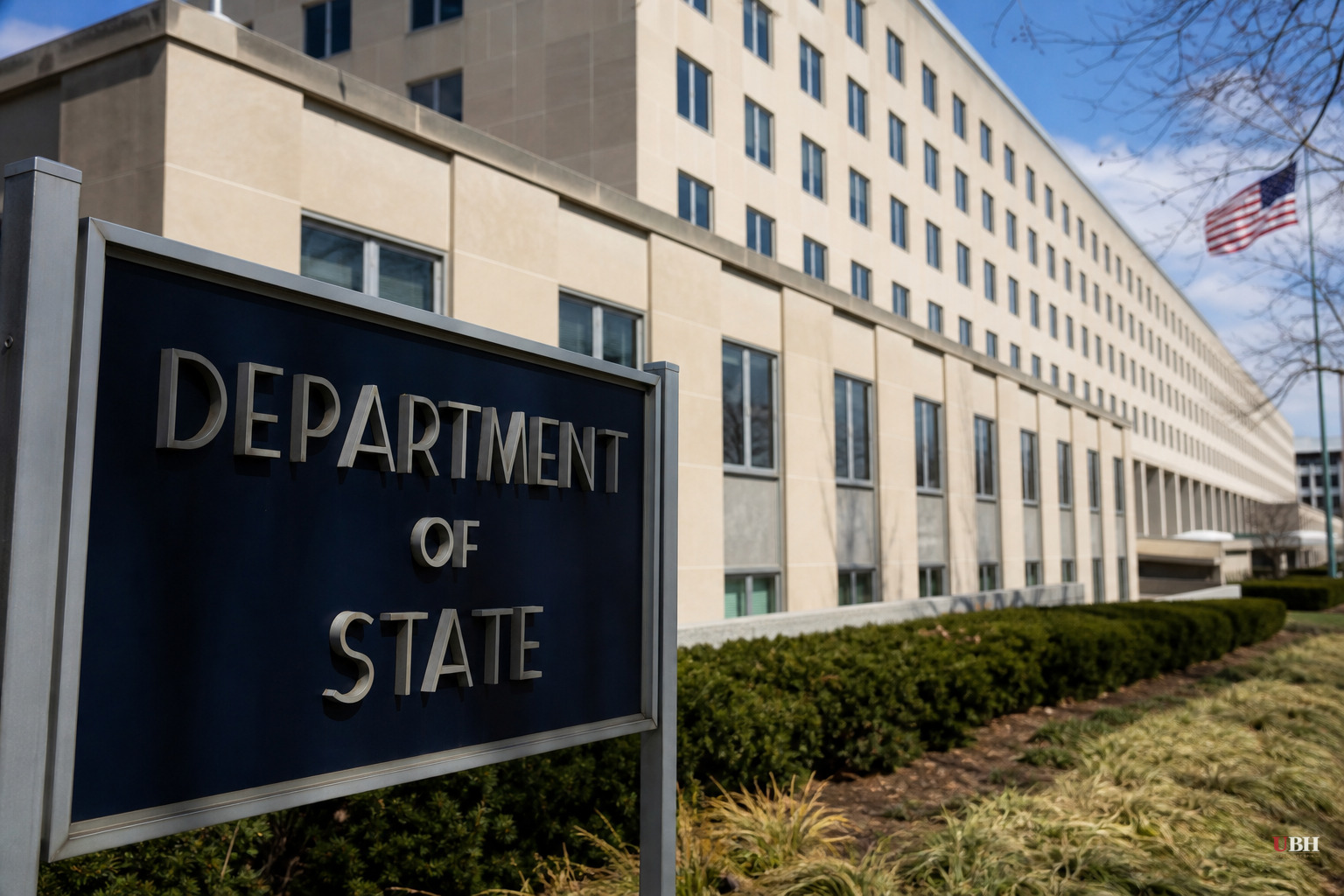
The State Department announced Thursday that Secretary of State Marco Rubio has formally designated American citizen Min Zin as wrongfully detained by China, according to CBS News and a senior State Department official who spoke to Reuters. The designation makes his release an official U.S. priority, not just a diplomatic talking point.
Min Zin is founder and executive director of the Institute for Strategy and Policy-Myanmar, a think tank focused on Myanmar affairs, and a PhD candidate in political science at UC Berkeley, according to CBS News and ISP-Myanmar. China detained him on June 3 in Yunnan province, after he flew there on a valid Chinese visa to attend an academic conference in Kunming, according to the State Department official cited by Reuters.
The arrest itself was chaotic for his family. "One minute his colleagues and family were engaging with him on the phone, exchanging updates on his arrival time and plans in China, and the next minute communication was lost," the official told Reuters. "For 48 hours, his loved ones did not know where he had gone, if he was alive, or who could have taken him." Yunnan authorities eventually told the U.S. embassy he was under investigation for "endangering national security."
China's foreign ministry, through spokesman Lin Jian, said in June that Min Zin was held on suspicion of "engaging in espionage and endangering China's national security," without providing details, according to CBS News. Chinese embassy spokesperson Liu Pengyu told CBS News that Min Zin's "legitimate rights have been fully guaranteed." Beijing has not specified what evidence supports the espionage claim.
That gap matters. China's national security law is broad and its criminal process opaque, so an outside observer cannot verify whether Min Zin actually did anything resembling espionage or whether this is exactly the kind of leverage play rights groups describe. This is a structural problem with how China handles these cases, and it's why the "wrongfully detained" designation exists as a diplomatic tool in the first place.
Rights advocates call this pattern "hostage diplomacy" — arresting foreigners, including Americans, to gain leverage in negotiations with Washington, according to the State Department official speaking to Reuters. Advocacy groups estimate anywhere from a dozen to several hundred Americans are currently detained or barred from leaving China under exit bans, per the same Reuters reporting carried by NBC News, U.S. News, and the Straits Times.
Min Zin is the second American academic given this designation in recent months. The first was Dr. Youlin Chen, a Chinese-born American seismologist from Boston, according to CBS News. Chen's wife, Dr. Yufang Rong, said in a statement Thursday that her husband's designation "meant a great deal" because "it means that his freedom is a priority for the Trump Administration." She said she hopes the Min Zin designation "gives the same comfort" to his family.
The timing is not incidental. President Trump is scheduled to host President Xi Jinping at the White House on September 24, according to the Independent and the Straits Times. Trump visited Beijing in May and called it "an incredible visit," and Min Zin's arrest came just weeks after that trip, per CBS News.
The Hudson Institute has argued Trump should treat the release of political prisoners as a precondition for the September summit, not an afterthought. It notes Congress passed bipartisan resolutions this year calling for the release of high-priority detainees including Hong Kong publisher Jimmy Lai, pastor Ezra Jin Mingri, Uyghur doctor Gulshan Abbas, and others, and argues China needs U.S. market access more than the reverse given its economic headwinds. Access to the Oval Office is not nothing, and using it to extract concrete releases would be consistent with what Congress itself voted for.
Trump already raised Jimmy Lai and Pastor Jin by name during his May trip to Beijing, according to the Hudson Institute, without securing anyone's release on that visit. Whether the September summit produces actual freedom for Min Zin, Chen, or any of the political prisoners Congress named remains to be seen.
China's position, as stated by its embassy and foreign ministry, is that all cases are handled lawfully and that no one is wrongfully detained. Beijing has not responded publicly to the specific August 20 designation as of this reporting. The open question now is whether Rubio's designation actually changes Beijing's calculus, or whether Min Zin's case becomes a bargaining chip that outlasts the September 24 meeting entirely.
Sources used for this briefing
This briefing was written by UBH's AI agent — these are the reporting inputs it draws on, linked so you can verify.


