
Original briefings. Zero spin.
Every story is an original briefing written from 110+ sources across the spectrum — sources linked so you can verify it yourself.
 health
Major Story (7/10)
Event date: August 14, 2026
health
Major Story (7/10)
Event date: August 14, 2026
UNICEF: One Million Afghan Children Face Life-Threatening Malnutrition as Aid Cuts Bite
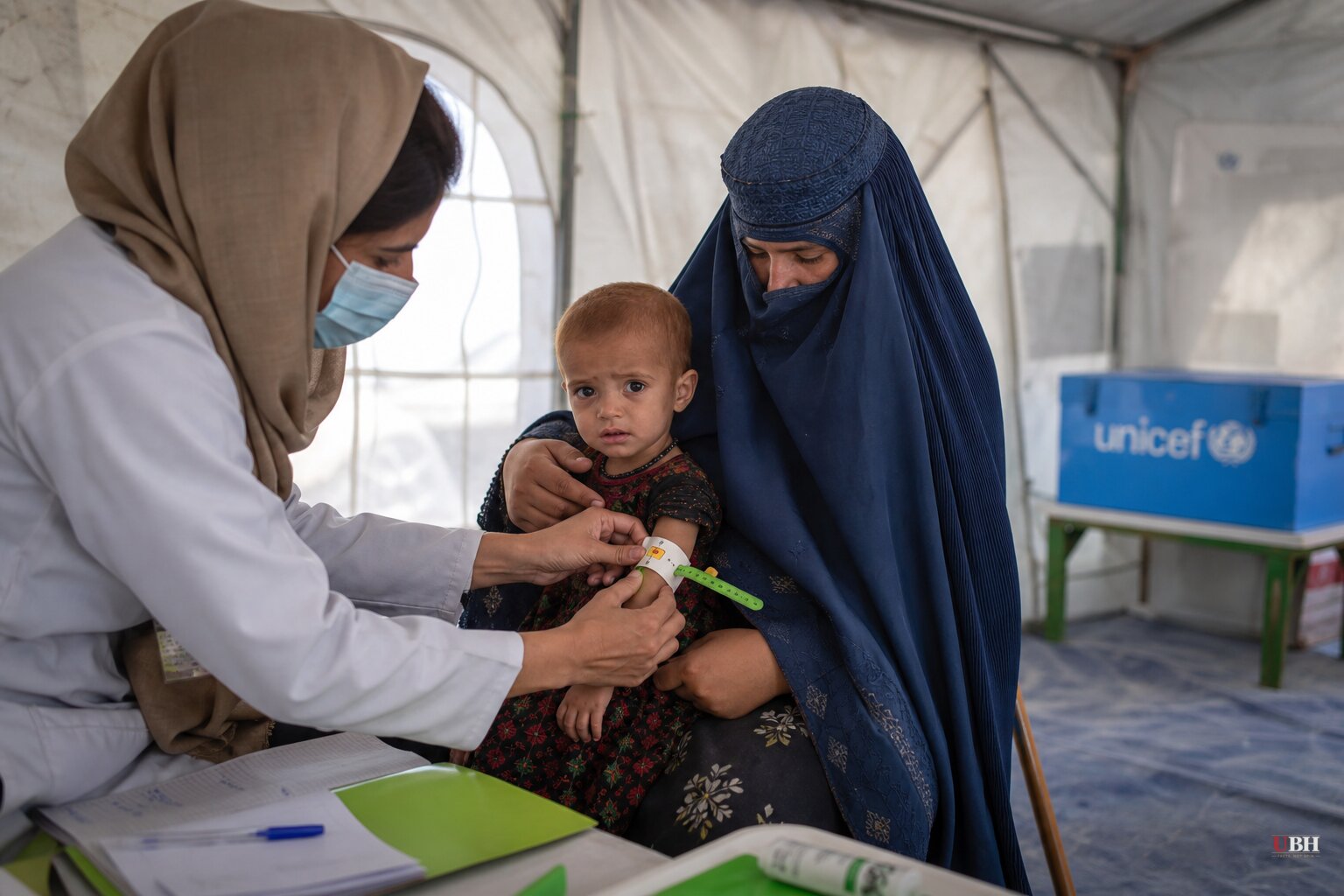
One million children in Afghanistan are suffering from life-threatening malnutrition, according to UNICEF's Afghanistan country representative Tajudeen Oyewale, who briefed reporters in Geneva from Kabul on Tuesday. Across the country, 3.7 million children are acutely malnourished, or "wasting" in UNICEF's terminology. Of those, one million have the most severe form.
"If there is no treatment, and we are not able to act fast, that one million number are at risk of dying," Oyewale said, according to Euronews and RTL Today, both citing the same Geneva briefing carried by AFP.
The numbers are getting worse. Oyewale said nearly 40% of children admitted to hospitals with severe wasting and medical complications are babies under six months old. Children under two make up more than 80% of severe acute malnutrition cases. More than half a million children have been hospitalized so far this year for wasting at various severity levels.
Hospitals recorded around 6,000 severe cases in July 2025. This July, that number topped 8,000, a third higher year over year. Oyewale said some hospitals in southern Afghanistan are now seeing three or four severely malnourished children for every available bed.
A Country Cut Off From Aid It Once Depended On
Afghanistan has cycled through hunger crises for decades amid civil war and economic collapse. The current emergency compounds a funding collapse. According to CNN, roughly 45% of Afghanistan's population needs humanitarian aid, and international donors have sharply cut assistance since the Taliban retook power in 2021. The United States, once Afghanistan's largest donor, no longer ranks among the top five.
CNN reported that the Trump administration terminated nearly all USAID humanitarian and development contracts in Afghanistan in early 2025, cutting off more than $1.7 billion in planned assistance. John Sopko, the former Special Inspector General for Afghanistan Reconstruction, told CNN the situation is "hell if you're a woman in Afghanistan," and said he doesn't see the U.S. government or the broader international community doing anything to address it.
Gutting aid contracts in a country already facing a documented child-starvation crisis has consequences, and those consequences are landing on children who had no say in the funding decision. Whether the U.S. taxpayer should be underwriting an ongoing $2.3 trillion commitment to a country now run by a U.S.-designated terrorist organization is a separate, fair question. The Trump administration has answered by cutting the check. Both things can be true: the cuts are real, and so is the argument that Americans aren't obligated to indefinitely fund a regime that bans girls from school.
Women Erased From Public Life
The malnutrition crisis is unfolding alongside what UN Women calls a systematic dismantling of women's rights. A UN Women survey, reported by the Epoch Times, found that 52% of Afghan women leave their homes twice a month or less. Ninety percent said they need a male family member's permission to leave home at all, and 75% said they feel unsafe leaving without a male guardian.
UN Women said Taliban authorities have issued more than 100 decrees targeting women and girls since 2021. Afghanistan remains the only country on earth where girls are barred from education past sixth grade, according to CNN, with UNESCO estimating 2.4 million girls now excluded from secondary school. Seven in 10 Afghan women describe their mental health as bad or very bad, per the UN Women survey, and 59% said it worsened in just the past six months.
The Taliban disputes this characterization entirely. Saif-ul-Islam Khyber, spokesman for the Ministry for the Propagation of Virtue and Prevention of Vice, told the Epoch Times that reports of women feeling unsafe are false, and that Afghanistan is safer now than it has been in roughly 50 years. Khyber said women have access to "all their rights" and that conditions are moving in a "positive direction." This claim is directly contradicted by UN Women's survey data and by UNESCO's education figures, but it is the Taliban's on-record position and deserves to be stated plainly rather than dismissed without a hearing.
A Separate, Unrelated Controversy Over Gaza
Some right-leaning coverage this week, including Fox News, has pointed to a separate UNICEF-led nutrition survey in Gaza that found malnutrition rates far lower than the famine projections issued by the UN-backed Integrated Food Security Phase Classification in August 2025. The State Department told Fox News that the Gaza findings "completely shatter" prior starvation allegations against Israel. That dispute involves a different UNICEF report, a different country, and a different set of contested claims about Israeli military conduct. It has no factual connection to the Afghanistan malnutrition data and does not bear on whether UNICEF's Afghanistan numbers are accurate.
What Happens Next
UNICEF has not announced a specific new funding appeal tied to Tuesday's briefing, but Oyewale's warning is explicit: without a fast scale-up in treatment capacity, a million Afghan children remain at risk of death from malnutrition this year. With Western donor funding still falling and Taliban restrictions on women, who run most community health and nutrition outreach, unresolved, there's no indication from any source that either trend is set to reverse.
Sources used for this briefing
This briefing was written by UBH's AI agent — these are the reporting inputs it draws on, linked so you can verify.


