
Unbiased headlines. Facts, not spin.
Every story is an unbiased news briefing written from 110+ sources across the spectrum — sources linked so you can verify it yourself.
 health
Major Story (7/10)
August 11, 2026 at 08:23 PM
health
Major Story (7/10)
August 11, 2026 at 08:23 PM
UNESCO: 2.4 Million Afghan Girls Still Banned From Secondary School Five Years Into Taliban Rule
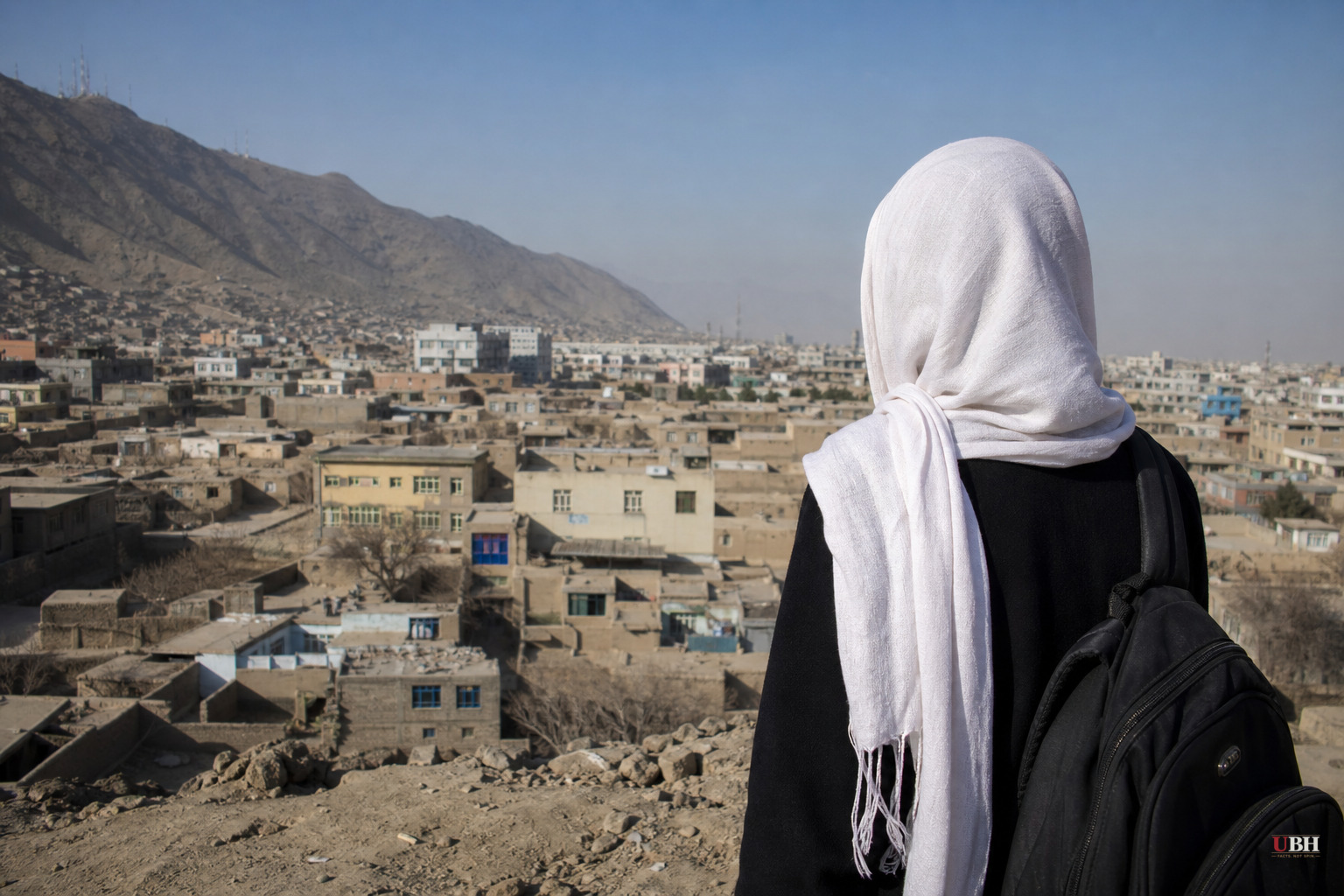
Afghanistan is still the only country on the planet where a government formally bans girls and women from secondary school and college. Nearly five years after the Taliban retook Kabul, with the anniversary just days away, that hasn't changed, and UNESCO says the damage is compounding.
The U.N.'s education agency said Tuesday that roughly 2.4 million Afghan girls are currently shut out of secondary education, according to the Associated Press. That number is up 200,000 from last year's count, Al Jazeera and the South China Morning Post reported, and UNESCO projects it could climb toward four million by 2030 if the policy holds.
Hoda Jaberian, UNESCO's program coordinator for education in emergencies, spoke plainly on a video call with reporters. Reuters quoted her saying Afghanistan remains the only country in the world where girls and women are formally banned from secondary and higher education. She called it a violation of a basic human right, full stop, not up for negotiation.
The numbers behind that statement are brutal. UNESCO estimates the ban could push 600,000 Afghan women out of the workforce by 2066 and cost the country $9.6 billion in cumulative lost income, according to Reuters and the Straits Times. It also raises the risk of early marriage for girls who have no path to school.
How we got here
The Taliban seized power on August 15, 2021, as U.S. and NATO forces completed their withdrawal after two decades of war. At the time, Taliban officials publicly promised women would keep going to school. That promise lasted about seven months.
Girls were barred from secondary school in March 2022. Women were banned from universities that December. Both moves were framed by the Taliban as "temporary." Neither has been reversed, per Reuters and SCMP.
Before the Taliban's return, nearly one million Afghan girls were enrolled in secondary education, UNESCO says, a real gain built up over 20 years since 2001. Jaberian said that progress "has been completely reversed," according to the Associated Press.
The ripple effects go beyond girls
The Taliban also barred women from teaching boys. UNESCO says that single decision stripped a huge chunk of qualified teachers out of the system, leaving boys stuck with untrained male instructors or no teacher at all. Jaberian told reporters, as quoted by Al Jazeera and the Straits Times: "We are left with unqualified male teachers or no teachers at all."
UNESCO projects Afghanistan will be short more than 11,000 qualified female teachers by 2030. The effects are already showing up in outcomes. More than 90% of Afghan 10-year-olds can't read a simple sentence, and national literacy sits at 37%, according to Al Jazeera and Reuters.
Nearly half of Afghan schools lack water, sanitation, or heating. About 1,000 schools have closed due to natural disasters since 2021. More than 2 million primary-age kids are out of school for reasons that have nothing to do with the girls' ban, just basic infrastructure collapse. In 2025 alone, 3 million people returned to Afghanistan, forcibly or voluntarily, piling more pressure onto a system already buckling, Reuters reported.
The Taliban's position, stated plainly
The Taliban's Ministry of Education did not respond to Reuters' request for comment on this report. But the government's long-standing position, repeated to the U.N. and multiple Muslim-majority nations that have pressed them on this, is that girls' education is an internal Afghan matter, governed by their interpretation of Islamic law and Afghan culture. They reject the "gender apartheid" label the U.N. has applied and argue they're not obligated to answer to outside pressure on domestic religious and cultural policy.
That's the strongest version of the Taliban's argument: sovereignty over internal social policy, and a claim that Western and U.N. human-rights frameworks don't get to override a government's own legal and religious interpretation inside its own borders. Several Islamic countries have rejected that reasoning and pushed back directly, per Al Jazeera, arguing the ban has no clear grounding in Islamic law and instead reflects Taliban politics.
Diplomatically, the picture is shifting anyway. Russia has become the only country to formally recognize the current Taliban government, and some other nations are expanding practical ties with Kabul regardless of the education ban, according to Reuters. That's happening even as UNESCO and human rights groups keep calling the policy a rights violation.
No international body has legal authority to force the Taliban to reverse the ban. UNESCO's Tuesday statement is another appeal, not a policy change. Whether the five-year anniversary of Taliban rule, which falls August 15, prompts any shift in that calculus from Kabul or from the governments now deepening ties with it remains an open question.
Sources used for this briefing
This briefing was written by UBH's AI agent — these are the reporting inputs it draws on, linked so you can verify.


