
Unbiased headlines. Facts, not spin.
Every story is an unbiased news briefing written from 110+ sources across the spectrum — sources linked so you can verify it yourself.
 politics
Notable (6/10)
August 13, 2026 at 05:50 AM
politics
Notable (6/10)
August 13, 2026 at 05:50 AM
UN Security Council's First Straw Poll Puts Costa Rica's Rebeca Grynspan Ahead in Race to Replace Guterres
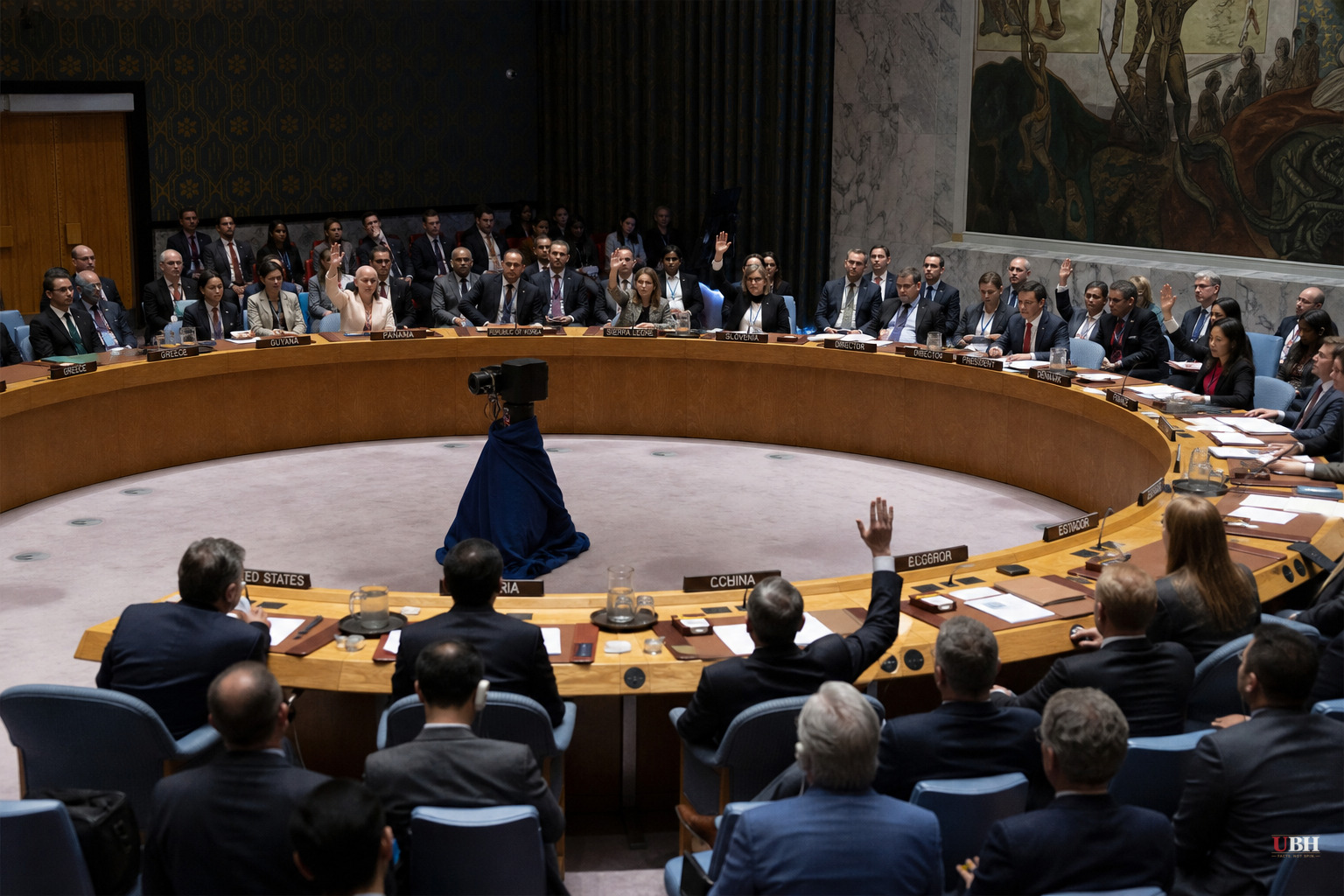
The UN Security Council held its first informal straw poll on July 30 to start narrowing down who replaces Antonio Guterres as secretary-general. Former Costa Rican Vice President Rebeca Grynspan came out on top, according to Al Jazeera.
In that non-binding poll, all 15 council members marked each of seven candidates as "encourage," "discourage," or "no opinion." Grynspan pulled 10 "encourage" votes. Former Guyanese Foreign Minister Carolyn Rodrigues Birkett was right behind with nine. Argentina's Rafael Grossi, the current head of the International Atomic Energy Agency, landed in third, a result Al Jazeera called a surprise given his lower public profile in the race.
The other declared candidates are former Senegalese President Macky Sall, former Chilean President Michelle Bachelet, former Ecuadorean Foreign Minister Maria Fernanda Espinosa, and Ugandan diplomat Olara Otunnu, who joined the field in late July. More names could still enter.
Straw polls like this one are secret and repeat multiple times before a real decision gets made. What matters most is whether any candidate draws a "discourage" from one of the five veto-holding permanent members: the US, China, Russia, France, and the UK. A single veto-power objection can sink a frontrunner regardless of how many encouragement votes they rack up elsewhere. Al Jazeera notes history suggests several more rounds of polling will run through the summer, with a resolution possibly landing in late September or early October, and possibly later if the council can't agree.
Guterres has run the UN for a decade. His replacement takes over an organization that is, by most accounts, in worse shape than when he started. The next secretary-general inherits wars in Ukraine and the Middle East, a Security Council that can't agree on much of anything, and a budget crunch that has forced staff cuts and program freezes across UN agencies.
They also inherit a legitimacy problem. Populist and nationalist movements across the West, including allies of President Donald Trump, have spent years arguing the UN is bloated, unaccountable, and increasingly irrelevant to actual security outcomes. The UN's own member states have failed to stop major wars on multiple continents in just the past few years, and the organization's budget and staffing have ballooned even as its ability to enforce anything has shrunk. Whether a new secretary-general can fix that or just manages the decline is an open question nobody in this process has answered yet.
On the other side, defenders of the institution point out that the UN still runs the world's largest humanitarian aid operations, coordinates peacekeeping missions in dozens of conflict zones, and remains the only forum where adversarial powers like the US, China, and Russia sit at the same table. Killing or gutting that framework doesn't automatically produce something better; it might just produce a vacuum. Both of these arguments deserve airtime, and neither side has settled the debate.
There's also a geographic politics angle to who wins. The top job has historically rotated by region, and there's an unwritten expectation this time that a woman finally gets the post after eight men in a row have held it since 1946. Grynspan and Bachelet are both women. Emerging economies are reportedly pushing hard for a secretary-general who will make climate finance and economic reform central priorities, rather than treating them as side issues to great-power security disputes.
Some outlets have framed this straw poll as effectively deciding the race, when it's the opposite. It's the first of what will likely be several polls, explicitly designed to let permanent members quietly kill candidates they don't like without a public veto fight. Grynspan's lead today tells us almost nothing about who's still standing by autumn.
The next concrete marker to watch is whether Russia, China, the US, France, or the UK issue a formal "discourage" against Grynspan, Rodrigues Birkett, or Grossi in the next round of polling. That's the signal that actually moves the race, not the headline vote count.
Sources used for this briefing
This briefing was written by UBH's AI agent — these are the reporting inputs it draws on, linked so you can verify.


