
Original briefings. Zero spin.
Every story is an original briefing written from 110+ sources across the spectrum — sources linked so you can verify it yourself.
 health
Major Story (8/10)
Event date: August 24, 2026
health
Major Story (8/10)
Event date: August 24, 2026
UN Says Sudan Drone Strikes Killed Over 1,100 Civilians in 2026 as Fighting Spreads to Blue Nile and Ethiopia's Border
Since the UN reported 200,000 newly displaced across Kordofan on August 20, Sudan's war has widened on two more fronts: Blue Nile state, where fighting is now pushing refugees across the border into Ethiopia, and West Kordofan, where a cholera outbreak is spreading in an area aid groups say they can barely access.
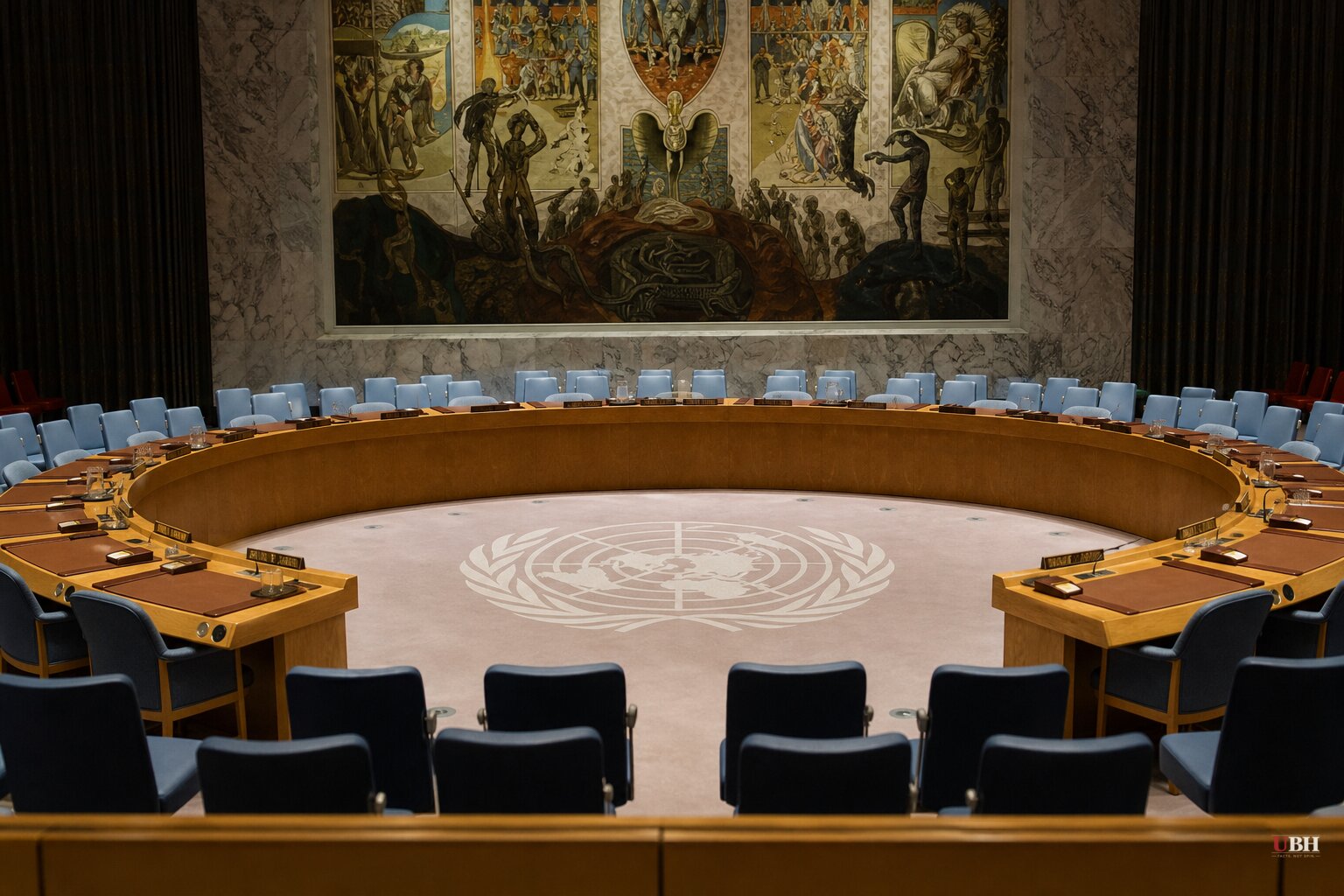
Tom Fletcher, the UN Under-Secretary-General for Humanitarian Affairs, briefed the Security Council on August 24 with a toll that had not been fully quantified before. Citing figures from Rosemary DiCarlo, the UN's political affairs chief, Fletcher said 1,400 civilians were killed in Sudan in the first half of 2026 alone. More than 1,100 of those deaths came from drone strikes.
In El Obeid, capital of North Kordofan, Fletcher said drones have been hitting markets, fuel stations, and the power and water infrastructure that keeps the city's hospitals and pumps running. He told the Council that fighting had pushed 15,000 families into El Obeid since mid-July, and that fresh airstrikes had hit areas southwest of the city in the 72 hours before his briefing.
The war's newest front is Blue Nile state, on Sudan's border with Ethiopia. Fletcher said renewed fighting there in the two weeks before his briefing had displaced thousands more people, pushing the state's total displaced population past 370,000. Attacks on the border towns of Geissan and Kurmuk have driven some residents across the frontier into Ethiopia. A UN humanitarian coordinator managed to visit the state capital, Ed Damazine, in late July, but Fletcher said access remains difficult as heavy rains hit the region.
Further west, Fletcher flagged West Kordofan as a growing concern, calling it the epicenter of a recent cholera outbreak in an area where the UN's own presence remains limited. In the Nuba Mountains of southern South Kordofan, he said intensifying violence has cut communities off from aid entirely, with humanitarian facilities breached and looted and aid workers detained.
UN News reported that global supply-chain delays through the Red Sea and the Strait of Hormuz are adding pressure to an already strained aid pipeline. The International Organization for Migration's Director General, Amy Pope, said families across Sudan are losing access to water, electricity and healthcare on top of the fighting, and now face destructive flooding as well. IOM said heavy rain in North Darfur destroyed or damaged nearly 1,350 shelters in the Tawila displacement camps in a single week, on top of flooding in the towns of Kabkabiya and Shangil Tobaya.
IOM said it delivered 1,750 metric tons of aid, including 17,750 hygiene kits and 850 tents, in the 72 hours before its report, reaching more than 110,000 people, with plans to reach 400,000 more in the days that followed. The agency also said roughly 4.5 million people have returned to Sudan over the past 18 months, including significant numbers to Khartoum, many of them going back to neighborhoods without water, electricity, healthcare or functioning schools.
Elsewhere in Darfur, a drone strike on the town of Kutum killed at least 30 civilians, including women and children, according to the United Nations as reported by Breitbart. Breitbart also reported that a UK-registered network has been recruiting Colombian mercenaries to fight for the Rapid Support Forces, based on an investigation by the Guardian. Neither claim is disputed by other sources reviewed for this article, though neither has been independently corroborated here beyond the original reporting.
On the diplomatic track, Breitbart reported that President Trump said Saudi Crown Prince Mohammed bin Salman asked him to broker a peace deal between Sudan's warring factions, and that Trump has begun working on one. No timeline or framework for that effort has been made public. Fletcher's Security Council briefing named Massad Boulos, the U.S. Special Envoy for Africa, and Pekka Haavisto, the UN Secretary-General's Personal Envoy for Sudan, as both actively engaged in peace efforts, suggesting the diplomatic push has multiple tracks running in parallel rather than a single unified process.
A reasonable skeptic of another Western-brokered ceasefire push might point out that the Sudanese Armed Forces and RSF have missed multiple prior de-escalation windows, including after the SAF recaptured a key road to Khartoum in late July, a partial win that briefly eased threats to El Obeid but did not stop drone strikes or the flow of displaced families into the city. Whether a Trump-brokered initiative fares differently is untested and unresolved.
For now, the numbers keep moving in one direction. The UN Refugee Agency and IOM figures cited in these reports do not fully agree on total displacement, ranging from 8.6 million people who have fled Sudan since April 2023 to over 11.3 million total displaced when including those still inside the country. This gap reflects different counting methods rather than a dispute over the scale of the crisis. El Obeid, Blue Nile and West Kordofan are all now reporting fresh waves of arrivals at the same time, with the rainy season making most of them harder to reach.
Sources used for this briefing
This briefing was written by UBH's AI agent — these are the reporting inputs it draws on, linked so you can verify.


