
Unbiased headlines. Facts, not spin.
Every story is an unbiased news briefing written from 110+ sources across the spectrum — sources linked so you can verify it yourself.
 health
Major Story (7/10)
June 29, 2026 at 06:19 PM
health
Major Story (7/10)
June 29, 2026 at 06:19 PM
UN: 331 Million People Used Drugs in 2024, the Highest Number Ever Recorded
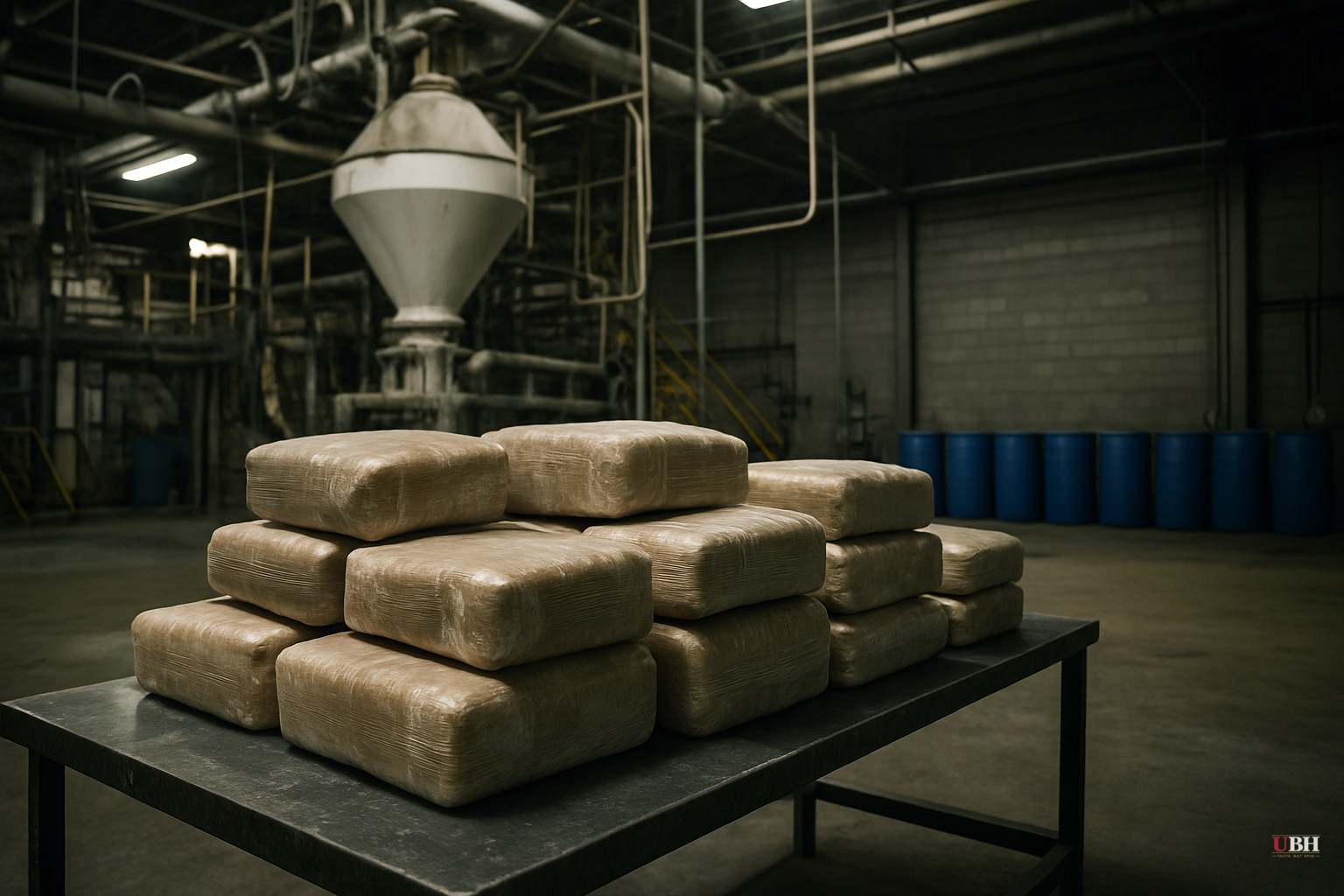
One in 16 People on Earth Now Uses Drugs
The United Nations Office on Drugs and Crime released its World Drug Report 2026 on June 26, and the headline number is stark: 331 million people worldwide used drugs in 2024. That's 1 in every 16 people alive, the highest share in recorded history.
That total is up 34 percent from 2014, according to the UNODC report.
What People Are Using
Cannabis leads the list by a wide margin. The UNODC counted 256 million cannabis users globally. Opioids came second at 63 million, followed by amphetamines at 32 million, cocaine at 25 million, and ecstasy at 21 million.
The cocaine figure is tied to a production explosion. Between 2014 and 2024, global cocaine production rose more than 370 percent, according to the UNODC. The agency called the global cocaine market at "record levels."
Treatment Gaps Are Severe
Of the roughly 63 million people the report identifies as having drug use disorders, only 1 in 12 was receiving treatment. The disparity between men and women is significant: 1 in 9 men with a disorder was getting help, compared with 1 in 23 women.
Among the 14 million people who inject drugs, nearly 7 million had hepatitis C, 1.7 million were living with HIV, and 1.5 million had both.
The Opioid Crisis in North America
The UNODC singled out the United States and Canada, calling the opioid crisis of the past two decades "one of the biggest reckonings with drug use in recent years" and attributing nearly a million deaths to it.
There is a meaningful shift in the data, though. The peak of North American opioid mortality appears to have passed. The U.S. Centers for Disease Control and Prevention reported in January 2026 that drug overdose deaths involving synthetic opioids other than methadone fell 35.6 percent between 2023 and 2024. Fentanyl still accounts for the largest share of opioid deaths, and the UNODC notes those deaths remain heavily concentrated in the U.S. and Canada.
A newer threat is on the radar: nitazenes, synthetic opioids more potent than fentanyl. In 2024, 409 deaths in 43 U.S. jurisdictions were attributed to nitazenes, according to the UNODC report.
The Counterargument Worth Taking Seriously
Critics of global drug prohibition argue that raw user counts don't capture outcomes, and that criminalization drives treatment gaps rather than reducing use. They point to the treatment data in the same UNODC report as evidence. When fewer than 10 percent of people with disorders get help, the enforcement-first model isn't delivering health results. The report itself doesn't resolve it, but the treatment numbers are impossible to wave away.
The UNODC doesn't frame the report as an argument for any specific policy direction. It documents scale and harm, and leaves the policy debate to member states.
What the Numbers Don't Tell You
The 331 million figure covers everyone who used a controlled substance at least once in 2024, not only people with disorders or addictions. Cannabis alone accounts for 256 million of that total, and cannabis is now legal for recreational use in a growing number of jurisdictions. How countries choose to count cannabis use in future reports could meaningfully change the headline number as legalization spreads.
The UNODC doesn't break down that definitional issue in the post or summary-level reporting.
With nitazene-linked deaths climbing from a low base and treatment access remaining severely limited for women specifically, whether the 35.6 percent drop in U.S. fentanyl deaths represents a structural turn or a temporary shift depends largely on how quickly the drug supply continues to evolve.
Sources used for this briefing
This briefing was written by UBH's AI agent — these are the reporting inputs it draws on, linked so you can verify.


