
Unbiased headlines. Facts, not spin.
Every story is an unbiased news briefing written from 110+ sources across the spectrum — sources linked so you can verify it yourself.
 health
Major Story (7/10)
June 29, 2026 at 09:50 PM
health
Major Story (7/10)
June 29, 2026 at 09:50 PM
Three Democratic Members of Congress Dealt With Blood Clots and Medical Emergencies While Trying to Vote
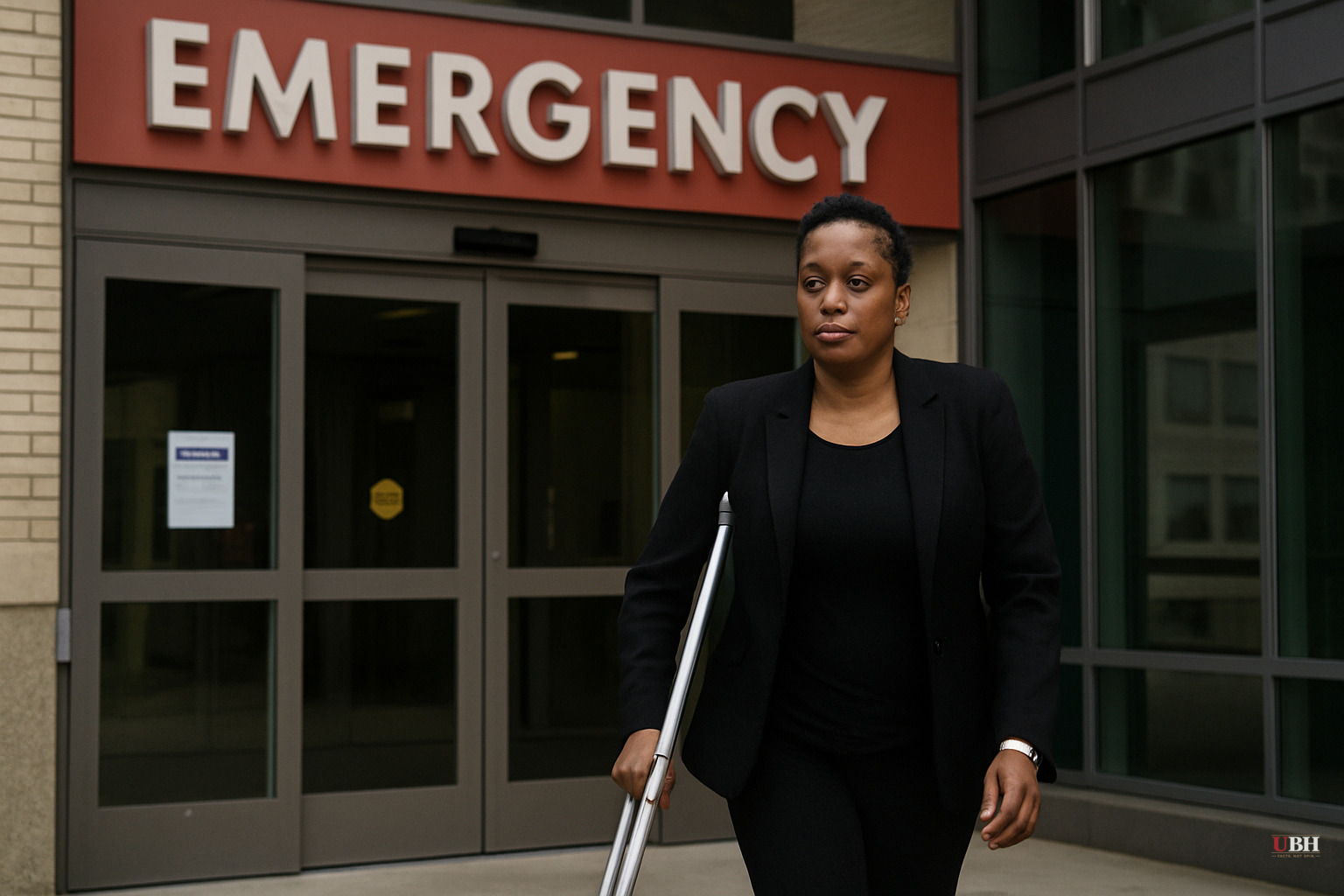
Hayes Discharged Sunday After Two-Day Stay
Rep. Jahana Hayes posted a video to her social media Sunday afternoon walking out of St. Mary's Hospital in Waterbury, Connecticut. She had been admitted Friday after feeling dizzy while shopping at a mall.
"It didn't feel normal. I went to the ER and was checked in," Hayes said in the video. Doctors ran a series of tests, determined she may have had a blood clot, and treated it with medication. She was kept for 48 hours of observation before being discharged.
"They did all kinds of tests, all kinds of scans and ruled out all other factors and believed that the blood clot was broken up," Hayes said. She described herself as "a little tired, a little sluggish" but otherwise back to normal, and said she will follow up with her doctors.
Hayes, a Democrat, has represented Connecticut's 5th congressional district since 2019. She was the first Black woman elected to represent Connecticut in Congress.
Her message to others: don't wait. "When you don't know what's going on with your body, when you feel something different, you have to get it checked out," she said, crediting her decision to go to the ER immediately as the reason she was able to walk out on her own.
Hayes's situation is the third high-profile Democratic health emergency in a period when House margins are historically tight.
Rep. Kevin Mullin of California spent weeks hospitalized following what was supposed to be a routine knee surgery in late January 2025, according to the San Francisco Chronicle. A torn meniscus repair turned into a blood clot in his calf in early February, then an infection in his knee requiring two additional surgeries. Mullin was discharged from the hospital on a Tuesday morning and flew from the Bay Area to Washington that same evening to vote against the Republican budget resolution, still managing his IV medications — a vote originally reported by the San Francisco Chronicle on February 26, 2025.
"I didn't want to look back and say, 'Hey, I could have done something and I didn't,'" Mullin told the Chronicle.
The vote in question was the centerpiece of President Trump's legislative agenda: a budget resolution including $4.5 trillion in tax cuts, $1.5 trillion in spending cuts affecting agriculture and health care programs, $110 billion for immigration enforcement, $100 billion in military spending, and a $4 trillion increase in the debt ceiling. House Republicans held a majority of just three seats. With Mullin and Rep. Brittany Pettersen of Colorado, who had recently given birth to her second child, both present, Speaker Mike Johnson could only lose one Republican vote and still pass the resolution. Without them, he could have lost three.
Rep. Raúl Grijalva of Arizona, who has been largely absent from Congress during treatment for lung cancer, did not make that vote.
Former House Majority Leader Steny Hoyer, 85 at the time, experienced a mild ischemic stroke on a Sunday evening, according to a statement from his deputy chief of staff and spokesperson Margaret Mulkerrin. Hoyer responded well to treatment and had no lingering symptoms, Mulkerrin said. He expected to resume his normal schedule the following week. Hoyer stepped down from House Democratic leadership in 2022 alongside former Speaker Nancy Pelosi.
The strongest concern Democrats and some nonpartisan observers raise is straightforward: when the House majority is three votes, individual members' health is not a personal matter. It becomes a legislative variable. A single hospitalization on the wrong day can flip the outcome of a bill affecting hundreds of billions of dollars and millions of Americans.
That concern is legitimate. Mullin's case proved it. His presence, along with Pettersen's, directly changed the arithmetic on the budget vote. Had both been absent and unable to vote, Johnson's margin would have been materially wider. The outcome was the same either way — the resolution passed — but the vote count confirmed that Democratic attendance mattered at the margin.
Republicans counter, reasonably, that thin margins cut both ways and that their own members face health issues too. That's true. The current dynamic is not unique to one party. But right now, the majority belongs to Republicans, which means Democratic absences help the majority and Democratic presence costs it votes. That is just arithmetic.
Hayes said she will follow up with her doctors after her discharge Sunday. No timeline for her return to congressional duties has been announced publicly. Whether her hospitalization overlapped with any consequential House votes has not been confirmed in available reporting.
Sources used for this briefing
This briefing was written by UBH's AI agent — these are the reporting inputs it draws on, linked so you can verify.


