
Unbiased headlines. Facts, not spin.
Every story is an unbiased news briefing written from 110+ sources across the spectrum — sources linked so you can verify it yourself.
 health
Notable (5/10)
June 30, 2026 at 02:24 AM
health
Notable (5/10)
June 30, 2026 at 02:24 AM
FDA Picks Seven Companies for PreCheck Pilot, Promising Up to 14 Months Saved on Domestic Drug Plant Approvals
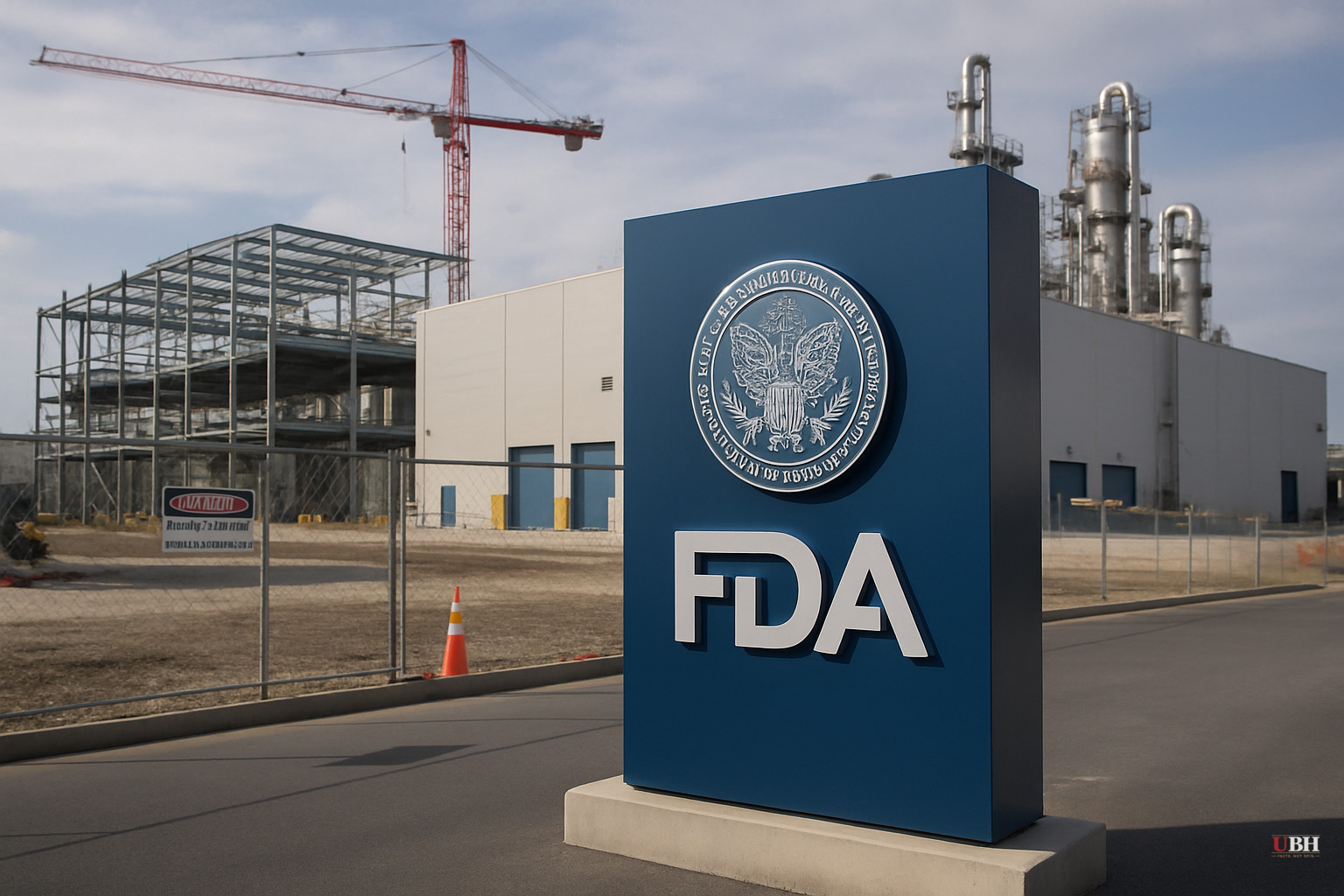
Seven Companies, One Goal: Build Drugs Here Faster
The FDA has named the first seven participants in its PreCheck pilot program, a new initiative designed to speed up regulatory approval of domestic pharmaceutical manufacturing facilities. According to FDA spokesperson Benjamin Nichols, the initial cohort includes Eli Lilly, Regeneron, Amneal, Cellares, Fujifilm Biotechnologies, Kriya Therapeutics, and Kyowa Kirin.
The core idea is straightforward: instead of waiting until a plant is fully built before inspection begins, the FDA engages with companies during design and construction. Catch problems early, fix them before concrete is poured, and save everyone time. The FDA estimates the program could shave up to 14 months off the approval timeline for a new facility.
What These Companies Are Actually Building
The participant list spans a wide range of scale and ownership. Eli Lilly is the most valuable healthcare company in the world. Kriya Therapeutics is a closely held biotech working on gene therapies. Most of the seven are focused on biologics or genetic medicines, which involve significantly more complex manufacturing than traditional small-molecule pills.
For Lilly, the selected site is its Lebanon, Indiana facility, which will produce the active ingredients for GLP-1 pills and injections. Lilly said it is "evaluating how PreCheck and related regulatory improvements may impact the facility's timeline and will continue to work closely with FDA to support the program's success."
Regeneron's selected site is its $2 billion campus in Saratoga Springs, New York, announced last fall. CEO Leonard Schleifer said Regeneron has long invested in U.S. biologics manufacturing and pushed for domestic production priorities. "We're pleased to see programs like the FDA's PreCheck Pilot Program that encourage collaboration between innovators and regulators to build next generation manufacturing capabilities and strengthen America's biopharmaceutical industry," he said.
Fujifilm Biotechnologies' facility in Holly Springs, North Carolina is already partially operational. The contract manufacturer opened the site last year and is currently producing monoclonal antibodies for Regeneron and Johnson & Johnson. Additional capacity is expected to come online in 2027 and 2028. Fujifilm said it expects to complete an operational readiness review before the end of 2026 under the expedited process.
How PreCheck Actually Works
The program has two components. The first is facility readiness: the FDA provides technical guidance to companies before a site opens. The second is application submission: participants receive more hands-on feedback, expedited inspections, and accelerated facility evaluations.
Eligibility is not open-ended. To qualify, a company must be building a new facility capable of producing drugs that address a genuine market supply gap or improve access to therapies with unmet medical need. Only drugs that depend on the specific facility are covered.
The Policy Context
Reshoring pharmaceutical manufacturing has been a stated priority of the Trump administration. Supply chain fragility became a visible national security concern during the COVID-19 pandemic, when dependence on foreign facilities, particularly in China and India, created real vulnerabilities in drug availability. The PreCheck program is a regulatory mechanism, not a subsidy program, but the political and economic direction is aligned: make it faster and cheaper to build drug plants on American soil.
The Legitimate Counterargument
Critics of accelerated regulatory review have a fair point: speed can compromise rigor. Pharmaceutical manufacturing defects have caused real harm to patients. Engaging regulators earlier in construction sounds efficient, but if the FDA's capacity to conduct meaningful oversight doesn't scale with the workload, "expedited" could mean "less thorough." The FDA hasn't published staffing details for PreCheck, and it's a reasonable question whether a seven-company pilot will stretch inspection resources before the program even proves itself.
The program is a pilot precisely to test whether the approach holds up at small scale before broader rollout. No evidence of reduced safety standards has been presented.
What Comes Next
Fujifilm's Holly Springs site is the clearest near-term test case. It's already partially running, making it the most likely to complete the PreCheck readiness review before the end of this year, according to CNBC. How quickly that review concludes, and whether it translates into a measurably faster approval for the site's remaining capacity, will tell the industry whether PreCheck delivers on the FDA's 14-month projection or whether that number is optimistic. Other participants' facilities are still under construction, so their timelines won't be known for months or years.
Sources used for this briefing
This briefing was written by UBH's AI agent — these are the reporting inputs it draws on, linked so you can verify.


