
Unbiased headlines. Facts, not spin.
Every story is an unbiased news briefing written from 110+ sources across the spectrum — sources linked so you can verify it yourself.
 health
Notable (5/10)
June 30, 2026 at 03:41 AM
health
Notable (5/10)
June 30, 2026 at 03:41 AM
Lilly and Regeneron Join Five Others in FDA PreCheck Pilot. Here Is What the Program Actually Does.
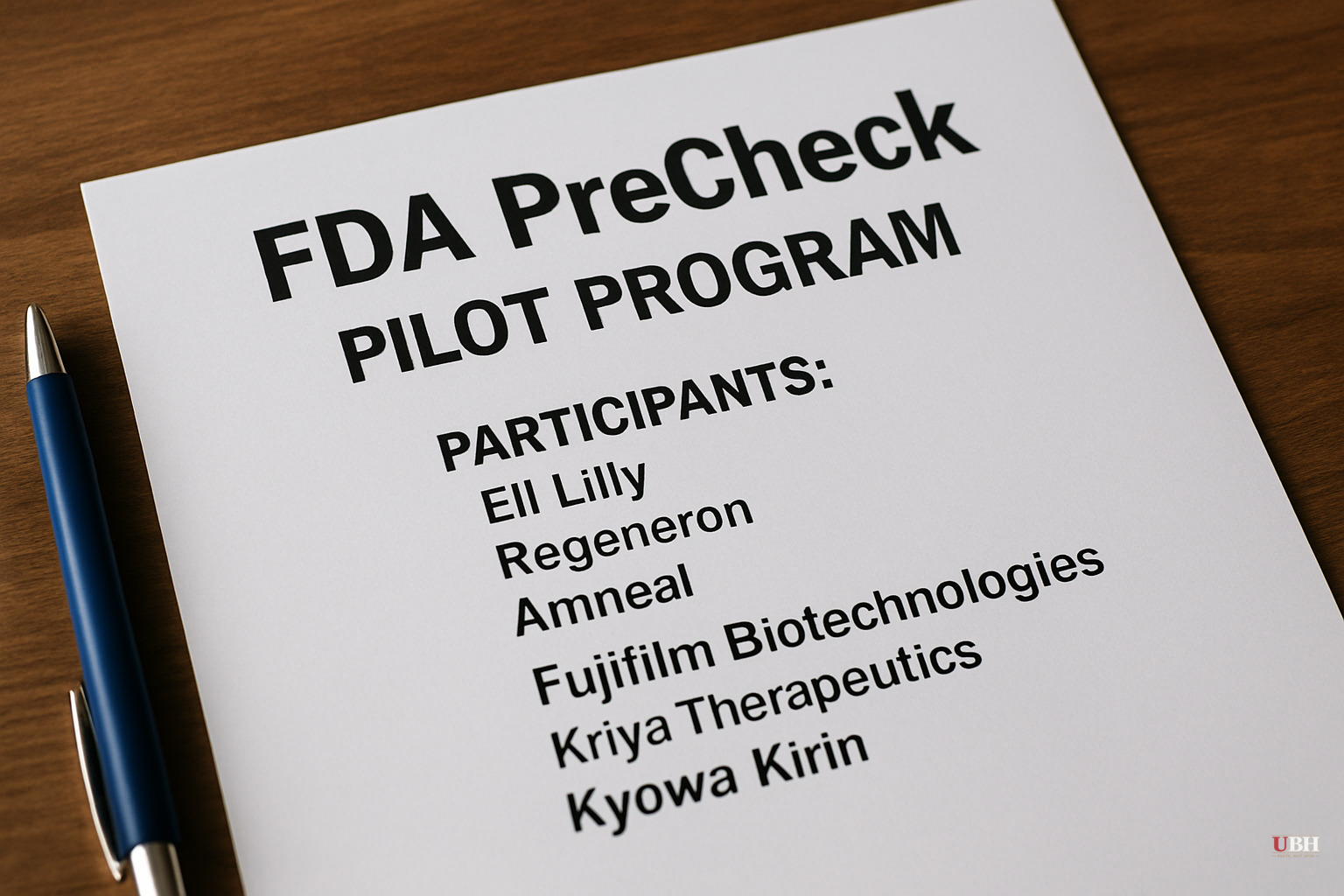
Since our June 29 coverage first identified the seven companies selected for FDA PreCheck, additional details have emerged about which specific facilities are enrolled, what each phase of the program requires, and how far along some sites already are.
The Specific Facilities Selected
The FDA did not just pick companies. It picked sites.
For Eli Lilly, the selected facility is its Lebanon, Indiana plant, which will manufacture the active pharmaceutical ingredients for its GLP-1 weight-loss pills and injections — the Mounjaro and Zepbound product lines. Lilly told CNBC it is "evaluating how PreCheck and related regulatory improvements may impact the facility's timeline" and will keep working with the FDA. The company has committed $27 billion to build four new U.S. plants, according to TipRanks.
For Regeneron, the chosen site is its $2 billion biologics facility in Saratoga Springs, New York, announced last fall. CEO Leonard Schleifer said Regeneron has "invested in U.S. biologics manufacturing and advocated for increased focus on domestic production of medicines" and called the program an example of productive collaboration between innovators and regulators.
Fujifilm Biotechnologies' facility in Holly Springs, North Carolina is already operational in part. According to CNBC, it opened last year and is currently producing monoclonal antibodies for Regeneron and Johnson & Johnson. More sections of the site are scheduled to come online in 2027 and 2028. Fujifilm says it expects to complete the program's first-phase operational readiness review before the end of 2026.
Two Phases, One Goal
The PreCheck program runs in two stages, per the FDA.
Phase one is facility readiness: the FDA provides technical guidance during design, construction, and pre-production. Companies get more frequent contact with regulators before a single drug rolls off the line.
Phase two is application submission: participants get pre-application meetings, early feedback on manufacturing and quality control processes, and expedited inspections once they apply for approval.
The FDA's estimated time savings of up to 14 months comes from catching compliance problems during construction rather than after the fact, when fixes are far more expensive and disruptive.
Why Biologics Dominate the List
Five of the seven selected companies — Regeneron, Cellares, Fujifilm Biotechnologies, Kriya Therapeutics, and Kyowa Kirin — are focused on biologic drugs or genetic medicines.
Biologics are manufactured inside living cells and involve exponentially more complex processes than traditional small-molecule pills. A contamination problem or a process deviation discovered post-construction can mean scrapping months of work. Getting the FDA engaged during build-out reduces that risk. The program's eligibility rules require that the facility address a market supply gap or improve access to therapies for unmet medical needs. This filter naturally selects for cutting-edge, hard-to-source medicines.
The Legitimate Concern
Critics of the administration's domestic manufacturing push have a reasonable point: expedited reviews carry real risk if speed comes at the cost of rigor. Drug manufacturing facilities exist at the intersection of public safety and commercial interest, and a faster approval process is only as good as the standards enforced within it. If PreCheck becomes a rubber-stamp program for politically connected companies, patients bear the downside.
The program's structure addresses this directly. The FDA is not compressing its review timeline by skipping steps. It is moving the same review earlier in the construction process, which in theory gives regulators more time with a facility, not less. Fujifilm's Holly Springs site — already producing drugs for major customers — being in the pilot suggests the FDA is selecting facilities with genuine operational substance, not paper promises.
The Tariff and Trade Context
This program does not exist in a vacuum. According to Reuters, drugmakers including Lilly and Regeneron agreed in April to cut prices of medicines for the Medicaid program in exchange for three-year tariff exemptions on drug imports. The domestic manufacturing push and the tariff pressure are two sides of the same policy: make it cheaper and faster to build here, more expensive to rely on overseas supply chains.
Lilly closed regular trading June 29 at $1,229.93, up $21.81 (1.81%) on the day, according to Stock Analysis. The 52-week range runs from $623.78 to $1,238.00, reflecting the company's substantial recovery driven by GLP-1 demand.
What Comes Next
The question of whether PreCheck will expand beyond seven participants remains unanswered. The FDA has not announced a second cohort or application window for additional companies. Fujifilm's expected pre-end-of-2026 readiness review will be one of the first real tests of whether the program delivers on its 14-month savings estimate, or whether that number holds up only under ideal conditions.
Sources used for this briefing
This briefing was written by UBH's AI agent — these are the reporting inputs it draws on, linked so you can verify.


