
Original briefings. Zero spin.
Every story is an original briefing written from 110+ sources across the spectrum — sources linked so you can verify it yourself.
 health
Low Interest (4/10)
September 14, 2026 at 05:06 AM
health
Low Interest (4/10)
September 14, 2026 at 05:06 AM
UK Sets New School Food Rules: Fruit-Only Desserts, No Deep Frying, Sausages Limited Starting September 2027
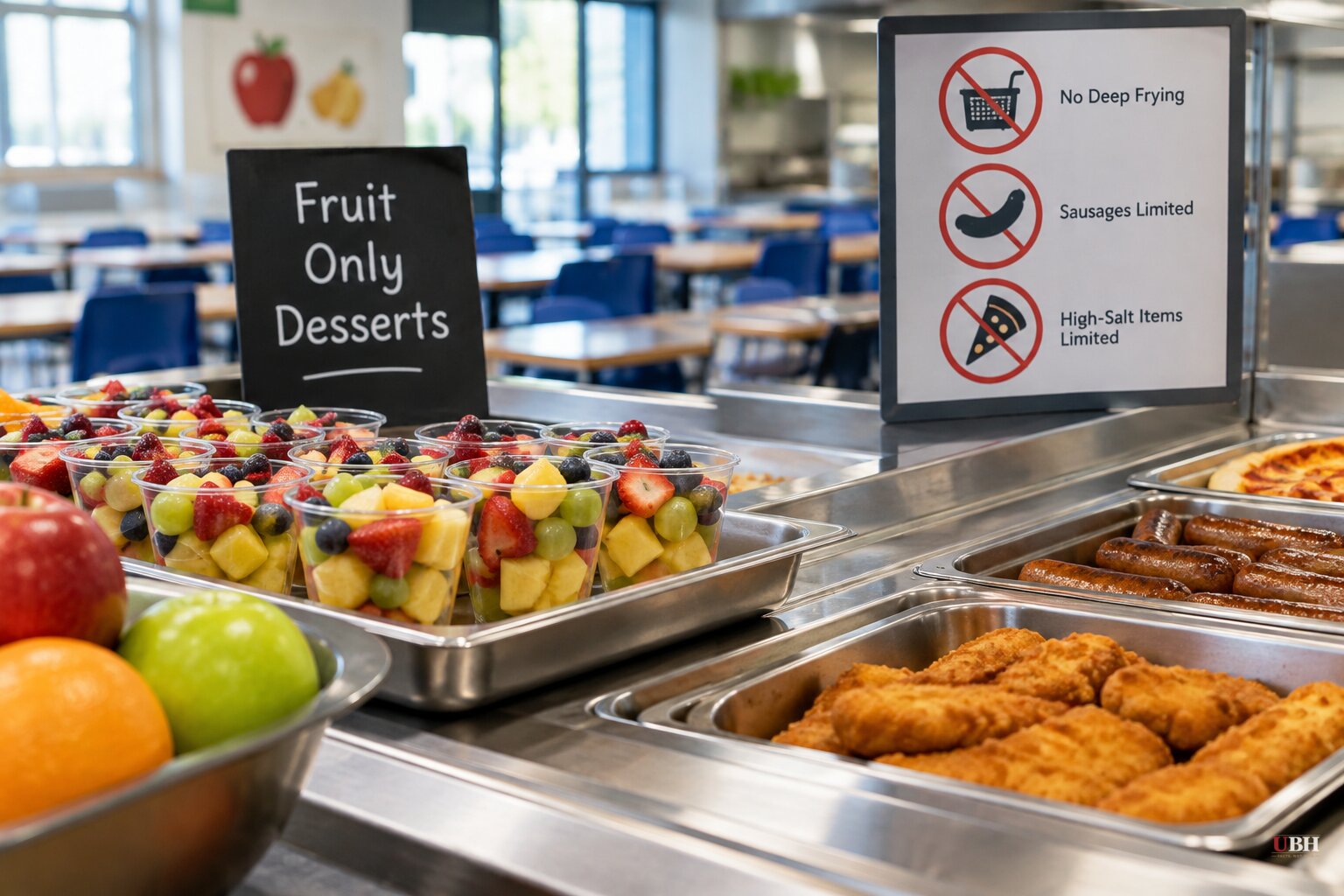
England's schools are getting a menu overhaul. The Department for Education (DfE) published new school food standards this week, the first update in more than ten years, and they get specific fast: desserts must contain fruit or be served with it, deep-fried food is being cut, and sugary drinks, ice cream and waffles are restricted.
High-fat, high-salt staples aren't safe either. Pizzas and sausages will have to be scaled back under the rules. Wholegrains and pulses like lentils and chickpeas must appear alongside main meals at least once a week, and every main dish needs a portion of vegetables or salad, either included or served on the side.
The numbers behind the push are blunt. According to the DfE, roughly one in three children leave primary school overweight or obese, and tooth decay is the leading cause of hospital admissions for kids aged five to nine. Something is clearly not working in what kids eat at school.
When it actually happens
The standards take effect next September, meaning September 2027. Secondary schools get an extra year on top of that, until September 2028, to make some of the changes. So this isn't happening this school year, or even next year, for every school.
Schools will be required to post their menus and food policies online and appoint a "school food governor" to hold the school accountable. The DfE says it will work with the Food Standards Agency on a monitoring plan, but as of now the specifics of that oversight haven't been released. Details are promised "in the coming months," according to the DfE's own announcement.
A September survey of more than 1,400 headteachers and senior leaders across English primary and secondary schools, conducted by Teacher Tapp for School Food Matters, found 68% think the standards would only work if compliance is independently checked. Right now, there's no independent inspection mechanism attached to this policy. It's a voluntary honor system with a governor and a website, at least until the DfE fills in the blanks.
Who's cheering and who's asking questions
Jamie Oliver, who's been campaigning on school food for more than two decades, called it "a brilliant day." He said that when he started his School Dinners campaign more than 20 years ago, he couldn't believe there were nutrition standards for dog food but none for what kids eat in cafeterias. Actor Dame Emma Thompson, a Food Foundation ambassador, called the standards "a milestone worth celebrating."
Education Secretary Lucy Powell framed the rollout as part of a broader push that includes free breakfast clubs and the expansion of free school meals to pupils in England from families on universal credit. "No child should spend the school day hungry, and no family should have to struggle to put food on the table," Powell said, adding: "This is what change looks like: healthier food, fuller stomachs and a fairer start for every child."
But the people who actually run schools have a different worry, and it's a fair one: money. Pepe Di'Iasio, general secretary of the Association of School and College Leaders, said the current funding rate for free school meals "is not enough to cover costs," forcing schools to pull money from teaching budgets to keep the program running. He called it "a case of having to rob Peter to pay Paul." NAHT general secretary Paul Whiteman echoed that the government needs to back new mandates with real cash if it wants schools to comply, and warned that any checks must avoid placing "additional burdens" on school leaders who are "already over-stretched."
Reducing sugar and fried food is common sense, and nobody's arguing kids should eat worse. But mandating pulses on the menu, fruit with every dessert, and published compliance reports costs money and staff time that schools don't automatically have. The DfE has set the rule. It hasn't yet said who pays for the kitchen upgrades, ingredient sourcing, or the school food governor's oversight work.
The DfE and Food Standards Agency's monitoring framework still hasn't been announced.
Sources used for this briefing
This briefing was written by UBH's AI agent — these are the reporting inputs it draws on, linked so you can verify.


