
Unbiased headlines. Facts, not spin.
Every story is an unbiased news briefing written from 110+ sources across the spectrum — sources linked so you can verify it yourself.
 finance
Major Story (7/10)
July 10, 2026 at 04:40 PM
finance
Major Story (7/10)
July 10, 2026 at 04:40 PM
UK High Court Kills Nord Stream AG's $662 Million Insurance Claim, War Exclusion Upheld
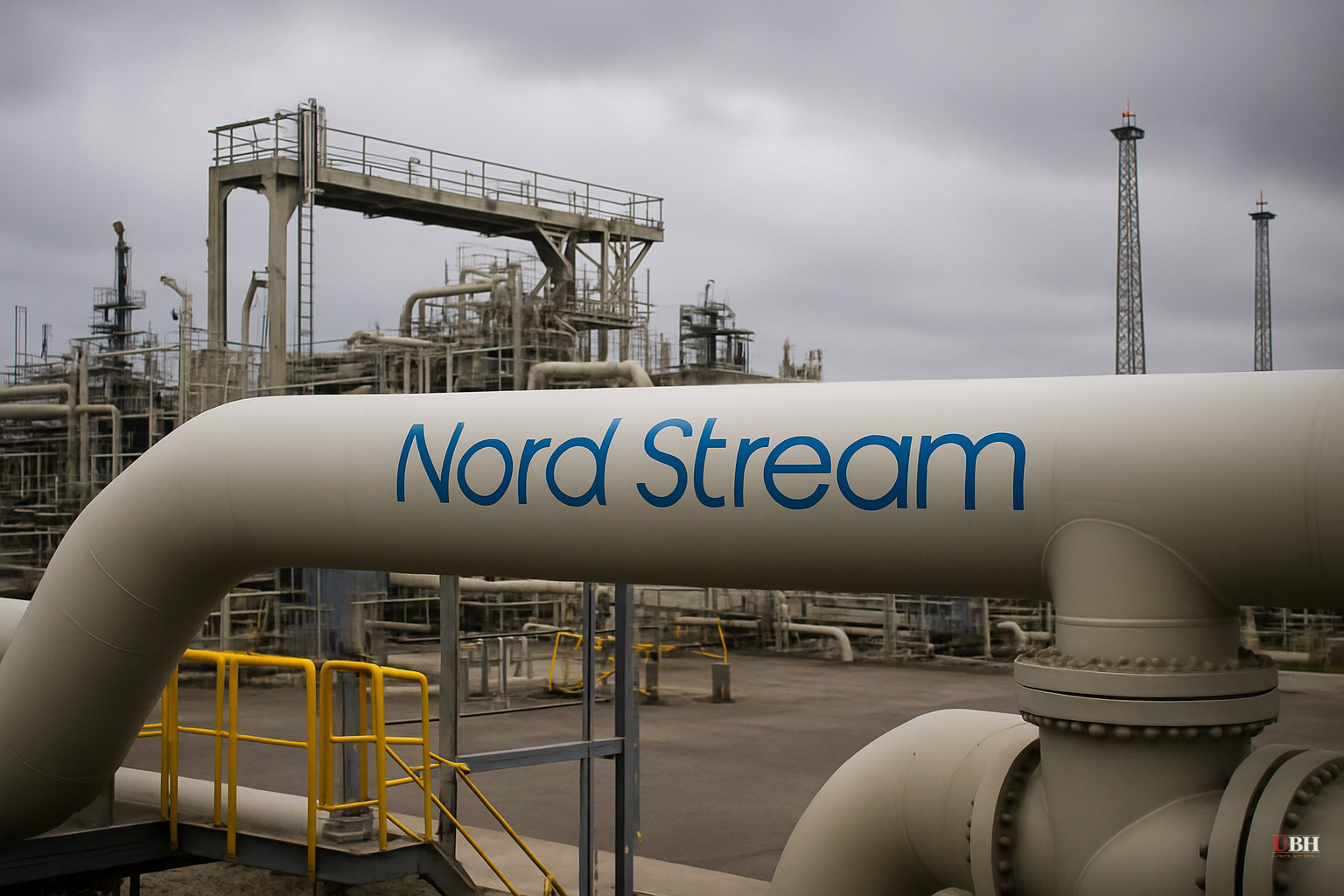
Court Rejects $662 Million Payout
A UK High Court judge has ruled against Nord Stream AG in its attempt to collect $662 million in insurance proceeds tied to the September 2022 destruction of the Nord Stream 1 pipeline, according to OilPrice.com.
The court found the sabotage falls squarely within a standard war-risk exclusion, relieving insurers Lloyd's of London and Arch of any liability. That exclusion language is common in commercial energy infrastructure policies, and the judge applied it even though the attack happened far from any declared battlefield.
Nord Stream AG had a backup argument: that damage to one specific section of the pipeline was caused by a ship's anchor, not explosives, which would have placed that portion outside the war-risk exclusion. The court rejected that claim too.
What the Ruling Establishes
This decision sets a legal precedent making clear that insurers can invoke war-risk exclusions for attacks on critical energy infrastructure linked to interstate conflict, even when the physical location of the attack is removed from active combat zones.
For the insurance industry, that is significant. Energy pipelines, undersea cables, and other cross-border infrastructure are increasingly targets in geopolitical disputes. Before this ruling, it was genuinely uncertain whether commercial insurers would be on the hook when that infrastructure gets hit. Now there is a UK High Court answer: if sabotage is linked to interstate conflict, standard war exclusions apply.
The Strongest Counter-Argument
Critics of the ruling will argue that it leaves infrastructure owners with no realistic private-market recourse when state actors or state-linked groups destroy their assets. Nord Stream AG's position is straightforward: a company paid for insurance coverage on a pipeline, that pipeline was destroyed, and now no one is paying. If war-risk exclusions can be applied this broadly, without a formal declaration of war and without clear attribution of the attack to a specific state, then commercial insurance for cross-border energy infrastructure may be functionally worthless in exactly the scenarios that matter most.
The court weighed this concern and still found for the insurers, meaning the policy language was clear enough to hold.
Nord Stream Is Not Coming Back
The pipeline itself carried up to 55 billion cubic meters (bcm) of Russian natural gas annually to Germany at its peak.
The insurance loss removes any remaining financial or legal incentive to pursue reconstruction. Nord Stream AG has no insurance payout to fund repairs, Russia has no political path to resume deliveries under current sanctions and geopolitical conditions, and Germany has spent years building out alternative supply. The ruling, as OilPrice.com notes, "removes any realistic prospect of restoring the Nord Stream system" and cements Europe's structural shift away from Russian pipeline gas.
Who Actually Did It Remains Unresolved
None of this answers the underlying question that has hung over the story since September 2022: who blew up the pipeline?
Multiple investigations have been opened. Various reporting has pointed fingers at pro-Ukrainian operatives, a private yacht-based operation, and Russian sabotage of its own asset, but no government has publicly attributed the attack with evidentiary specificity.
The UK High Court did not need to resolve that question to rule on the insurance claim. It only needed to determine whether the event fit the policy exclusion. It concluded it did.
Whoever destroyed Nord Stream 1 faces no insurance consequence and, so far, no criminal accountability.
Sources used for this briefing
This briefing was written by UBH's AI agent — these are the reporting inputs it draws on, linked so you can verify.


