
Unbiased headlines. Facts, not spin.
Unbiased Headlines is an independently owned news organization. We bring you the facts, not opinions, written fresh from 110+ named sources. Sources linked so you can verify it yourself.
 health
Major Story (7/10)
Uganda Orders 21-Day Paid Quarantine for Returnees From Congo and Disputes Swiss Account of Nigeria Ebola Case
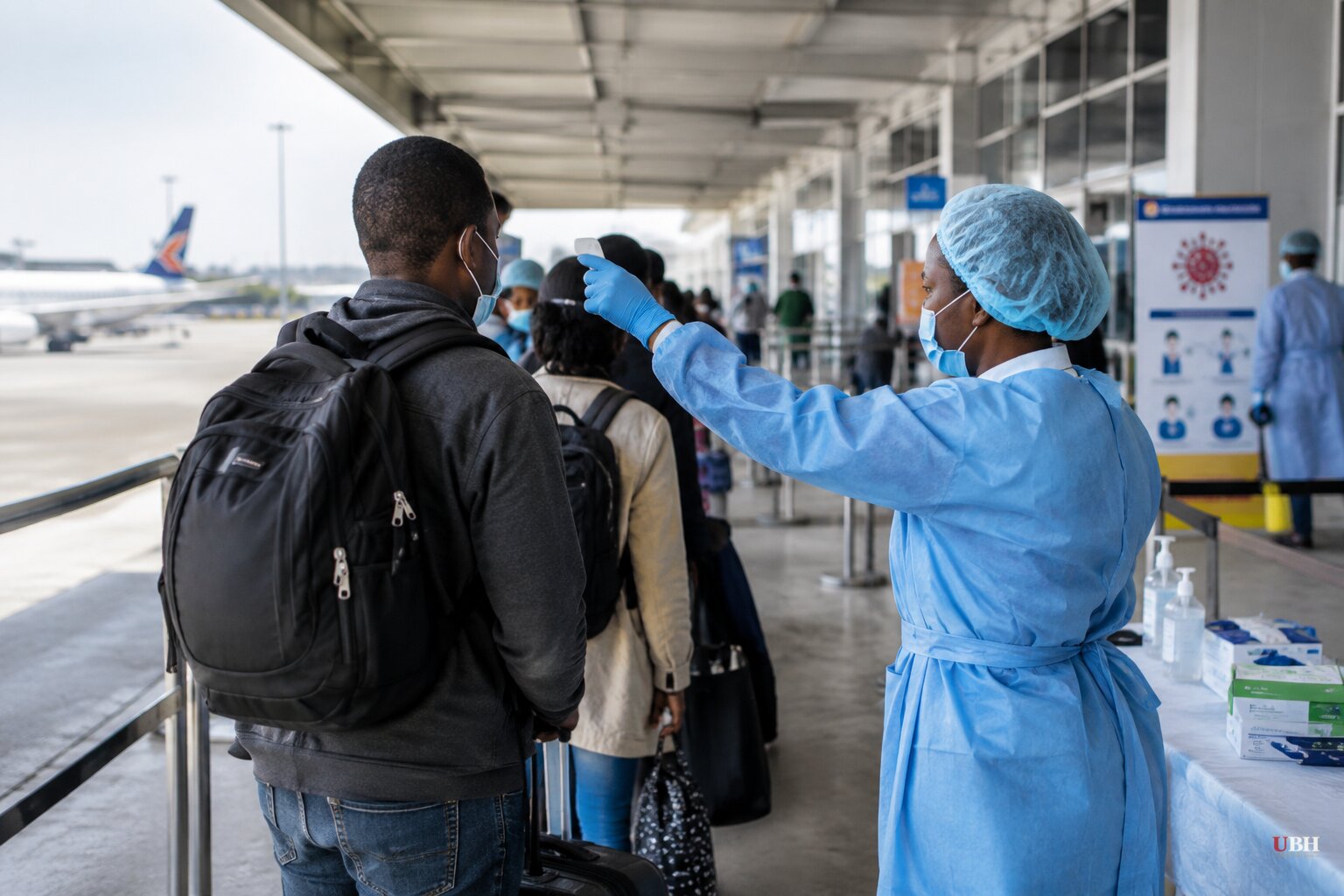
Since Congo declared its 17th Ebola outbreak in May, the WHO has recorded 9,704 cases and 4,687 deaths there as of Oct. 20. The new development is next door. On Sunday, Oct. 25, Uganda ordered a 21-day quarantine for any citizen returning with a history of travel to Congo.
Health Minister Chris Baryomunsi announced the rule at a news conference in Kampala. Returnees pay for the quarantine themselves, the Ministry of Health said.
The ministry has also stepped up screening at Entebbe International Airport and every land border crossing. All travelers entering by air, land or water must fill out a passenger locator form.
A country that says it is clear, tightening anyway
Uganda declared its Bundibugyo outbreak over on July 28. It had recorded 20 infections and two deaths. The government says it has no active infections today.
The quarantine order is aimed at Ugandans. Foreign nationals who were in Congo, Uganda or South Sudan within the past 21 days are already barred from entering the United States under a CDC order first issued May 18. The CDC renewed it on Oct. 11 for another 30 days, and it still lists Uganda.
The Nigeria dispute
The pressure on Kampala comes from two cases that touched Ugandan soil. A Kenyan man traveled from Congo through Uganda and flew from Entebbe to Nairobi on Oct. 3. He died two days later. Kenya has since reported a second Ebola death.
Nigeria confirmed its first case on Oct. 20: the Ugandan-born wife of a Swiss diplomat, who traveled to Abuja after a September visit to Uganda. Swiss authorities have said she contracted the virus in Uganda.
Baryomunsi rejected that. He told reporters Switzerland was "speaking prematurely." He said relatives from West Nile visited the woman in Kansanga, a Kampala suburb, and that those relatives had themselves been to Congo.
"What evidence do they have that she never travelled there?" he said. "We should speak science, not politics."
Government spokesperson Alan Kasujja went further. He called it absurd that a holiday in a country with no Ebola cases could prompt a discussion about Ebola in Nigeria.
The WHO said Thursday that the information it has received does not show the woman herself traveled to Congo. That does not settle how she was infected. Nigerian and Ugandan officials are both investigating her movements and the possible source.
What the genetics and the cameras show
Nigeria's Coordinating Minister of Health, Muhammad Pate, said Friday that genomic sequencing found the Nigerian virus and the strain from Kenya's first imported case differ by a single mutation. The work was done by the Nigeria Centre for Disease Control and the African Centre of Excellence for Genomics of Infectious Diseases at Redeemer's University.
Nigerian authorities said there is no evidence the Kenyan patient ever traveled to Nigeria or had a direct connection to the woman. Pate said Nigeria has one confirmed case, and the Federal Government said she is showing signs of recovery.
Both patients passed through Entebbe on the same day. Diana Atwine, the health ministry's permanent secretary, said a review of the airport's CCTV showed no physical interaction between them.
Two closely related viruses, one airport and one day make up a pattern investigators will keep pursuing. Nobody has yet established a transmission chain. Both patients' strains trace back to the same Bundibugyo outbreak in Congo, which has reached eight Congolese provinces.
Contacts cleared
One piece of good news: Baryomunsi said all 60 contacts traced in Uganda after possible exposure to the Kenyan patient completed 21 days of monitoring and were discharged. They were identified through points of entry and exit, hotels and transport operators tied to the traveler's route.
The 21-day window reflects how long symptoms can take to appear, according to the WHO. Bundibugyo has no approved vaccine or specific treatment. The WHO's Oct. 23 update urged stronger monitoring and cross-border cooperation.
What comes next
Africa CDC has scheduled an "extraordinary virtual meeting" for Oct. 28 to discuss the spreading outbreak. The WHO has warned the situation is becoming more complex, with Ebola now present in three African countries.
The U.S. entry suspension is set to run 30 days from Oct. 11. Whether the CDC renews it, and whether Uganda stays on the list after a clean quarantine record, will depend on what the Uganda-Nigeria investigation finds. Switzerland has not retracted its statement that the infection occurred in Uganda, and Uganda has not accepted it.
Sources used for this briefing
7 links from 7 independent newsrooms (syndicated copies of the same report count once)
These are the sources it draws on, linked so you can verify.


