
Original briefings. Zero spin.
Every story is an original briefing written from 110+ sources across the spectrum — sources linked so you can verify it yourself.
 health
Low Interest (4/10)
Event date: August 18, 2026
health
Low Interest (4/10)
Event date: August 18, 2026
UCLA Marmot Researchers Turn to OnlyFans and a Meme Coin After Federal Grant Cuts
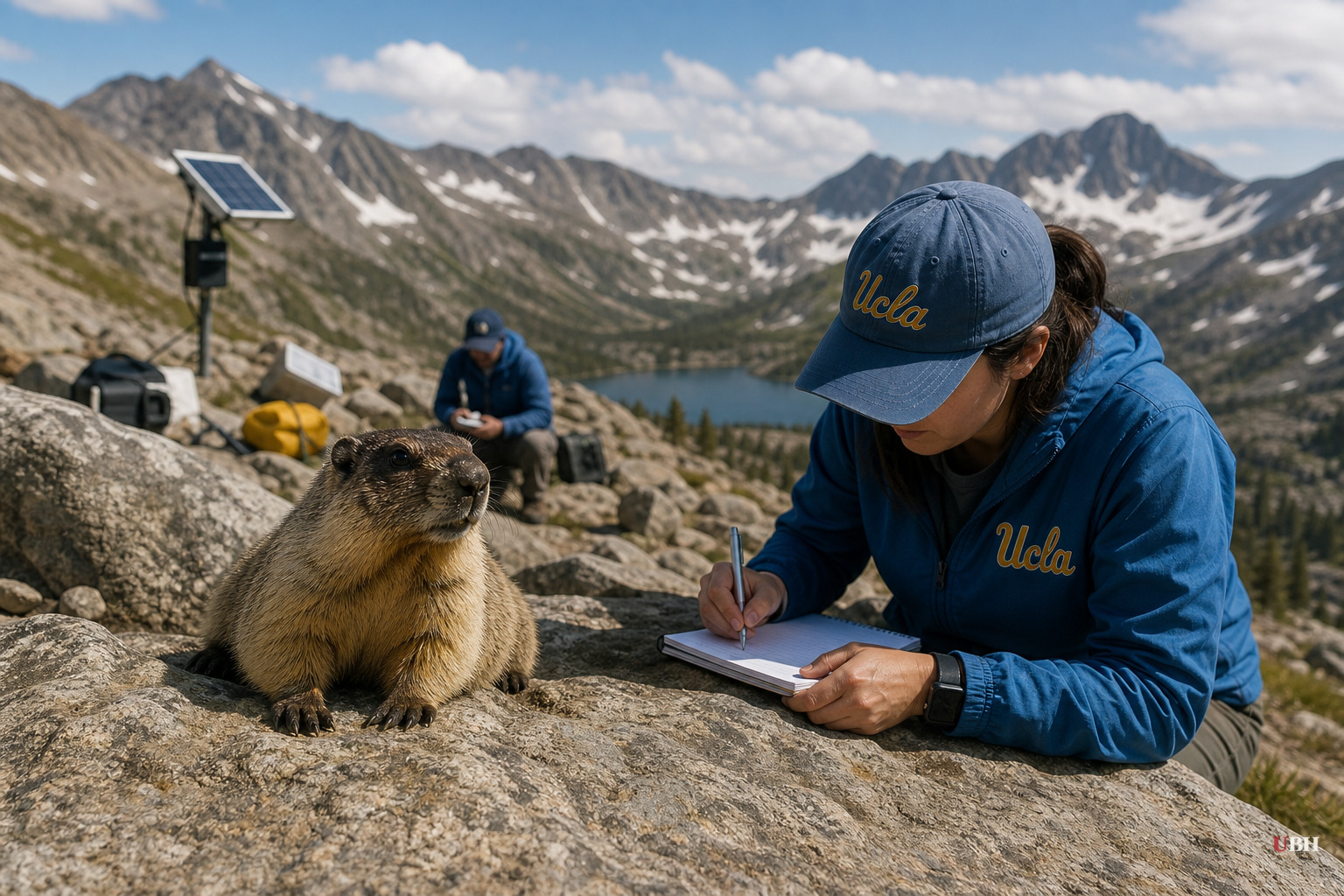
A 64-year study of yellow-bellied marmots in the Colorado Rockies almost went extinct this year, not because of the animals, but because of the money.
The Marmot Project, run out of the Rocky Mountain Biological Laboratory in Gothic, Colorado, has tracked the same population of ground squirrels since 1962, when ecologist Ken Armitage started the work. Dan Blumstein, a UCLA professor of ecology and evolutionary biology, took over day-to-day management in 2001, according to the Los Angeles Times. It's one of the longest continuously running animal behavior studies in the world.
This year federal funding cuts hit the lab hard. According to the Los Angeles Times, universities nationwide have slashed the number of graduate students who receive financial support for research, and Blumstein's lab wasn't spared. Fewer funded graduate students means fewer people to run the years-long fieldwork the marmot project depends on.
So Blumstein did something no federal grant committee ever anticipated. In late May, according to the Los Angeles Times, he launched an OnlyFans account called "OnlyMarms." The idea came to him after watching the Apple TV comedy "Margo's Got Money Troubles," about a single mom who turns to OnlyFans to pay her bills. "Marmots got money troubles too," he figured.
The content is entirely G-rated: marmots chasing each other around burrows, marmots eyeing trail cameras, marmots doing marmot things. "These are wild animals, so it's important for people to know that we are just getting footage of them in their natural environment," said Emily Renkey, a first-year graduate student in Blumstein's lab, according to the Los Angeles Times.
The OnlyFans account brought in about 1,700 subscribers and roughly $5,000 in tips, netting the lab about $4,000 after the platform's cut, per the Los Angeles Times.
Then something bigger happened. An anonymous group of online supporters, unconnected to the lab, created a marmot-themed meme coin called $OnlyMarms on the Solana blockchain and began donating the transaction fees to the project. According to The Guardian, that coin raised more than $88,000 in about two weeks. Combined with direct donations from people who didn't want to sign up for OnlyFans, the total funding raised has topped $100,000.
Julien Martin, a University of Ottawa researcher who co-leads the project with Blumstein, told The Guardian he initially thought the crypto scheme was a scam before accepting the money was real. "It's been a crazy last two weeks, it's been incredible to see and it's a relief that the research can continue for another year," Martin said. He added that hitting $300,000 would fund a PhD student on the project for four years.
Martin noted what he called the irony of leaning on cryptocurrency, an industry that has personally netted President Trump about $635 million through his own meme coin, to patch a hole in science funding that Trump's administration created, according to The Guardian. The Guardian reports Trump has moved to shrink National Science Foundation funding and has frozen more than $700 million in grants. A program that's been collecting continuous data since 1962 is exactly the kind of long-term dataset that's hard to rebuild once it lapses. Scientists can debate all day about the price tag of a marmot census, but you can't retroactively study a hibernation season you missed.
To keep the lights on, or the burrows monitored, the lab is now running a fun public event. Fat Marmot Week, modeled on Alaska's popular Fat Bear Week contest, kicks off Monday, according to the Associated Press by way of The Independent and AOL. Blumstein put the stakes bluntly: "In some sense, we're going to be laughing our way down as the Titanic sinks. Because what else are you going to do?"
The marmots themselves had a rough year even before the funding crunch. A lack of snow cover last winter killed off two-thirds of one monitored population during hibernation, according to the Associated Press. The survivors spent the summer fattening up, doubling their body weight to as much as 13 pounds, in preparation for winter, and, unwittingly, for a donation drive built around their body mass.
Researchers say they need roughly $200,000 to guarantee three full years of continued fieldwork, according to PressBee's republishing of the Associated Press report. As of this week they're a bit past the halfway mark. Whether Fat Marmot Week or another meme coin rally gets them the rest of the way is an open question, and one that will determine whether a 64-year dataset keeps running or goes dark.
Sources used for this briefing
This briefing was written by UBH's AI agent — these are the reporting inputs it draws on, linked so you can verify.


